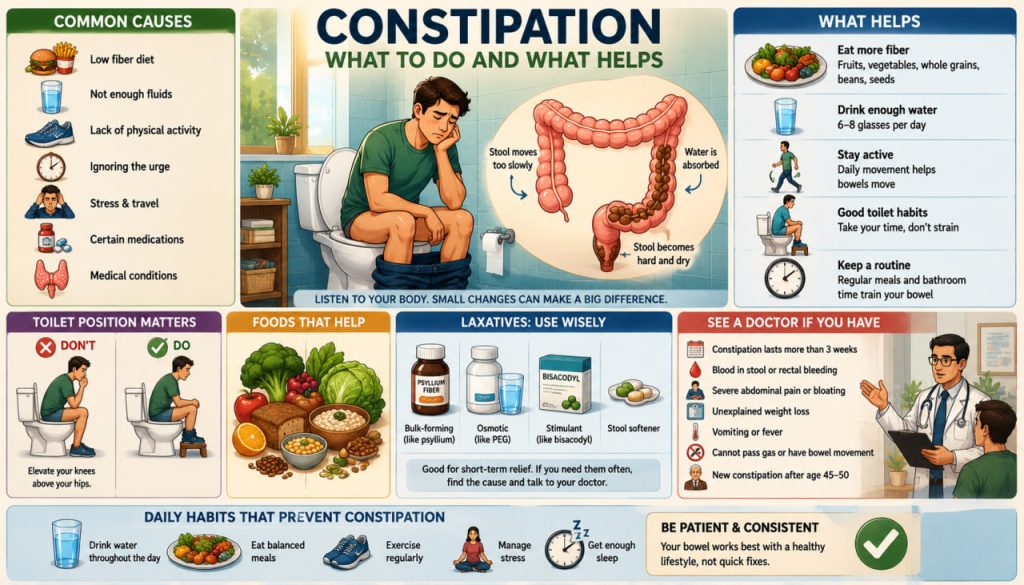
Constipation is one of the most common digestive problems, but it is also one of the most misunderstood. Many people think constipation only means “not going every day.” In reality, normal bowel frequency varies. Some healthy people go three times a day, while others go only a few times a week.
Constipation usually means bowel movements are infrequent, difficult, hard, painful, or incomplete. You may feel bloated, heavy, uncomfortable, or as if you still need to go after using the toilet.
Most cases improve with simple changes: more fiber, enough fluids, regular movement, better toilet habits, and sometimes short-term laxatives. But constipation can also be a sign of medication side effects, dehydration, thyroid problems, diabetes, irritable bowel syndrome, bowel obstruction, or rarely colorectal cancer.
The goal is not just to “force a bowel movement.” The goal is to understand why constipation is happening and fix the pattern safely.
What Constipation Actually Means
Constipation is usually described as having fewer than three bowel movements per week, passing hard or lumpy stools, straining, or feeling that evacuation is incomplete. NIDDK explains that constipation can include stools that are hard, dry, or difficult to pass, as well as a feeling that the bowel movement was incomplete.
Constipation may be temporary or chronic.
Temporary constipation often happens after travel, illness, low fluid intake, stress, diet changes, or reduced physical activity.
Chronic constipation lasts longer or keeps returning. It may require a medical evaluation, especially if lifestyle changes do not help.
Occasional constipation is common. Persistent constipation deserves attention.
Common Causes of Constipation
Constipation usually develops when stool moves too slowly through the colon or when the rectum does not empty effectively.
Common causes include:
- Low fiber intake
- Not drinking enough fluids
- Lack of movement
- Ignoring the urge to go
- Sudden diet changes
- Stress or disrupted routine
- Pregnancy
- Aging
- Certain medications
- Irritable bowel syndrome
- Pelvic floor dysfunction
Medications are a frequent cause. Opioid painkillers, some antidepressants, iron supplements, calcium supplements, antacids containing aluminum or calcium, antihistamines, and some blood pressure medicines can slow bowel function.
The NHS specifically warns that medicines such as opioid painkillers can cause constipation and advises speaking with a doctor before stopping prescribed medication.
If constipation started after a new medicine, do not simply stop the drug. Ask a clinician or pharmacist for a safer plan.
First Step: Fix the Basics
For mild constipation, start with the foundations.
Increase fluids, especially water. Eat regular meals. Add fiber gradually. Move your body daily. Respond to the urge to use the toilet instead of delaying it.
The NHS recommends increasing fiber, drinking plenty of fluids, and increasing activity to help treat constipation. It also advises improving toilet position by raising the knees above the hips, such as by resting the feet on a small stool.
A practical daily routine may include:
- A glass of water after waking
- Breakfast with fiber
- A relaxed toilet attempt after breakfast
- A 10–20 minute walk
- Vegetables, legumes, or whole grains during the day
- A consistent bedtime and meal schedule
Your bowel likes rhythm. Regular meals, movement, and toilet timing can train the gut to work more predictably.
Fiber: Helpful, But Add It Slowly
Fiber helps stool hold water and move through the intestine more easily.
Good fiber sources include:
- Oats
- Beans
- Lentils
- Vegetables
- Fruits
- Berries
- Whole grains
- Chia seeds
- Flaxseed
- Psyllium husk
However, adding too much fiber too quickly can cause gas, bloating, cramps, and worse discomfort. Increase fiber gradually over several days or weeks, and drink enough fluid.
Cambridge University Hospitals notes that fiber intake should be increased gradually and that although benefits may appear within days, it can take up to four weeks to see the full effect.
Fiber works best with water. Without enough fluid, extra fiber may make stool bulkier but harder to pass.
Toilet Technique Matters
Many people strain because their toilet posture works against anatomy.
Try this:
Sit with feet supported on a small stool. Lean slightly forward. Keep knees higher than hips. Relax the belly. Breathe slowly. Do not hold your breath or push aggressively.
Spend enough time to relax, but do not sit for long periods scrolling on your phone. Long toilet sessions can worsen hemorrhoids and make straining a habit.
If nothing happens after several minutes, get up and try again later.
Gentle timing is better than force. Repeated hard straining can create pain, hemorrhoids, and pelvic floor problems.
When Laxatives Can Help
Laxatives can be useful when lifestyle changes are not enough.
Common types include:
- Bulk-forming laxatives, such as psyllium
- Osmotic laxatives, such as polyethylene glycol
- Stool softeners
- Stimulant laxatives, such as bisacodyl or senna
- Suppositories or enemas for selected situations
NIDDK states that doctors may recommend over-the-counter medicines such as fiber supplements, osmotic agents, stool softeners, lubricants, and stimulant laxatives, depending on the situation. It also advises talking with a doctor if you have been taking laxatives for a long time and cannot have a bowel movement without them.
For chronic idiopathic constipation in adults, the joint American Gastroenterological Association and American College of Gastroenterology guideline strongly recommends polyethylene glycol and also recommends some stimulant and prescription options depending on severity and response.
Laxatives are tools, not a lifestyle strategy. If you need them frequently, the cause should be reviewed.
What Not to Do
Avoid extreme approaches.
Do not use repeated enemas without medical advice. Do not take large doses of laxatives to “clean out” the bowel. Do not use detox teas, harsh herbal blends, or unknown supplements as a daily solution.
Also avoid ignoring serious symptoms.
Constipation with severe pain, vomiting, fever, inability to pass gas, blood in stool, unexplained weight loss, or sudden major bowel habit changes should not be treated as ordinary constipation.
The more intense or unusual the symptoms, the more important it is to get medical help instead of experimenting at home.
When to See a Doctor
Medical care is important if constipation is new, persistent, severe, or associated with warning signs.
NIDDK advises seeing a doctor right away if constipation occurs with rectal bleeding, blood in stool, constant abdominal pain, inability to pass gas, vomiting, fever, lower back pain, or unexplained weight loss.
Mayo Clinic also recommends medical attention for constipation lasting longer than three weeks, rectal bleeding, blood in stool, abdominal pain, unexplained weight loss, or constipation that alternates with diarrhea.
See a doctor especially if:
- Constipation lasts more than two to three weeks
- It keeps coming back
- It begins suddenly after age 45–50
- You see blood
- You lose weight without trying
- You have anemia or constant fatigue
- You have severe abdominal pain
- You cannot pass gas
- You vomit
- You have a family history of bowel cancer
- You need laxatives all the time
Persistent constipation is treatable, but it should not be ignored.
Expert Perspective
The American Gastroenterological Association and American College of Gastroenterology published evidence-based guidance for chronic idiopathic constipation in adults. Their guideline emphasizes matching treatment to severity and response, using evidence-supported options such as fiber in selected patients, polyethylene glycol, stimulant laxatives for short-term or rescue use, and prescription medicines when standard therapies fail.
This expert approach is practical: start with low-risk lifestyle measures, add appropriate medicines when needed, and investigate warning signs or resistant symptoms.
Good constipation care is step-by-step, not random trial and error.
How to Prevent Constipation Long Term
Prevention is usually about consistency.
Eat enough fiber most days. Drink water regularly. Keep moving. Create a toilet routine. Do not ignore the urge. Review constipating medicines with a doctor when needed.
For people with chronic constipation, prevention may also involve managing underlying conditions such as hypothyroidism, diabetes, IBS, neurological disorders, or pelvic floor dysfunction.
If constipation is related to opioids, pregnancy, surgery, aging, or chronic disease, ask a clinician for a personalized plan.
The best routine is the one you can maintain every week, not the most extreme plan you can follow for two days.
Interesting Facts
- Normal bowel frequency varies widely from person to person.
- Constipation can happen even if someone has daily bowel movements, especially if stool is hard or incomplete.
- The colon absorbs water from stool; slow movement can make stool harder and drier.
- Raising the knees above the hips can make passing stool easier for many people.
- Fiber may take days or weeks to show its full benefit.
- Opioid pain medicines are a common cause of constipation.
- Persistent constipation with bleeding, weight loss, or severe pain needs medical evaluation.
Glossary
- Constipation — Difficult, infrequent, hard, painful, or incomplete bowel movements.
- Fiber — Plant material that helps add bulk and water to stool.
- Psyllium — A soluble fiber supplement often used for constipation.
- Osmotic Laxative — A medicine that draws water into the bowel to soften stool.
- Stimulant Laxative — A medicine that stimulates bowel contractions.
- Stool Softener — A medicine that helps stool retain moisture.
- Hemorrhoids — Swollen veins around the anus or lower rectum, often worsened by straining.
- Pelvic Floor Dysfunction — Difficulty coordinating the muscles needed for bowel movement.
- Chronic Idiopathic Constipation — Long-term constipation without a clearly identifiable medical cause.
- Bowel Habit Change — A noticeable change in stool frequency, consistency, or ease of passing.