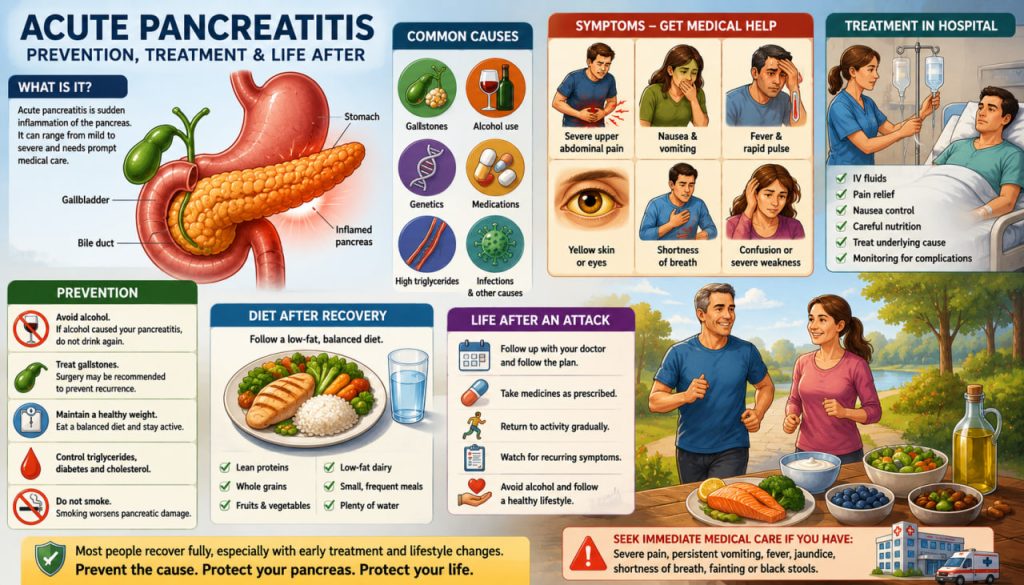
Acute pancreatitis is a sudden inflammation of the pancreas that can range from mild and short-lived to severe and life-threatening. The pancreas is a small organ behind the stomach, but its role is huge: it helps digest food and produces hormones such as insulin that regulate blood sugar.
An attack of acute pancreatitis often begins with strong upper abdominal pain, sometimes spreading to the back. Nausea, vomiting, fever, and a fast heartbeat may also occur. NIDDK warns that severe or worsening abdominal pain, nausea and vomiting, fever, chills, fast heartbeat, shortness of breath, or jaundice require urgent medical care.
Acute pancreatitis is not a condition to “wait out” at home. If symptoms suggest an attack, medical evaluation is essential.
What Is Acute Pancreatitis?
Acute pancreatitis happens when the pancreas becomes inflamed suddenly. In many cases, the inflammation settles within days, but some cases lead to complications such as infection, fluid collections, tissue damage, or organ failure.
Doctors usually diagnose acute pancreatitis using symptoms, blood tests, and sometimes imaging. NICE notes that people usually present with sudden abdominal pain, often with nausea and vomiting, and diagnosis is confirmed by raised blood lipase or amylase levels, although these enzymes can also rise in other conditions.
A widely used diagnostic approach requires at least two of the following: typical upper abdominal pain, pancreatic enzymes at least three times above the normal limit, or imaging findings consistent with pancreatitis.
Common Causes of Acute Pancreatitis
The two most common causes are gallstones and alcohol use.
Gallstones can block the bile duct or pancreatic duct, trapping digestive enzymes inside the pancreas. Alcohol can directly injure pancreatic tissue and increase the risk of repeated attacks.
Other possible causes include:
- Very high triglyceride levels
- Certain medications
- Abdominal injury
- Infections
- Genetic factors
- Autoimmune conditions
- Complications after procedures such as ERCP
- Unknown causes
NIDDK lists gallstones, heavy alcohol use, medicines, and genetic disorders among the causes of pancreatitis.
Preventing another attack starts with identifying the original cause.
Symptoms That Need Emergency Attention
Acute pancreatitis can become dangerous quickly.
Seek medical help immediately if you have:
- Severe upper abdominal pain
- Pain spreading to the back
- Persistent vomiting
- Fever or chills
- Fast heartbeat
- Shortness of breath
- Yellow skin or yellow eyes
- Confusion, weakness, or fainting
- Abdominal swelling or worsening tenderness
These symptoms may signal severe inflammation, infection, duct blockage, dehydration, or complications involving other organs. NIDDK specifically advises seeking care right away for severe or worsening abdominal pain, vomiting, fever, fast heartbeat, shortness of breath, or jaundice.
Do not use painkillers, fasting, or home remedies as a substitute for emergency care.
How Acute Pancreatitis Is Treated
Most people with suspected acute pancreatitis need hospital care.
Treatment may include:
- Intravenous fluids
- Pain control
- Anti-nausea treatment
- Blood tests and monitoring
- Imaging if complications are suspected
- Nutritional support
- Treatment of the underlying cause
Mayo Clinic states that there is no specific medicine that directly cures pancreatitis; treatment usually begins with a hospital stay to manage symptoms and complications, including pain medicines, IV fluids, and nutrition.
The American College of Gastroenterology highlights early oral feeding with a low-fat solid diet within 24–48 hours in mild disease when tolerated, and avoiding parenteral nutrition when possible.
This is important because older advice often emphasized long fasting. Modern care is more individualized, and early feeding may be safe in mild cases when symptoms allow.
Prevention: How to Reduce the Risk
Not every case can be prevented, but many risk factors can be reduced.
The most effective prevention steps include:
- Avoid heavy alcohol use
- Stop alcohol completely after alcohol-related pancreatitis
- Treat gallstones when recommended
- Maintain a healthy weight
- Follow a low-fat, balanced diet if advised
- Control triglycerides
- Manage diabetes
- Use medications only as prescribed
- Avoid smoking
- Attend follow-up appointments
NIDDK advises that a low-fat, healthy eating plan can decrease pancreatitis risk, and strongly advises people with pancreatitis not to drink alcohol, even if the pancreatitis is mild.
The two most practical long-term steps are treating the cause and protecting the pancreas from repeated injury.
Life After an Acute Pancreatitis Attack
Recovery does not end when the pain improves.
After discharge, ask your doctor:
- What caused the attack?
- Do I need gallbladder surgery?
- Are my triglycerides too high?
- Should I avoid alcohol completely?
- Do any medicines need changing?
- When can I return to normal food?
- Do I need enzyme, glucose, or imaging follow-up?
- What symptoms mean I should return to the hospital?
People with gallstone pancreatitis often need treatment to prevent recurrence. The 2024 ACG guideline summary notes that biliary pancreatitis typically requires surgery to prevent recurrent disease and may need early ERCP if complicated by cholangitis.
A second attack is not just an inconvenience. Recurrent inflammation can increase the risk of chronic pancreatic damage.
What to Eat After Pancreatitis
Diet after an attack should be discussed with a clinician, especially after severe disease. Still, general principles are useful.
Many patients are advised to restart food gradually and focus on lower-fat meals. NIDDK recommends drinking plenty of fluids, limiting caffeine, avoiding alcohol, and using a low-fat, healthy eating plan to reduce risk.
Helpful food choices may include:
- Lean protein
- Vegetables
- Fruits
- Whole grains
- Legumes
- Low-fat dairy if tolerated
- Small, frequent meals
- Plenty of water
Foods that may be harder to tolerate include:
- Fried foods
- Fatty meats
- Heavy cream sauces
- Fast food
- Large high-fat meals
- Alcohol
The goal is not extreme restriction. The goal is a sustainable eating pattern that lowers pancreatic stress and supports recovery.
Alcohol, Smoking, and Recurrence
Alcohol is one of the most important modifiable risks.
If alcohol contributed to the attack, complete abstinence is usually necessary. Even if alcohol was not the main cause, many doctors recommend avoiding it after pancreatitis because the pancreas may be more vulnerable.
Smoking also matters. It is associated with pancreatic disease and can worsen long-term digestive health. Quitting smoking may reduce the risk of future pancreatic problems and improve overall recovery.
For people who struggle with alcohol dependence, medical treatment, counseling, support groups, and addiction medicine services can be crucial.
Stopping alcohol is not a moral issue. It is a medical protection strategy for an injured organ.
When to Return to Exercise and Normal Life
After mild pancreatitis, many people gradually return to normal activities once pain, vomiting, and fatigue improve. Severe pancreatitis may require weeks or months of recovery.
Start slowly.
Focus on:
- Walking
- Hydration
- Adequate sleep
- Small meals
- Avoiding alcohol
- Follow-up testing
- Gradual return to work
Do not rush intense exercise if you are weak, losing weight, dehydrated, or still in pain. If the attack was severe, ask your doctor whether you need nutritional support or pancreatic function testing.
Cleveland Clinic notes that most people recover completely from acute pancreatitis, especially when it is not severe, but avoiding the original cause is key to preventing recurrence.
Expert Perspective
The American College of Gastroenterology’s 2024 acute pancreatitis guideline emphasizes an evidence-based approach: confirm the diagnosis properly, assess severity, provide appropriate fluids and pain control, support nutrition, and address the underlying cause to reduce recurrence risk. Its guidance also highlights that patients with biliary pancreatitis often need definitive treatment, such as surgery, to prevent repeated attacks.
For patients, the practical message is clear: acute pancreatitis is not only about surviving one painful episode. It is about preventing the next one.
Interesting Facts
- The pancreas produces digestive enzymes and hormones, including insulin.
- Gallstones are one of the leading causes of acute pancreatitis.
- Acute pancreatitis can be mild, but severe cases can affect the lungs, kidneys, and circulation.
- Modern treatment often allows earlier feeding in mild pancreatitis when tolerated.
- Very high triglycerides can trigger pancreatitis.
- Alcohol-related pancreatitis may recur if alcohol use continues.
- Some cases have no obvious cause even after testing.
Glossary
- Acute Pancreatitis — Sudden inflammation of the pancreas.
- Pancreas — An organ behind the stomach that helps with digestion and blood sugar regulation.
- Gallstones — Hardened deposits that form in the gallbladder and can block digestive ducts.
- Triglycerides — A type of fat in the blood; very high levels can increase pancreatitis risk.
- Lipase — A pancreatic enzyme often measured in blood tests when pancreatitis is suspected.
- Amylase — An enzyme that helps digest carbohydrates and may rise during pancreatitis.
- ERCP — A procedure used to examine or treat problems in the bile and pancreatic ducts.
- Biliary Pancreatitis — Pancreatitis caused by gallstones or bile duct obstruction.
- Parenteral Nutrition — Nutrition delivered through a vein rather than through the digestive system.
- Chronic Pancreatitis — Long-term inflammation and damage of the pancreas.