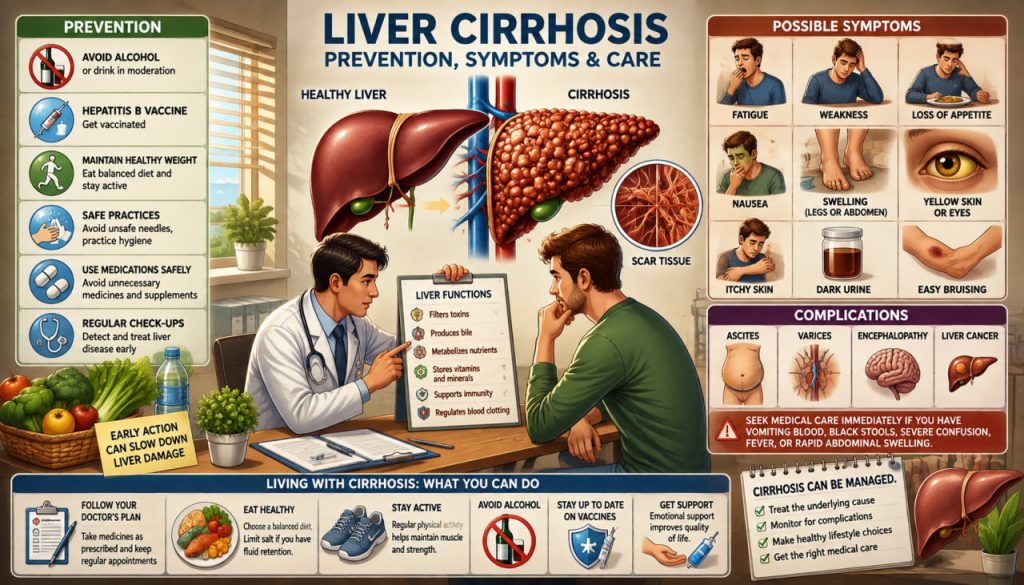
Liver cirrhosis is a serious chronic condition in which healthy liver tissue is replaced by scar tissue. Over time, this scarring makes it harder for the liver to filter blood, process nutrients, produce essential proteins, fight infections, and support digestion. NIDDK describes cirrhosis as permanent liver scarring that can worsen until the liver begins to fail.
The frightening part is that cirrhosis can develop silently for years. A person may feel mostly normal while damage is progressing in the background.
The hopeful part is just as important: many causes of cirrhosis can be prevented, slowed, treated, or managed when detected early. If someone is already diagnosed, the goal is to stop further damage, monitor complications, and protect quality of life.
What Causes Liver Cirrhosis?
Cirrhosis is not one disease with one cause. It is the final stage of long-term liver injury.
Common causes include:
- Long-term heavy alcohol use
- Chronic hepatitis B
- Chronic hepatitis C
- Metabolic dysfunction-associated steatotic liver disease, often linked to obesity and type 2 diabetes
- Autoimmune liver diseases
- Bile duct diseases
- Genetic conditions such as Wilson disease or hemochromatosis
- Long-term exposure to certain toxins or medications
Mayo Clinic notes that although long-term heavy alcohol use is a common cause, many different liver diseases and conditions can lead to cirrhosis.
The most important prevention strategy is to identify the cause before irreversible liver scarring becomes advanced.
Early Symptoms People Often Miss
Cirrhosis may cause no obvious symptoms in the beginning.
When symptoms appear, they can be vague and easy to blame on stress, age, poor sleep, or digestion problems. NIDDK lists possible symptoms such as tiredness, weakness, itchy skin, poor appetite, unintended weight loss, nausea, vomiting, mild pain over the liver area, muscle loss, muscle cramps, and sexual problems.
Possible warning signs include:
- Constant fatigue
- Loss of appetite
- Nausea
- Itchy skin
- Easy bruising
- Swelling in the legs or abdomen
- Yellowing of the skin or eyes
- Dark urine
- Confusion or unusual sleepiness
- Vomiting blood or black stools
Jaundice, vomiting blood, severe confusion, rapid abdominal swelling, fever, or black stools require urgent medical attention.
How to Prevent Cirrhosis
Prevention depends on protecting the liver from long-term injury.
The most effective steps include:
- Avoid alcohol use
- Get tested for hepatitis B and C if at risk
- Vaccinate against hepatitis B when eligible
- Maintain a healthy weight
- Control diabetes, cholesterol, and blood pressure
- Avoid sharing needles or unsafe injection equipment
- Use medications only as directed
- Be careful with herbal supplements and “liver detox” products
- Treat known liver disease early
CDC states that chronic hepatitis B increases the risk of cirrhosis and liver cancer and requires medical care, while WHO notes that hepatitis viruses can cause severe liver damage and cancer.
There is no reliable shortcut or detox cleanse that prevents cirrhosis. The liver needs fewer injuries, not miracle products.
Alcohol and Cirrhosis: The Rule Is Simple
If cirrhosis is diagnosed, alcohol should be avoided completely.
Even small amounts may worsen liver damage in people with cirrhosis, especially when the cause is alcohol-associated liver disease, viral hepatitis, fatty liver disease, or mixed causes.
NIDDK states that doctors may recommend people with cirrhosis stop activities such as drinking alcohol and taking medicines that caused cirrhosis or can make it worse.
For a scarred liver, alcohol is not a harmless social habit. It is an additional injury.
People who find it hard to stop drinking should ask for medical help. Alcohol dependence is treatable, and professional support can be lifesaving.
What to Do If You Are Diagnosed
A cirrhosis diagnosis should trigger a structured medical plan.
The first step is to see a hepatologist or gastroenterologist. Doctors usually investigate the cause using medical history, physical examination, blood tests, imaging tests, and sometimes liver biopsy. NIDDK explains that cirrhosis diagnosis may be based on medical history, physical exam, blood tests, imaging, and biopsy results.
Ask your doctor about:
- The cause of your cirrhosis
- Whether it is compensated or decompensated
- Your MELD or Child-Pugh score if applicable
- Screening for liver cancer
- Screening for esophageal varices
- Vaccination needs
- Medication safety
- Diet and sodium intake
- Whether transplant evaluation is needed
Do not panic, but do not ignore it. Cirrhosis needs lifelong monitoring, even when symptoms are mild.
Treatment: Can Cirrhosis Be Reversed?
Scar tissue from cirrhosis is often permanent, but liver damage can sometimes stabilize when the cause is treated.
Treatment depends on the underlying condition.
Examples include:
- Antiviral therapy for hepatitis B or C
- Alcohol cessation treatment
- Weight loss and metabolic control for fatty liver disease
- Medicines for autoimmune liver disease
- Treatment for bile duct conditions
- Managing iron or copper overload in genetic diseases
- Liver transplant evaluation in advanced cases
CDC notes that several antiviral medicines can lower hepatitis B viral levels and slow liver disease progression, although hepatitis B is not yet considered curable.
For hepatitis C, modern antiviral treatment can cure most infections, which can reduce future liver damage. WHO states that there is no effective hepatitis C vaccine, so prevention focuses on avoiding contact with infected blood.
The best treatment is cause-specific. “Liver support” supplements cannot replace medical therapy.
Diet and Daily Habits After Diagnosis
People with cirrhosis should not follow extreme diets without medical advice.
General priorities usually include:
- Enough protein to prevent muscle loss
- Limited sodium if fluid retention is present
- Avoiding alcohol
- Safe food handling to reduce infection risk
- Maintaining a healthy weight
- Staying physically active within medical limits
- Avoiding raw or unsafe seafood
- Reviewing all medicines with a doctor
Protein restriction is an outdated idea for many patients. Many people with cirrhosis actually need adequate protein because muscle loss is common.
However, advanced cirrhosis can be complex. Fluid retention, kidney problems, confusion, bleeding risk, and malnutrition require personalized medical guidance.
Diet should support the liver and the whole body, not starve them.
Complications Doctors Watch For
Cirrhosis can lead to serious complications.
NIDDK lists complications such as portal hypertension, infections, liver cancer, liver failure, and other problems. Portal hypertension happens when scar tissue slows blood flow through the liver and raises pressure in the portal vein.
Common complications include:
- Ascites, or fluid in the abdomen
- Varices, or enlarged veins that can bleed
- Hepatic encephalopathy, or confusion from toxin buildup
- Kidney problems
- Increased infection risk
- Liver cancer
- Severe bleeding
- Malnutrition
This is why routine checkups matter. Doctors may recommend ultrasound screening, blood tests, endoscopy, medication, vaccines, and monitoring for fluid or mental-status changes.
Expert Perspective
The American Association for the Study of Liver Diseases provides evidence-based practice guidance for liver conditions, including cirrhosis, portal hypertension, alcohol-associated liver disease, metabolic liver disease, and acute-on-chronic liver failure. AASLD emphasizes structured diagnosis, risk assessment, treatment of underlying causes, and management of complications.
The practical message for patients is clear: cirrhosis should not be managed casually. Specialist care, regular monitoring, and cause-specific treatment can change the trajectory of the disease.
Interesting Facts
- Cirrhosis can exist for years before obvious symptoms appear.
- The liver can perform many essential functions even when partly damaged, which is why early disease may be silent.
- Hepatitis B vaccination can help prevent chronic hepatitis B-related cirrhosis.
- Cirrhosis can increase the risk of liver cancer even if symptoms improve.
- Muscle loss is common in cirrhosis, so nutrition and physical activity matter.
- Not all cirrhosis is caused by alcohol; viral hepatitis, metabolic disease, autoimmune disease, and genetic disorders can also cause it.
- Some people with advanced cirrhosis may need evaluation for liver transplantation.
Glossary
- Cirrhosis — Severe scarring of the liver caused by long-term liver injury.
- Fibrosis — The buildup of scar tissue in an organ.
- Hepatitis — Inflammation of the liver, often caused by viruses, alcohol, toxins, or immune disease.
- Portal Hypertension — High pressure in the portal vein caused by restricted blood flow through the liver.
- Ascites — Fluid buildup in the abdomen, often linked to advanced liver disease.
- Varices — Enlarged veins that can bleed, especially in the esophagus or stomach.
- Hepatic Encephalopathy — Confusion or mental changes caused by toxin buildup when the liver cannot filter blood properly.
- Hepatologist — A doctor specializing in liver diseases.
- Liver Transplant — Surgery to replace a failing liver with a healthy donor liver.
- Decompensated Cirrhosis — Advanced cirrhosis with complications such as bleeding, ascites, jaundice, or confusion.