Caffeine is one of the most widely consumed stimulants in the world. It is found in coffee, tea, energy drinks, cola, chocolate, pre-workout supplements, some pain medicines, and many “focus” products.
For many people, caffeine feels like a daily necessity. It improves alertness, reduces sleepiness, and can make morning routines more pleasant.
But its relationship with the heart and blood vessels is more complicated.
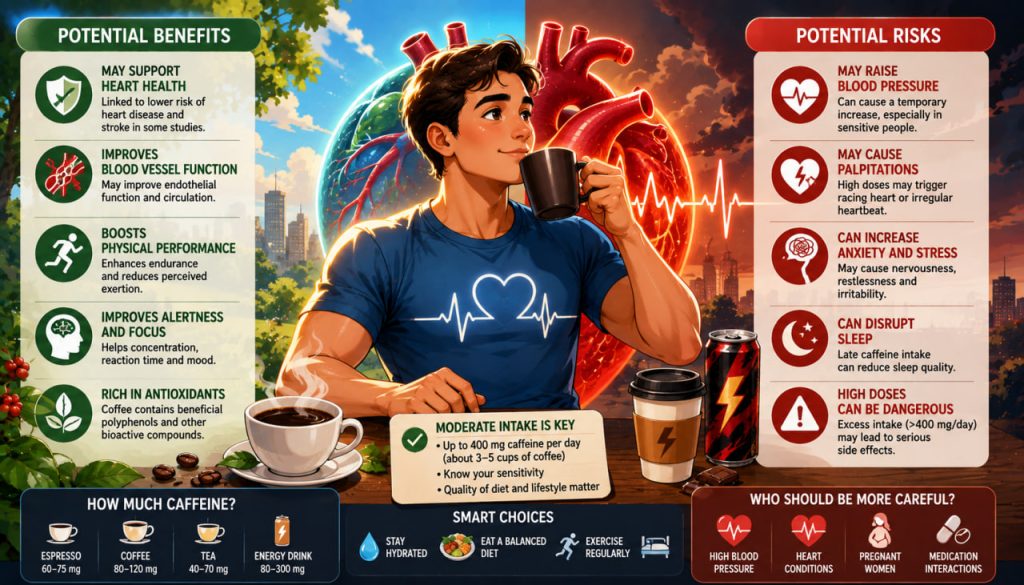
Caffeine can temporarily raise blood pressure and trigger palpitations in sensitive people, yet moderate coffee consumption appears safe for most adults and may be linked with cardiovascular benefits in some groups.
The key is dose, individual sensitivity, health status, and the source of caffeine.
What Is Caffeine?
Caffeine is a natural stimulant found in plants such as coffee beans, tea leaves, cacao, guarana, and yerba mate.
It works mainly by blocking adenosine receptors in the brain and body. Adenosine is a chemical involved in sleepiness and relaxation. When caffeine blocks its effects, people often feel more awake and focused.
The American Heart Association explains that caffeine is rapidly absorbed and metabolized mainly by the liver enzyme CYP1A2, and that it can increase sympathetic activity, leading to temporary increases in blood pressure, heart rate, and alertness.
This is why caffeine can feel energizing.
It is also why some people feel jittery, anxious, shaky, or aware of a racing heartbeat after drinking too much.
How Caffeine Affects the Cardiovascular System
The cardiovascular system includes the heart, blood vessels, and blood circulation.
Caffeine can affect this system in several ways.
It may temporarily:
- Increase alertness
- Raise blood pressure
- Slightly increase heart rate in some people
- Increase stress-hormone activity
- Improve exercise performance
- Cause palpitations in sensitive individuals
These effects are usually short-lived.
People who consume caffeine regularly may develop some tolerance, meaning the same amount produces less dramatic physical response over time.
The effect of caffeine depends heavily on the person.
A small espresso may make one person feel focused and comfortable, while the same dose may cause another person to feel anxious or notice heart pounding.
Caffeine and Blood Pressure
Blood pressure is one of the clearest short-term cardiovascular effects of caffeine.
Mayo Clinic states that caffeine may cause a short but dramatic rise in blood pressure, even in people without high blood pressure. However, it also notes that caffeine does not appear to have a long-term effect on blood pressure and is not linked with a higher risk of hypertension for most people.
This means caffeine is not automatically “bad for blood pressure,” but it can matter for certain individuals.
People with poorly controlled hypertension, strong caffeine sensitivity, anxiety, sleep problems, or heart symptoms should be more cautious.
A practical test is simple: measure blood pressure before caffeine and again about 30–120 minutes afterward. If it rises strongly, reducing caffeine or changing timing may help.
For someone with hypertension, caffeine should be treated as a personal variable, not ignored.
Coffee Is More Than Caffeine
Many studies about caffeine and heart health are actually studies about coffee.
This matters because coffee contains far more than caffeine.
It also contains polyphenols, antioxidants, minerals, and hundreds of bioactive compounds. Some of these may support metabolism, blood vessel function, and inflammation balance.
The American Heart Association notes that most major studies on caffeine and cardiovascular health examine naturally occurring caffeine, especially from coffee. Its recent scientific statement reports that up to 400 mg of caffeine per day, or up to about 5 cups of caffeinated coffee, appears safe for most adults and may be linked with cardiovascular health benefits in some individuals.
That does not mean sugary coffee drinks are heart-protective.
A black coffee and a large dessert-style drink with whipped cream, syrup, and extra sugar are nutritionally very different.
Coffee may be part of a heart-healthy pattern, but sugar-loaded caffeinated drinks are a different story.
Possible Cardiovascular Benefits
Moderate coffee consumption has been associated in many observational studies with lower risk of several health outcomes, including some cardiovascular conditions.
Possible benefits may be linked to:
- Antioxidant compounds
- Improved insulin sensitivity
- Anti-inflammatory effects
- Better alertness and physical activity
- Plant polyphenols
- Effects on liver and metabolic health
The American Heart Association’s 2026 scientific statement reports that moderate caffeinated coffee intake appears safe for most adults and may be associated with lower risk of heart failure, coronary heart disease, stroke, and some other cardiovascular outcomes in certain populations.
However, this does not prove that caffeine itself prevents heart disease.
People who drink moderate coffee may also have other lifestyle patterns that influence results.
The strongest message is not “drink coffee to protect your heart.” It is “moderate coffee is not the cardiovascular villain it was once assumed to be.”
Possible Risks and Side Effects
Caffeine can cause problems when the dose is too high or the person is sensitive.
Common side effects include:
- Fast heartbeat
- Palpitations
- Nervousness
- Anxiety
- Insomnia
- Trembling
- Stomach discomfort
- Headache
- Increased blood pressure
- Restlessness
The FDA says that, for most adults, 400 mg of caffeine per day is not generally associated with dangerous negative effects. But it also warns that too much caffeine can cause harmful effects, and rapid consumption of about 1,200 mg may lead to toxic effects such as seizures.
Mayo Clinic also lists fast heartbeat, nervousness, insomnia, and other symptoms as signs that caffeine intake may be too high for an individual.
Safe for most adults does not mean safe for every person at every dose.
Caffeine and Heart Rhythm
Many people worry that caffeine causes arrhythmias.
The evidence is more nuanced than the fear.
For most healthy adults, moderate coffee intake does not appear to strongly increase the risk of common rhythm problems. Some people with atrial fibrillation or palpitations tolerate coffee well, while others clearly notice symptoms after caffeine.
The American Heart Association notes that the relationship between caffeine and cardiovascular health is complex and that a reasonable amount for one person may cause palpitations, anxiety, or sleep disruption in another.
Its reporting on irregular heartbeat also emphasizes that coffee-based beverages loaded with sugar, syrups, and whipped cream should not be confused with plain coffee in heart-health discussions.
If caffeine reliably triggers palpitations, your body is giving useful information. Reduce the dose, change the source, or discuss symptoms with a clinician.
Seek medical care for chest pain, fainting, severe shortness of breath, or a new irregular heartbeat.
Energy Drinks Are a Special Concern
Coffee and tea are traditional caffeine sources. Energy drinks are different.
They may contain high caffeine doses, sugar, stimulants, herbal extracts, and large serving sizes. Some people drink them quickly, combine them with alcohol, or use them before intense exercise.
Mayo Clinic warns that mixing caffeine with other substances may raise the risk of high blood pressure, heart attack, stroke, or seizures in some people.
Energy drinks may be especially risky for teenagers, people with heart disease, people with hypertension, and anyone using stimulant medications.
The cardiovascular risk is often not caffeine alone, but high-dose caffeine combined with speed, sugar, stimulants, dehydration, alcohol, or intense exertion.
Who Should Be More Careful With Caffeine?
Some people should limit caffeine or discuss it with a healthcare professional.
This includes people with:
- Uncontrolled high blood pressure
- Frequent palpitations
- Known arrhythmias
- Anxiety or panic attacks
- Severe insomnia
- Pregnancy or breastfeeding
- Heart disease
- Certain medication interactions
- Sensitivity to stimulants
- Adolescents and children
Caffeine can also interact with medications or change how some drugs affect the body.
If you take medicines for the heart, blood pressure, mental health, ADHD, thyroid disease, or asthma, ask a healthcare professional whether caffeine matters for your situation.
Personal medical context matters more than general internet advice.
How Much Caffeine Is in Common Drinks?
Caffeine content varies widely.
Approximate amounts:
- Brewed coffee: about 80–120 mg per cup
- Espresso: about 60–75 mg per shot
- Black tea: about 40–70 mg per cup
- Green tea: about 20–45 mg per cup
- Cola: about 30–40 mg per can
- Energy drinks: often 80–300 mg per serving
- Dark chocolate: small to moderate amounts
The FDA emphasizes that caffeine content varies by brand and preparation method.
A large coffee shop drink may contain far more caffeine than a small homemade cup.
Do not count cups. Count milligrams when caffeine sensitivity or heart symptoms matter.
How to Use Caffeine in a Heart-Smarter Way
For most healthy adults, a moderate approach is reasonable.
Useful rules:
- Stay under about 400 mg per day, unless your clinician advises less.
- Avoid caffeine late in the day if it harms sleep.
- Choose coffee or tea more often than energy drinks.
- Avoid combining caffeine with alcohol or stimulant supplements.
- Watch for palpitations, anxiety, insomnia, or blood pressure spikes.
- Reduce gradually if you want to cut back.
- Prefer unsweetened or lightly sweetened drinks.
- Track total caffeine from all sources.
Sleep deserves special attention.
Poor sleep increases cardiovascular strain over time. If caffeine helps you work today but ruins sleep tonight, the trade-off may not be worth it.
Caffeine should improve your day without damaging your night.
Expert Perspective
The American Heart Association’s scientific statement gives the most balanced expert view: caffeine’s cardiovascular effects depend on dose, source, metabolism, and individual health. Moderate caffeinated coffee intake appears safe for most adults, while some people experience unwanted effects such as palpitations, anxiety, or sleep disruption.
The FDA provides a practical safety boundary: about 400 mg per day is generally not associated with dangerous effects for most adults, but high-dose caffeine powders and rapid excessive intake can be dangerous.
The practical conclusion is clear: caffeine is not simply good or bad for the heart. It is dose-dependent, source-dependent, and person-dependent.
Interesting Facts
- Caffeine begins affecting many people within 15–45 minutes after consumption.
- Coffee contains hundreds of compounds besides caffeine.
- Filtered coffee is generally preferred over unfiltered coffee for heart health because unfiltered coffee can contain compounds that may raise LDL cholesterol.
- Some people metabolize caffeine quickly, while others feel its effects for much longer.
- Caffeine tolerance can develop with regular use.
- Energy drinks can contain much more caffeine than people expect.
- Sleep disruption from caffeine may indirectly harm cardiovascular health even if caffeine itself is moderate.
Glossary
- Caffeine — A natural stimulant found in coffee, tea, cacao, guarana, and some beverages or medicines.
- Cardiovascular System — The heart and blood vessels that circulate blood through the body.
- Blood Pressure — The force of blood pushing against artery walls.
- Hypertension — Persistently high blood pressure.
- Heart Palpitations — A feeling that the heart is racing, pounding, fluttering, or beating irregularly.
- Arrhythmia — An abnormal heart rhythm.
- Atrial Fibrillation — A common irregular heart rhythm that can increase stroke risk.
- CYP1A2 — A liver enzyme that helps metabolize caffeine.
- Adenosine — A chemical involved in sleepiness and relaxation that caffeine blocks.
- LDL Cholesterol — Often called “bad cholesterol,” a blood fat linked with artery plaque when levels are high.
- Sympathetic Activity — Activation of the body’s “fight or flight” system.
- Energy Drink — A beverage usually containing caffeine and other stimulating ingredients.