Hydration is one of the simplest parts of sports performance, but it is also one of the easiest to get wrong.
Drink too little, and your body may struggle with heat, fatigue, dizziness, headaches, poor concentration, and reduced endurance. Drink too much, especially during long events, and you may dilute blood sodium levels, creating a dangerous condition called hyponatremia.
The right strategy is not “drink as much as possible.” It is drink enough to replace fluid losses without overloading the body.
For most recreational athletes, water is enough for short workouts. For longer, hotter, or more intense exercise, electrolytes and carbohydrates may become useful.
Why Hydration Matters During Exercise
Water helps regulate body temperature, transport nutrients, support blood circulation, lubricate joints, and remove waste products.
During exercise, the body produces heat.
To cool itself, it sweats.
Sweat evaporation helps lower body temperature, but it also removes fluid and electrolytes, especially sodium and chloride. If fluid loss becomes too high, the heart must work harder to circulate blood, and performance can decline.
The American College of Sports Medicine explains that the goal of fluid replacement during physical activity is to support hydration and maintain normal body water and electrolyte balance. It also notes that prehydration should begin several hours before exercise when needed, allowing time for absorption and normal urine output.
Hydration is not only about thirst. It is about temperature control, blood volume, muscle function, and safe performance.
How Much Water Should You Drink Before Exercise?
A good hydration plan starts before training begins.
If you begin already dehydrated, you may fatigue faster and feel worse during the session.
For most people, the practical approach is simple:
Drink regularly throughout the day.
Eat normal meals that include fluids and some salt.
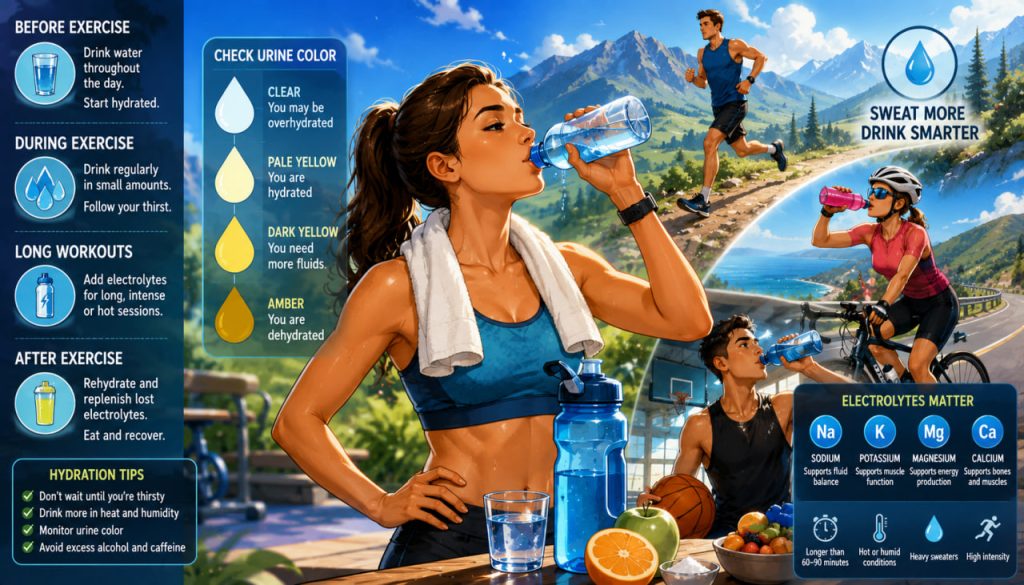
Check urine color before exercise.
Pale yellow urine usually suggests reasonable hydration, while very dark urine may suggest you need more fluids.
If you are preparing for a long run, cycling session, sports match, hike, or training in heat, start drinking fluids several hours beforehand instead of chugging water right before activity.
Drinking a large amount immediately before exercise can cause stomach discomfort and frequent bathroom breaks.
The best pre-workout hydration is steady and calm, not last-minute panic drinking.
How Much Should You Drink During Exercise?
There is no perfect number for everyone.
Sweat rate depends on body size, fitness level, heat, humidity, clothing, exercise intensity, altitude, and individual biology.
Some people barely sweat. Others lose large amounts of fluid.
The National Athletic Trainers’ Association warns that both dehydration and overhydration can compromise performance and increase health risks. Athletes need access to water but should also understand the danger of overdrinking and exercise-associated hyponatremia.
A practical starting point for many workouts is:
- For exercise under 60 minutes: drink according to thirst.
- For exercise lasting 60–90 minutes: drink small amounts regularly, especially in heat.
- For exercise over 90 minutes: consider a structured fluid and electrolyte plan.
Mayo Clinic sports medicine advice also emphasizes drinking to thirst during exercise, using plain water and sports beverages when needed.
Thirst is usually a useful guide for ordinary workouts, but long endurance events and hot conditions require more planning.
Water or Sports Drink?
For many gym sessions, short runs, casual cycling, yoga, strength training, and recreational sports, plain water is enough.
Sports drinks become more useful when exercise is:
- Long
- Intense
- Hot
- Humid
- Very sweaty
- Repeated several times in one day
- Part of an endurance event
Sports drinks usually provide water, electrolytes, and carbohydrates.
Electrolytes help replace minerals lost in sweat. Carbohydrates provide quick energy during longer activity.
Mayo Clinic notes that sports drinks with electrolytes and carbohydrates may be helpful during exercise outdoors in hot or humid weather.
Use water for simple hydration. Use electrolytes when sweat loss becomes significant. Use carbohydrates when the workout is long enough to require extra fuel.
Electrolytes: Why Sodium Matters
Electrolytes are minerals that help regulate fluid balance, nerve signaling, muscle contraction, and heart rhythm.
The most important electrolyte for sports hydration is usually sodium.
Sodium helps the body retain fluid and replace what is lost in sweat. It also reduces the risk of diluting blood sodium during long exercise.
Sports drinks may contain sodium, potassium, magnesium, and other minerals, but sodium is the key one for heavy sweating.
If you train for several hours, run a marathon, cycle long distances, hike in heat, or sweat heavily, electrolytes can be helpful.
However, electrolyte products are not automatically necessary for every workout.
A 30-minute light workout does not usually require an electrolyte drink. A hot three-hour endurance session often does.
The Danger of Overhydration
Many people worry about dehydration but forget that overhydration can also be dangerous.
Hyponatremia occurs when sodium levels in the blood become too low. In sports, this can happen when a person drinks large amounts of water over a long period without replacing sodium.
Mayo Clinic advises endurance athletes to drink only as much fluid as they lose through sweating during races and notes that thirst is generally a good guide. It also suggests considering electrolyte-containing sports beverages for demanding endurance events such as marathons or triathlons.
Symptoms of hyponatremia may include:
- Nausea
- Headache
- Confusion
- Weakness
- Vomiting
- Swelling
- Seizures in severe cases
Do not force yourself to drink constantly if you are not thirsty and not losing much sweat. More water is not always safer.
How to Estimate Your Sweat Rate
Athletes who train seriously can personalize hydration by estimating sweat rate.
A simple method:
Weigh yourself before exercise.
Train for one hour.
Track how much fluid you drink.
Weigh yourself afterward.
A large weight drop usually reflects fluid loss.
For example, if you lose 1 kilogram during a workout, that is roughly equal to about 1 liter of fluid loss, before adjusting for what you drank.
This method is not perfect, but it helps you understand your personal needs.
The best hydration plan is based on your actual sweat loss, not random internet numbers.
This is especially useful for runners, cyclists, football players, tennis players, hikers, and anyone training in hot weather.
Hydration in Hot Weather
Heat and humidity increase sweat loss and make cooling harder.
In humid weather, sweat evaporates less effectively, so the body may keep sweating without cooling as efficiently.
The CDC’s heat guidance recommends regular water intake during moderate activity in heat and notes that if sweating lasts for several hours, sports drinks with balanced electrolytes can help replace salt lost in sweat. It also advises avoiding alcohol and drinks high in caffeine or sugar during heat stress.
Useful hot-weather strategies include:
- Start hydrated.
- Drink small amounts regularly.
- Use electrolytes for long sweaty sessions.
- Wear breathable clothing.
- Take shade breaks.
- Reduce intensity when heat is extreme.
- Watch for dizziness, chills, confusion, or stopped sweating.
In heat, hydration must work together with cooling. Water alone cannot protect you from unsafe training conditions.
What to Drink After Exercise
After exercise, the goal is to restore fluid, electrolytes, and energy.
For short workouts, normal meals and water are usually enough.
After long or sweaty sessions, recovery may require more attention.
Useful options include:
- Water with a balanced meal
- Electrolyte drink
- Milk or yogurt drink
- Soup
- Fruit and salty foods
- Smoothie with protein and carbohydrates
Do not judge recovery only by how thirsty you feel. Continue drinking gradually after exercise, especially if you are still hot or your urine remains dark.
Recovery hydration works best when paired with food because meals help replace sodium, potassium, carbohydrates, and other nutrients.
Signs You May Be Dehydrated
Mild dehydration can be easy to miss.
Possible signs include:
- Thirst
- Dry mouth
- Dark urine
- Headache
- Fatigue
- Dizziness
- Muscle cramps
- Poor concentration
- Rapid heartbeat
- Unusual overheating
Severe dehydration requires urgent attention, especially if there is confusion, fainting, inability to keep fluids down, very little urination, or symptoms of heat illness.
Mayo Clinic states that severe dehydration should be treated right away, while mild to moderate dehydration can often improve with fluids; sports drinks with electrolytes and carbohydrates may also help in some situations.
If symptoms are severe, hydration advice is not enough. Medical help is needed.
Expert Perspective
The National Athletic Trainers’ Association position statement gives one of the clearest expert messages: both insufficient fluid replacement and excessive fluid intake can harm athletes. Its guidance supports individualized hydration strategies instead of rigid “one-size-fits-all” drinking rules.
This is the most important lesson for athletes.
The goal is not maximum water intake. The goal is smart fluid balance.
A person training lightly in a cool gym needs a very different plan from a marathon runner, a football player in summer heat, or a cyclist riding for four hours.
A Simple Hydration Plan for Most Athletes
For everyday training, follow this practical structure.
Before exercise, drink normally through the day and begin the session hydrated.
During exercise under one hour, use thirst as your main guide and drink water if needed.
During longer sessions, drink small amounts regularly and add electrolytes if you are sweating heavily.
During endurance events, practice your hydration strategy in training before race day.
After exercise, drink gradually and eat a balanced meal or snack.
Your body needs water, but it also needs sodium, energy, cooling, and common sense.
Interesting Facts
- Sweat rate can vary dramatically between athletes doing the same workout.
- Sodium is usually the most important electrolyte lost in sweat.
- Clear urine all day may sometimes mean overhydration, not perfect hydration.
- Thirst is usually a useful guide for ordinary exercise, but endurance events need planning.
- Hot and humid weather increases the risk of dehydration and heat illness.
- Sports drinks are most useful during long, intense, or very sweaty activity.
- Drinking too much water during endurance events can be dangerous because it may contribute to hyponatremia.
Glossary
- Hydration — Maintaining enough fluid in the body for normal function.
- Dehydration — A state in which the body loses more fluid than it takes in.
- Electrolytes — Minerals such as sodium and potassium that help regulate fluid balance, nerves, and muscles.
- Sodium — An electrolyte that helps maintain fluid balance and is lost in sweat.
- Hyponatremia — Dangerously low blood sodium, sometimes caused by overdrinking water during long exercise.
- Sweat Rate — The amount of fluid a person loses through sweating during a specific time.
- Prehydration — Drinking before exercise to begin activity in a well-hydrated state.
- Rehydration — Restoring fluid after sweating, illness, or dehydration.
- Heat Illness — A group of heat-related conditions that can occur when the body cannot cool itself properly.
- Sports Drink — A beverage designed to provide fluid, electrolytes, and often carbohydrates during or after exercise.