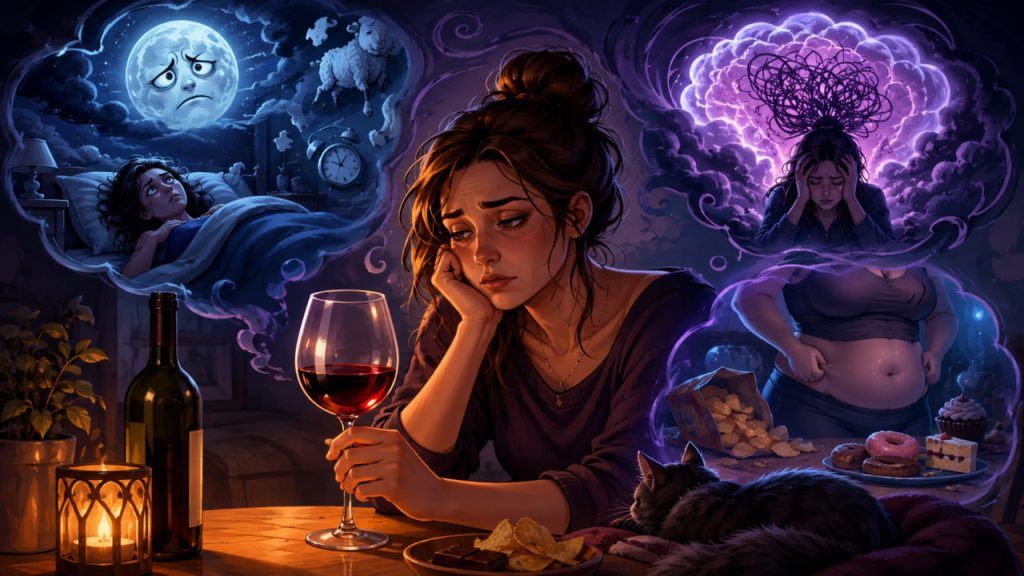
Alcohol is often wrapped in soft language: “a glass to relax,” “a little wine for the heart,” “a drink to sleep better,” “just social drinking.” But biologically, alcohol is not a wellness product. It is a psychoactive substance that affects the brain, liver, metabolism, hormones, sleep architecture, appetite, mood, and cardiovascular system.
The idea that a nightly glass of wine is harmless has become increasingly difficult to defend.
The World Health Organization states clearly that no level of alcohol consumption is safe for health, especially because alcohol is linked with cancer risk and other harms. WHO also notes that even so-called light and moderate drinking contributes to alcohol-attributable cancers in Europe.
Alcohol may feel relaxing in the moment, but its effects on sleep, weight, and mental health are largely negative.
What Alcohol Really Does in the Body
Alcohol, or ethanol, is absorbed quickly into the bloodstream. It reaches the brain, where it changes neurotransmitter activity, slows reaction time, reduces inhibition, and alters judgment.
The body treats alcohol as a toxin that must be metabolized.
The liver breaks alcohol down into acetaldehyde, a toxic compound, and then into acetate. This process places metabolic stress on the body and can interfere with normal energy use.
Alcohol does not simply “pass through” the body. It forces the body to prioritize detoxification.
That priority affects sleep, fat metabolism, blood sugar regulation, hydration, mood stability, and recovery.
Alcohol and Sleep: Why It Feels Helpful but Makes Sleep Worse
Many people drink wine or another alcoholic beverage because they think it helps them fall asleep.
This belief is partly understandable.
Alcohol can reduce sleep onset latency, meaning a person may fall asleep faster. But falling asleep faster is not the same as sleeping well.
Scientific reviews show that alcohol can make the first half of sleep feel deeper while increasing sleep disruption in the second half of the night.
That is why people may fall asleep quickly after drinking but wake up at 3 a.m., feel restless, sweat, have a dry mouth, or wake unrefreshed.
Alcohol sedates the brain; it does not create healthy sleep.
Alcohol Disrupts REM Sleep
REM sleep is important for emotional processing, memory, learning, creativity, and mental restoration.
Alcohol commonly suppresses REM sleep, especially during the first part of the night, and disrupts sleep continuity later. Research on alcohol and sleep-related problems reports that moderate alcohol doses consistently reduce REM sleep duration, especially in the second half of the night.
This matters because sleep quality is not only about hours in bed.
A person can sleep for eight hours and still wake up tired if sleep stages are disrupted.
A glass of wine before bed can steal the exact type of sleep the brain needs for emotional balance.
Over time, alcohol-related sleep disruption can worsen fatigue, irritability, concentration problems, cravings, and stress sensitivity.
Alcohol Can Worsen Snoring and Sleep Apnea
Alcohol relaxes muscles in the throat and airway.
This can make snoring worse and may aggravate obstructive sleep apnea in vulnerable people.
Sleep apnea already reduces oxygen levels and disrupts sleep repeatedly through the night. Adding alcohol can make breathing instability worse.
This is especially concerning for people who wake with headaches, experience daytime sleepiness, snore loudly, or have high blood pressure.
Alcohol before bed is especially harmful when breathing during sleep is already compromised.
Alcohol and Weight Gain
Alcohol contributes to weight gain in several ways.
First, alcohol contains calories: about 7 calories per gram, which is almost as energy-dense as fat. These calories are often easy to underestimate.
The National Institute on Alcohol Abuse and Alcoholism provides tools showing how quickly alcohol calories add up across drinks and weeks.
A glass of wine, cocktail, beer, or sweet alcoholic drink may seem small, but repeated drinking can quietly add hundreds or thousands of calories per week.
Alcohol calories are easy to drink and hard to notice.
Unlike protein or fiber-rich foods, alcohol does not create useful fullness or provide meaningful nutrition.
Alcohol Blocks Fat Burning
When alcohol enters the body, the liver prioritizes metabolizing it.
That means fat oxidation can be reduced while the body deals with alcohol first.
This does not mean every sip instantly becomes body fat. But it does mean alcohol can interfere with normal metabolic priorities.
Alcohol also tends to appear alongside high-calorie foods: cheese, chips, fried snacks, desserts, late-night meals, sauces, and restaurant portions.
Alcohol weakens both metabolism and decision-making at the same time.
That combination makes weight control harder.
Alcohol Increases Appetite and Impulsive Eating
Alcohol lowers inhibition.
That effect is not limited to speech or behavior. It also affects food choices.
After drinking, people are more likely to overeat, choose salty or fatty foods, ignore fullness signals, and snack late at night.
Alcohol can also disrupt blood sugar control, which may increase hunger, fatigue, and cravings later.
The result is a common pattern:
A glass becomes two.
Dinner becomes heavier.
Sleep becomes worse.
Morning energy drops.
Cravings increase.
Exercise feels harder.
Alcohol creates a cycle that pushes the body away from stable weight regulation.
Alcohol and Mental Health
Alcohol is often used as emotional self-medication.
People drink to reduce anxiety, loneliness, stress, sadness, social discomfort, or racing thoughts.
But alcohol is a poor mental-health strategy because its calming effect is temporary and often followed by a rebound.
Alcohol changes brain chemistry, affects sleep, worsens emotional regulation, and can increase anxiety and depressive symptoms over time.
Research on alcohol and depression notes that excessive alcohol consumption causes morbidity and mortality and is linked with increased risk of depressive episodes, especially among older adults.
Alcohol may numb feelings briefly, but it often makes the nervous system more unstable afterward.
“Wine Helps Me Relax” Is a Dangerous Half-Truth
A glass of wine may feel relaxing because alcohol increases sedation and reduces inhibition.
But that is not the same as true recovery.
Real recovery restores the nervous system. Alcohol burdens it.
The next day, even moderate drinking may contribute to:
- Lower mood
- More anxiety
- Poorer focus
- Less patience
- Reduced motivation
- Worse sleep quality
- More cravings
- Greater emotional reactivity
This is why some people experience “hangxiety”: anxiety, worry, irritability, or shame after drinking.
The relaxed feeling is rented. The body pays interest later.
Alcohol and Stress
Alcohol does not remove stress. It delays it.
When people repeatedly use alcohol to cope, they miss the opportunity to build healthier stress-regulation skills.
Instead of processing the problem, the brain learns:
“When I feel bad, I drink.”
That pattern can become stronger with repetition.
Over time, the amount needed to feel the same effect may increase because tolerance develops.
Using alcohol for stress relief can turn an emotional problem into a biological habit.
Healthier stress tools include sleep, movement, therapy, breathing exercises, journaling, time outdoors, social support, and reducing overload.
The Myth of the Healthy Glass of Wine
The “wine is good for the heart” idea has been repeated for decades.
But modern public-health messaging is much more cautious.
WHO’s position is direct: alcohol is not safe for health, and risk starts from the first drink.
Claims about moderate drinking benefits are complicated by confounding factors. People who drink lightly may differ from non-drinkers in income, diet, social life, healthcare access, and pre-existing health conditions.
That makes it difficult to prove that alcohol itself creates benefits.
No one needs alcohol for heart health, sleep, weight control, or mental stability.
Whatever small benefit someone imagines from wine can be replaced by safer habits: exercise, Mediterranean-style eating, social connection, quality sleep, stress management, and medical care when needed.
Alcohol and Cancer Risk
The negative context cannot ignore cancer.
WHO states that alcohol causes at least seven types of cancer, including cancers of the mouth, throat, larynx, esophagus, liver, colorectum, and female breast.
This is one of the strongest reasons public-health experts reject the idea of a safe drinking level.
A drink does not need to cause visible drunkenness to contribute to long-term biological risk.
The absence of immediate symptoms does not mean the absence of harm.
Expert Perspective
The World Health Organization’s European office gives one of the clearest expert statements on alcohol: there is no safe level of alcohol consumption for health. Its position is based largely on alcohol’s established link with cancer and the fact that risk begins even at low levels.
Sleep researchers also show that alcohol is not a true sleep aid. A major review found that alcohol can shorten the time it takes to fall asleep but increases disruption later in the night.
Together, these expert views remove the romantic illusion around the “healthy glass of wine.”
What Happens When People Reduce Alcohol?
Many people notice improvements quickly when they reduce or stop drinking.
Common changes include:
- Better sleep quality
- Easier mornings
- Reduced anxiety
- More stable mood
- Fewer cravings
- Lower calorie intake
- Better exercise recovery
- Improved skin hydration
- Clearer concentration
- More control over routines
The body does not need wine to relax.
It needs rest, nutrition, hydration, sunlight, movement, connection, and psychological safety.
Removing alcohol often reveals how much energy the body was spending recovering from it.
P.S. Having realized in practice that if I consume alcohol I will quickly die, I stopped doing it and replaced it with meditation – and in doing so I gained health and happiness, which I wish for you too.
Interesting Facts
- Alcohol can make people fall asleep faster while still making sleep quality worse.
- REM sleep is often reduced after drinking, which may affect mood and memory.
- Alcohol contains about 7 calories per gram, but it provides no essential nutrition.
- A “small” drink can still add meaningful weekly calories if repeated often.
- Alcohol can increase appetite and reduce food-related self-control.
- WHO states that no level of alcohol consumption is safe for health.
- Alcohol is linked with at least seven types of cancer.
- The calming effect of alcohol can be followed by anxiety, irritability, and poor sleep.
Glossary
- Alcohol — A psychoactive substance, usually ethanol, found in wine, beer, spirits, and other alcoholic drinks.
- Ethanol — The type of alcohol consumed in alcoholic beverages.
- Acetaldehyde — A toxic compound produced when the body breaks down alcohol.
- REM Sleep — A sleep stage involved in dreaming, emotional processing, memory, and brain recovery.
- Sleep Architecture — The structure and sequence of sleep stages through the night.
- Hyponutrition — Poor nutritional quality despite calorie intake; alcohol contributes calories without essential nutrients.
- Tolerance — A state where the body needs more of a substance to feel the same effect.
- Hangxiety — Anxiety, nervousness, or emotional discomfort after drinking alcohol.
- Blood Alcohol Concentration — The amount of alcohol in the bloodstream.
- Alcohol Use Disorder — A medical condition involving impaired control over alcohol use despite harm.