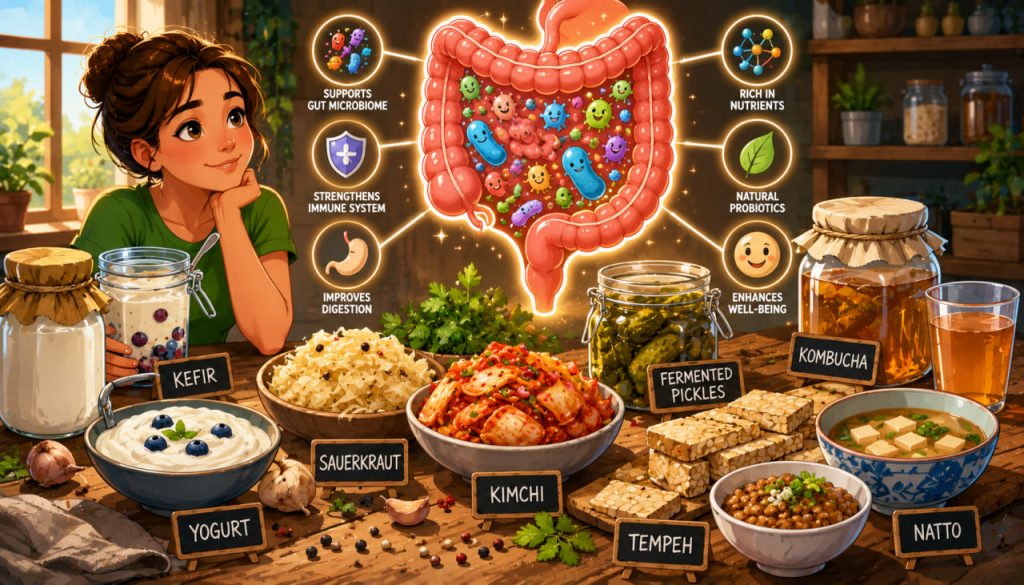
Fermented foods have moved from traditional kitchens into modern nutrition conversations. Yogurt, kefir, sauerkraut, kimchi, miso, tempeh, kombucha, fermented pickles, and sourdough bread are now often discussed as “gut-friendly” foods.
But fermentation is not a new wellness trend.
For thousands of years, people used fermentation to preserve food, improve flavor, and make ingredients easier to digest. Today, science is helping explain why these foods may benefit the gut microbiome, immune system, metabolism, and overall health.
The most important point is simple: fermented foods are not magic, but they can be a valuable part of a balanced, fiber-rich diet.
What Are Fermented Foods?
Fermented foods are foods or drinks transformed by microorganisms such as bacteria, yeasts, or molds.
During fermentation, these microbes break down sugars and other food components. This process can create acids, gases, alcohol, enzymes, vitamins, aroma compounds, and bioactive substances.
The International Scientific Association for Probiotics and Prebiotics defines fermented foods as foods made through desired microbial growth and enzymatic conversions of food components.
Common fermented foods include:
- Yogurt
- Kefir
- Kimchi
- Sauerkraut
- Miso
- Tempeh
- Natto
- Kombucha
- Fermented cucumbers
- Sourdough bread
- Certain cheeses
Fermentation changes food biologically, chemically, and nutritionally.
That is why fermented cabbage tastes different from fresh cabbage, milk becomes yogurt, and soybeans can become miso or tempeh.
Fermented Foods and the Gut Microbiome
The gut microbiome is the community of microorganisms living mainly in the large intestine.
These microbes help digest fiber, produce short-chain fatty acids, support the gut barrier, communicate with immune cells, and influence metabolism.
Fermented foods can affect the gut microbiome in several ways.
They may introduce live microbes, provide microbial metabolites, change digestion, and support microbial diversity. A 2022 review published through the National Institutes of Health concluded that fermented foods can affect the gut microbiome in both the short and long term and should be considered an important part of the human diet.
A diverse gut microbiome is generally considered more resilient than a low-diversity one.
This does not mean every fermented food works the same way. Yogurt, kimchi, kefir, miso, and kombucha contain different microbes and compounds.
Variety matters.
Are Fermented Foods the Same as Probiotics?
Many people call all fermented foods “probiotics,” but this is not technically correct.
A probiotic is a live microorganism that has been studied and shown to provide a specific health benefit when consumed in adequate amounts.
Not all fermented foods meet that definition.
The International Scientific Association for Probiotics and Prebiotics explains that fermented foods are generally not automatically probiotics, because only some contain specific microbes with proven benefits at defined amounts.
For example, some yogurts contain well-studied live cultures. Some shelf-stable fermented products may be pasteurized, meaning the microbes were killed by heat.
Fermented food can still be valuable even when it is not officially a probiotic.
It may contain useful nutrients, acids, peptides, enzymes, and other compounds created during fermentation.
Why Fermented Foods May Reduce Inflammation
One of the most interesting studies on fermented foods came from Stanford researchers.
In a 10-week dietary study, people eating a diet rich in fermented foods showed increased microbiome diversity and reduced inflammatory markers. The published Cell study reported that the high-fermented-food diet steadily increased microbiota diversity and decreased inflammatory markers.
This does not mean fermented foods cure inflammation-related diseases.
It means diet can influence immune signals, and fermented foods may be one useful tool.
The gut and immune system are closely connected.
A large part of the immune system interacts with the gut environment. When the microbiome is healthier and more balanced, immune communication may become more regulated.
Fermented Dairy: Yogurt and Kefir
Yogurt and kefir are among the most accessible fermented foods.
Yogurt is made by fermenting milk with specific bacteria, usually Lactobacillus bulgaricus and Streptococcus thermophilus. Kefir is typically more microbially diverse because it is made with kefir grains containing bacteria and yeasts.
Fermented dairy may be easier to digest for some people because fermentation reduces lactose.
Yogurt and kefir can also provide:
- Protein
- Calcium
- B vitamins
- Live cultures, if not heat-treated
- Bioactive fermentation products
Choose plain versions when possible.
Many flavored yogurts and drinkable kefirs contain high amounts of added sugar.
The best fermented dairy is usually plain, unsweetened, and labeled with live active cultures.
Fermented Vegetables: Sauerkraut and Kimchi
Sauerkraut and kimchi are made through lactic acid fermentation.
Sauerkraut is usually fermented cabbage with salt. Kimchi often contains cabbage or radish, chili, garlic, ginger, and other seasonings.
These foods can provide fiber, plant compounds, organic acids, and live lactic acid bacteria when unpasteurized.
They are also flavorful, which makes them useful for improving meals without relying on heavy sauces.
However, many fermented vegetables are high in sodium.
People with high blood pressure, kidney disease, or sodium restrictions should use smaller portions and choose lower-salt options when available.
Fermented vegetables are powerful as small daily additions, not necessarily as large servings.
Fermented Soy: Miso, Tempeh, and Natto
Soy fermentation creates foods with very different textures and flavors.
Miso is a salty fermented soybean paste often used in soups and sauces.
Tempeh is a firm fermented soybean cake that can be sliced, grilled, crumbled, or stir-fried.
Natto is a sticky Japanese fermented soybean food with a strong flavor and a distinctive texture.
Fermented soy foods can provide protein, minerals, fiber, and bioactive compounds.
Tempeh is especially useful as a plant-based protein.
Miso is nutritious but salty, so it is best used as a flavoring rather than eaten in large quantities.
Fermentation can make plant proteins more interesting, versatile, and digestible.
Kombucha and Fermented Drinks
Kombucha is fermented tea made with a culture of bacteria and yeast.
It has a tart flavor and often contains small amounts of alcohol, carbonation, organic acids, and tea polyphenols.
Some people enjoy it as an alternative to soda.
However, kombucha varies widely. Some products are high in sugar, and homemade kombucha can be unsafe if prepared improperly.
People who are pregnant, immunocompromised, or sensitive to acidity should be cautious and ask a healthcare professional when needed.
A fermented drink is not automatically healthy just because it sounds natural.
Check sugar content, storage requirements, and quality.
How to Add Fermented Foods Safely
Fermented foods are usually safe for most healthy people, but they should be introduced gradually.
Start with small portions:
- A few spoonfuls of yogurt
- One tablespoon of sauerkraut
- A small glass of kefir
- A small serving of tempeh
- A little miso in soup
Some people may notice temporary gas or bloating as their gut adjusts.
Those with serious digestive disorders, weakened immune systems, histamine intolerance, severe food allergies, or complex medical conditions should be more careful.
More is not always better. Consistency and variety matter more than large portions.
What to Look for When Buying Fermented Foods
Read labels carefully.
Look for phrases such as:
- “Live and active cultures”
- “Unpasteurized”
- “Raw fermented”
- “Naturally fermented”
- “Refrigerated”
Avoid products that are mostly sugar, artificial flavoring, or vinegar-pickled rather than truly fermented.
Pickles made with vinegar can be delicious, but they are not the same as naturally fermented pickles with live cultures.
For yogurt and kefir, choose unsweetened versions.
For sauerkraut and kimchi, check sodium levels.
For kombucha, check sugar and alcohol content.
Marketing words are less important than ingredients, live cultures, and overall food quality.
Expert Perspective
The Stanford study on gut-microbiota-targeted diets showed that fermented foods may increase microbiome diversity and reduce inflammatory markers over a relatively short intervention period.
At the same time, ISAPP experts emphasize an important distinction: fermented foods are a broad food category, while probiotics require specific evidence for specific strains and benefits.
The practical expert message is balanced: eat fermented foods as part of a varied diet, but do not treat them as medicine or confuse them with guaranteed probiotic therapy.
Fermented Foods Work Best With Fiber
Fermented foods are helpful, but they should not replace fiber-rich foods.
Gut bacteria need fuel from plants.
That means the best gut-supportive diet includes:
- Vegetables
- Fruits
- Beans
- Lentils
- Whole grains
- Nuts
- Seeds
- Herbs
- Fermented foods
Harvard Health notes that both fiber and fermented foods can support the gut microbiome and may contribute to better health and mood.
Think of fiber as food for your microbes and fermented foods as microbial diversity support.
Together, they create a stronger foundation than either one alone.
Interesting Facts
- Fermentation was used long before refrigeration to preserve food.
- Not all fermented foods contain live microbes by the time they are eaten.
- Pasteurization can kill live cultures, even if the food was originally fermented.
- Kefir often contains both bacteria and yeasts.
- Sourdough fermentation can change bread flavor and digestibility, but baking kills most live microbes.
- Kimchi and sauerkraut are both based on lactic acid fermentation.
- Fermented foods can be sour because microbes produce organic acids.
Glossary
- Fermentation — A process in which microorganisms transform food components through biological activity.
- Fermented Food — A food made through desired microbial growth and enzymatic changes.
- Gut Microbiome — The community of microorganisms living in the digestive tract.
- Probiotic — A live microorganism with a proven health benefit when consumed in adequate amounts.
- Lactic Acid Bacteria — Bacteria that produce lactic acid during fermentation.
- Live Cultures — Living microorganisms present in some fermented foods.
- Pasteurization — Heat treatment used to kill microbes and improve food safety or shelf life.
- Kefir Grains — A culture of bacteria and yeasts used to ferment milk or other liquids.
- Bioactive Compounds — Food-derived substances that can influence biological processes.
- Short-Chain Fatty Acids — Compounds produced by gut bacteria when they ferment fiber.