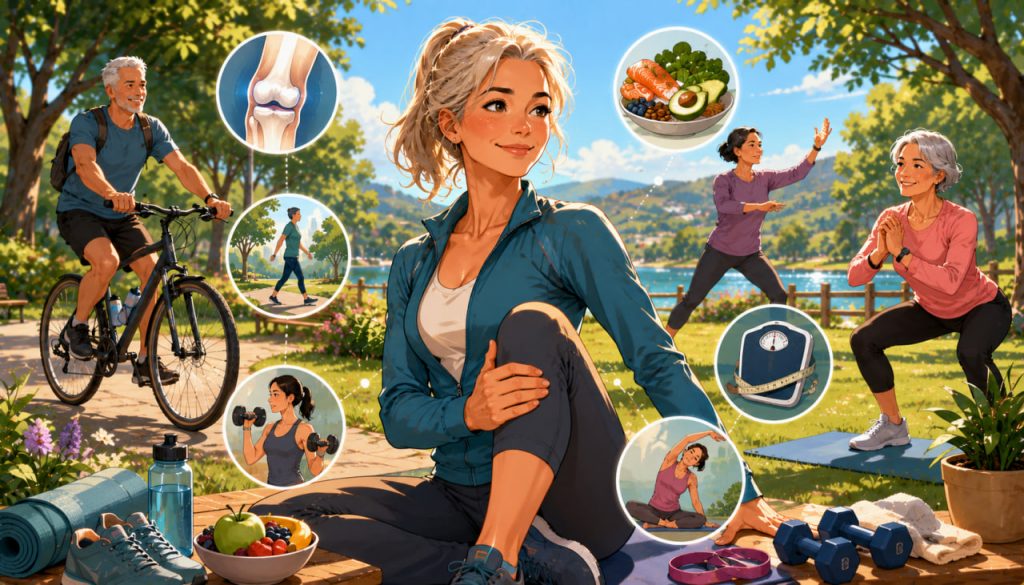
Healthy joints make everyday independence possible. They allow you to walk, climb stairs, carry groceries, exercise, work, travel, and get up from a chair without assistance. Although joints naturally change with age, stiffness and reduced mobility are not inevitable consequences of getting older.
The strongest protection is not complete rest or an expensive supplement. It is a combination of regular movement, muscle strengthening, healthy body weight, good balance, injury prevention, and early attention to persistent symptoms.
Joint health is also closely connected to muscle strength. Strong muscles absorb part of the load that would otherwise fall directly on the knees, hips, spine, shoulders, and ankles. The more capable the muscles surrounding a joint are, the better supported that joint usually becomes.
What Happens to Joints With Age?
A joint is the place where two or more bones meet. Depending on the joint, it may include cartilage, ligaments, tendons, muscles, synovial fluid, and a protective capsule.
Cartilage provides a smooth surface that helps bones move with limited friction. With age, joint tissues may become less resilient, muscles may weaken, and previous injuries may begin to cause symptoms.
However, age alone does not guarantee severe joint disease. Genetics, body weight, injuries, occupation, muscle condition, physical activity, and inflammatory illness all influence joint health.
Osteoarthritis develops when tissues throughout a joint gradually change and break down. It commonly affects the hands, knees, hips, neck, and lower back.
Aging changes joints, but lifestyle strongly influences how well they continue to function.
Keep Moving Instead of Protecting Joints With Rest
When joints feel stiff, resting may seem like the safest response. Brief rest can be appropriate after an injury or during an inflammatory flare, but long periods of inactivity usually weaken muscles and reduce mobility.
Regular physical activity can reduce arthritis-related pain, improve physical function, and delay limitations. The CDC recommends joint-friendly activities such as walking, cycling, swimming, water exercise, dancing, gardening, and tai chi.
Movement also helps joints pass through their normal range of motion and keeps the surrounding muscles active.
A useful rule is to begin gently and increase duration or intensity gradually. Sudden jumps from inactivity to demanding exercise increase the risk of strains and overuse injuries.
Joints are designed to move, and safe movement is usually part of the solution rather than the problem.
Build Strength Around the Joints
Strength training is one of the most valuable habits for long-term mobility.
Muscles help stabilize joints, maintain posture, control movement, and reduce the stress placed on vulnerable tissues. Weak thigh and hip muscles, for example, can make walking, stair climbing, and balance more difficult.
Useful exercises may include:
- Chair squats
- Sit-to-stand repetitions
- Step-ups
- Calf raises
- Resistance-band rows
- Wall push-ups
- Hip-strengthening movements
- Light free-weight exercises
Adults should generally perform muscle-strengthening activity involving major muscle groups on at least two days each week. Older adults should also include activities that develop balance and coordination.
The correct resistance should feel challenging while allowing controlled technique. Painful, jerky, or poorly aligned repetitions are not the goal.
Strong muscles act like an active support system for your joints.
Protect Flexibility and Range of Motion
Flexibility helps you reach, bend, turn, dress, and move comfortably.
Gentle stretching can maintain movement around the hips, ankles, shoulders, spine, and knees. It is usually better to stretch warm muscles after walking or another short activity rather than forcing a cold joint.
Useful mobility habits include:
- Shoulder circles
- Gentle neck turns
- Ankle circles
- Calf stretches
- Hip flexor stretches
- Chest-opening movements
- Controlled knee bending
- Slow spinal rotation
The NHS recommends building flexibility exercises gradually and combining them with other forms of regular activity.
Stretching should create mild tension, not sharp pain. A joint that suddenly loses movement, locks, or becomes markedly swollen needs evaluation rather than aggressive stretching.
Maintain a Healthy Weight Without Crash Dieting
Body weight has a direct mechanical effect on weight-bearing joints, particularly the knees, hips, feet, and lower back.
For people who are overweight or obese, weight reduction can decrease stress on these joints, improve movement, and reduce pain.
The goal should be gradual, sustainable change rather than extreme restriction. Rapid weight loss can reduce muscle mass, and losing muscle may worsen stability and physical function.
A joint-friendly eating pattern should support healthy weight and muscle maintenance through:
- Vegetables and fruit
- Whole grains
- Beans and lentils
- Fish, eggs, dairy, tofu, or other protein sources
- Nuts and seeds
- Adequate fluids
- Moderate portions
Weight management protects joints best when it preserves strength rather than simply lowering the number on a scale.
Choose Joint-Friendly Cardio
Cardiovascular fitness supports circulation, endurance, body-weight management, heart health, and the ability to stay independent.
Good low-impact options include:
- Brisk walking
- Cycling
- Swimming
- Water aerobics
- Elliptical exercise
- Dancing
- Rowing when comfortable
Swimming and cycling can improve fitness, mobility, and strength without placing excessive stress through the joints.
High-impact exercise is not automatically harmful for everyone. People with healthy joints and proper conditioning may run or jump safely. The important factors are gradual progression, suitable footwear, recovery, strength, technique, and existing joint conditions.
Train Balance to Prevent Falls
A fall can injure the hip, knee, shoulder, wrist, or spine and may permanently reduce confidence and mobility.
Balance exercises become especially important with age. Useful options include:
- Standing on one leg near a stable support
- Heel-to-toe walking
- Tai chi
- Controlled step exercises
- Sideways walking
- Supported yoga movements
Older adults with reduced mobility should perform activities that improve balance several days per week.
Vision checks, suitable footwear, good lighting, secure rugs, and uncluttered walking spaces are also part of joint protection because they reduce fall risk.
Do Supplements Protect Cartilage?
Many products are marketed for joint health, including glucosamine, chondroitin, collagen, turmeric, and various herbal blends.
Evidence varies, and no supplement can reliably rebuild severely damaged cartilage. Products may also interact with medication or vary in quality.
A balanced diet, regular exercise, healthy weight, sleep, and appropriate medical treatment have stronger practical importance than relying on supplements alone.
People considering supplements should discuss them with a clinician or pharmacist, especially when taking blood thinners, diabetes medication, or several prescriptions.
A supplement should never replace movement, diagnosis, or evidence-based treatment.
Respect Pain Without Becoming Afraid of Movement
Some muscle fatigue or mild temporary discomfort can occur when starting exercise. Sharp pain, rapid swelling, instability, locking, or pain that continues to worsen should not be ignored.
Reduce intensity and seek professional advice when necessary.
Pain does not always equal new structural damage, but it is still useful information. A physical therapist can help adapt movements, improve technique, strengthen weak areas, and develop a realistic progression.
Expert Perspective
The National Institute of Arthritis and Musculoskeletal and Skin Diseases states that exercise is a central part of osteoarthritis care because it can reduce pain and stiffness while increasing flexibility, strength, and endurance.
The CDC similarly emphasizes that joint-friendly activity can improve function and quality of life, even for people already living with arthritis.
The expert recommendation is not to avoid using aging joints, but to train the body around them safely and consistently.
When Joint Symptoms Need Medical Attention
Seek medical assessment when you experience:
- A hot, red, or severely swollen joint
- Sudden inability to bear weight
- Joint deformity after an injury
- Locking or repeated giving way
- Persistent morning stiffness
- Fever with joint pain
- Pain that regularly interrupts sleep
- Symptoms lasting several weeks
- Progressive loss of movement
Joint pain can result from osteoarthritis, injury, bursitis, gout, rheumatoid arthritis, infection, or other conditions. The correct treatment depends on the cause.
Interesting Facts
- Joint-friendly exercise can reduce arthritis pain rather than inevitably making it worse.
- Strong muscles support joints and improve control during everyday movement.
- Swimming and cycling can build fitness with relatively low impact on the knees and hips.
- Balance training protects joints indirectly by reducing the likelihood of falls.
- Stiffness after inactivity can occur with osteoarthritis and may improve after gentle movement.
- Maintaining mobility requires strength, balance, endurance, and flexibility—not stretching alone.
- Healthy aging does not require being completely free from disease; it includes preserving the ability to do personally meaningful activities.
Glossary
- Joint — A structure where two or more bones meet and movement may occur.
- Cartilage — Smooth connective tissue that covers and cushions the ends of bones in many joints.
- Osteoarthritis — A joint disease involving changes and breakdown in cartilage and other joint tissues.
- Range of Motion — The extent through which a joint can move.
- Low-Impact Exercise — Physical activity that places relatively limited impact stress on joints.
- Resistance Training — Exercise in which muscles work against weights, bands, body weight, or another form of resistance.
- Mobility — The ability to move the body and its joints effectively during daily activities.
- Synovial Fluid — Lubricating fluid found inside many movable joints.