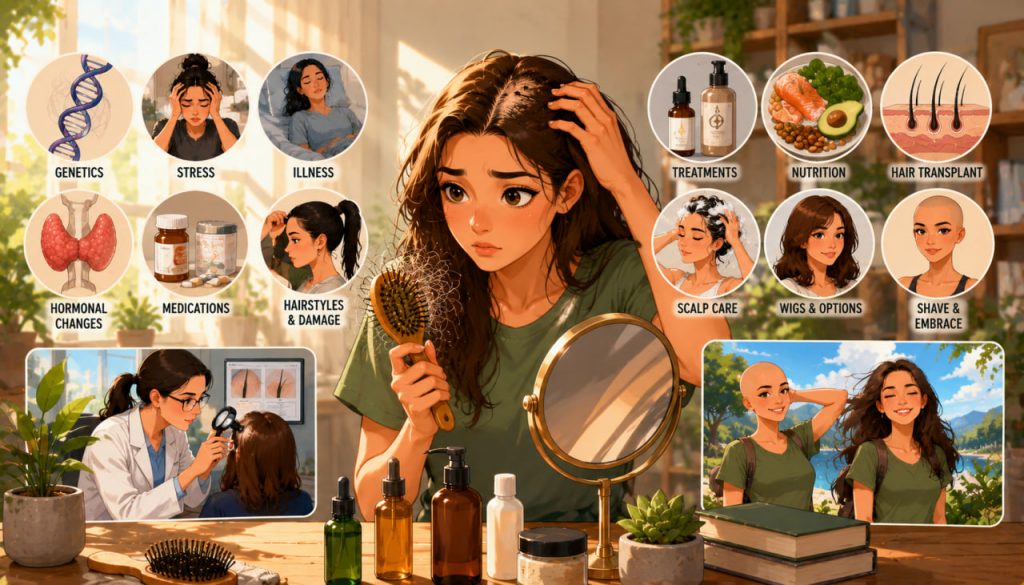
Hair loss can be temporary, gradual, sudden, genetic, hormonal, autoimmune, nutritional, or related to illness and medication. It may appear as increased shedding in the shower, a widening part, a receding hairline, isolated bald patches, or thinning across the entire scalp.
For some people, losing hair is only a cosmetic change. For others, it affects confidence, identity, relationships, and emotional well-being. There is no universal rule saying that hair must be restored. Treatment is a personal choice, but understanding the cause is important because some forms of hair loss can signal a medical condition or become permanent without early care.
Choosing a shaved or bald look can be practical and empowering. However, accepting hair loss and investigating its cause are not mutually exclusive. You can feel comfortable without hair while still making sure your health is not being overlooked.
Normal Shedding vs. True Hair Loss
Hair naturally follows a growth cycle. Individual hairs grow, rest, fall out, and are replaced.
The American Academy of Dermatology states that losing approximately 50 to 100 hairs per day is normal. Losing significantly more may indicate excessive shedding, medically known as telogen effluvium.
Normal shedding is usually distributed across the scalp and does not rapidly create visible bald areas. Signs that may suggest more significant hair loss include:
- A widening part
- A thinner ponytail
- A receding hairline
- A slowly expanding bald area
- Smooth round patches
- Sudden clumps of hair
- Loss of eyebrows or eyelashes
The AAD notes that early signs can include gradual thinning, a growing bald spot, a receding hairline, or reduced ponytail fullness.
The number of hairs in the drain matters less than whether your overall density and growth pattern are changing.
Genetic Pattern Hair Loss
The most common cause of permanent hair loss is hereditary pattern baldness, also called androgenetic alopecia.
In men, it often produces a receding hairline, thinning at the temples, or loss around the crown. In women, it more commonly appears as gradual thinning around the central part and top of the scalp rather than complete baldness.
Genes inherited from either side of the family can influence susceptibility. Age and the follicles’ sensitivity to hormones also play important roles.
Pattern hair loss usually develops slowly. Early diagnosis matters because treatment is generally better at preserving existing hair than restoring follicles that have been inactive for a long time.
Stress, Illness, and Telogen Effluvium
A major physical or emotional stressor can push more hairs than usual into the resting phase. Several months later, widespread shedding may begin.
Common triggers include:
- High fever or serious illness
- Surgery
- Childbirth
- Major emotional stress
- Rapid weight loss
- Significant dietary restriction
- Some medications
The AAD identifies childbirth, substantial weight loss, and severe stress as common triggers of excessive shedding.
This type of shedding is often temporary. After the trigger resolves, growth may gradually recover, although improvement is not immediate because hair cycles move slowly. Post-illness shedding, including shedding after COVID-19, may begin months after recovery; the AAD reports that regrowth often begins within several months.
Hair may start falling after the stressful event is already over, which is why the connection is easy to miss.
Autoimmune Hair Loss
Alopecia areata occurs when the immune system attacks hair follicles. It often begins with sudden, smooth, round or oval bald patches, although it can affect larger areas of the scalp or body.
Some people also lose eyebrows, eyelashes, beard hair, or body hair. Nail changes may occur as well.
Hair may regrow spontaneously, but the condition can recur. Dermatologists may recommend treatments such as corticosteroids or other medicines depending on the person’s age, extent of hair loss, and medical history.
A smooth bald patch should not automatically be treated with cosmetic oils or supplements. It needs an accurate diagnosis.
Hormones, Medical Conditions, and Medication
Hair loss can accompany hormonal changes during pregnancy, after childbirth, around menopause, or with thyroid disorders. It can also occur with scalp infections, lupus, diabetes, nutritional deficiencies, or the hair-pulling disorder trichotillomania.
Some medications and cancer treatments can also cause thinning or shedding. Chemotherapy-related hair loss may begin within weeks of starting treatment, although the pattern varies by medicine and dose.
Do not stop a prescribed medication on your own because you suspect it is affecting your hair. A clinician can assess alternatives, dosage, and the risks of changing treatment.
Hairstyles and Hair-Care Damage
Tight hairstyles can repeatedly pull on follicles and cause traction alopecia.
Risky styles may include very tight:
- Braids
- Ponytails
- Buns
- Extensions
- Cornrows
- Hairpieces attached under tension
The AAD warns that frequent pulling can eventually produce permanent hair loss. Pain during styling is an important warning sign that the tension may be excessive.
Bleaching, chemical straightening, excessive heat, and rough brushing can also break the hair shaft. Breakage is not always the same as follicle-related hair loss, but it can make the hair look significantly thinner.
A hairstyle should not hurt, burn, or continuously pull at the scalp.
Do Hair Vitamins and Supplements Work?
Supplements are frequently marketed as easy solutions, but they are not automatically safe or effective.
A nutrient deficiency can contribute to hair problems, and correcting a confirmed deficiency may help. However, taking large doses without testing can be unnecessary or harmful. The AAD cautions that excessive amounts of some nutrients can actually worsen hair loss.
Before buying supplements, it is better to discuss possible causes with a doctor or dermatologist. Depending on symptoms and medical history, testing may be considered for conditions such as anemia, thyroid disease, or nutritional deficiency.
More vitamins do not necessarily create more hair.
Which Treatments Can Help?
Treatment depends entirely on the diagnosis.
Options may include:
- Treating an underlying illness or deficiency
- Changing damaging hairstyles
- Topical minoxidil
- Prescription medicines
- Corticosteroids for certain autoimmune forms
- Treatment for scalp infection
- Hair transplantation for suitable permanent pattern baldness
- Cosmetic camouflage, wigs, or scalp micropigmentation
Mayo Clinic lists minoxidil among the common treatments for hereditary pattern hair loss and notes that some conditions may improve spontaneously or with treatment.
No treatment works for everyone, and results usually require patience. The NHS emphasizes that treatment effectiveness varies and that no option is guaranteed to restore all lost hair.
A hair transplant may suit some people with stable hereditary baldness, but it is generally not appropriate for every type of alopecia.
Is It Better to Shave Everything Off?
For some people, yes.
A shaved head can offer:
- A controlled and intentional appearance
- Less time spent styling
- Lower spending on cosmetic hair products
- Relief from hiding thin areas
- A cleaner transition during extensive hair loss
- Greater comfort in hot weather
For others, keeping or restoring hair remains emotionally important. Both responses are valid.
Shaving does not make hair grow back thicker. It cuts the shaft at the surface but does not change the number, size, or biological activity of follicles.
A bald scalp also needs care. Without hair, the scalp receives more direct sunlight and may be more vulnerable to sunburn. Use shade, a hat, or broad-spectrum sunscreen on exposed skin.
Being bald is not a health failure. It can be a style, a practical choice, or an accepted part of life.
Expert Perspective
Dermatologists emphasize that effective treatment begins with finding the cause. The AAD recommends consulting a board-certified dermatologist because many forms of hair loss look similar but require different treatment.
This is especially important for scarring alopecia, in which inflammation damages follicles and may cause permanent loss. Early assessment can help slow further damage even when already lost hair cannot be restored.
The expert priority is diagnosis first, products second.
When to Seek Medical Advice
Arrange a medical evaluation when hair loss is:
- Sudden or patchy
- Rapidly worsening
- Associated with scalp pain, redness, scaling, or scarring
- Accompanied by fatigue, weight changes, or hormonal symptoms
- Affecting eyebrows or eyelashes
- Beginning after a new medicine
- Causing significant distress
- Occurring in a child
Mayo Clinic advises medical assessment for sudden, patchy, or unusually heavy shedding because it may indicate an underlying condition requiring treatment.
The NHS also recommends seeking professional advice when you are worried about hair loss, ideally before paying for treatment at a commercial hair clinic.
Interesting Facts
- Losing approximately 50 to 100 hairs per day is considered normal.
- Hair shedding can begin several months after illness, childbirth, surgery, or severe stress.
- Alopecia areata can affect eyelashes, eyebrows, beard hair, and body hair as well as the scalp.
- Tight hairstyles may cause permanent follicle damage if tension continues for long periods.
- Shaving changes the shape of the cut hair tip but does not increase follicle number or growth speed.
- Some temporary forms of hair loss recover without specific regrowth treatment.
- A widening part or thinner ponytail may be an early sign of female pattern hair loss.
Glossary
- Alopecia — The medical term for hair loss.
- Hair Follicle — The small structure in the skin from which a hair grows.
- Androgenetic Alopecia — Hereditary male or female pattern hair loss.
- Telogen Effluvium — Excessive shedding that often follows illness, childbirth, stress, surgery, or rapid weight loss.
- Alopecia Areata — An autoimmune condition that commonly causes sudden smooth patches of hair loss.
- Traction Alopecia — Hair loss caused by repeated pulling or tension from hairstyles.
- Scarring Alopecia — Hair loss involving inflammation and permanent destruction of follicles.
- Minoxidil — A medicine applied to the scalp, or prescribed in other forms in selected cases, to support hair growth or slow certain types of hair loss.