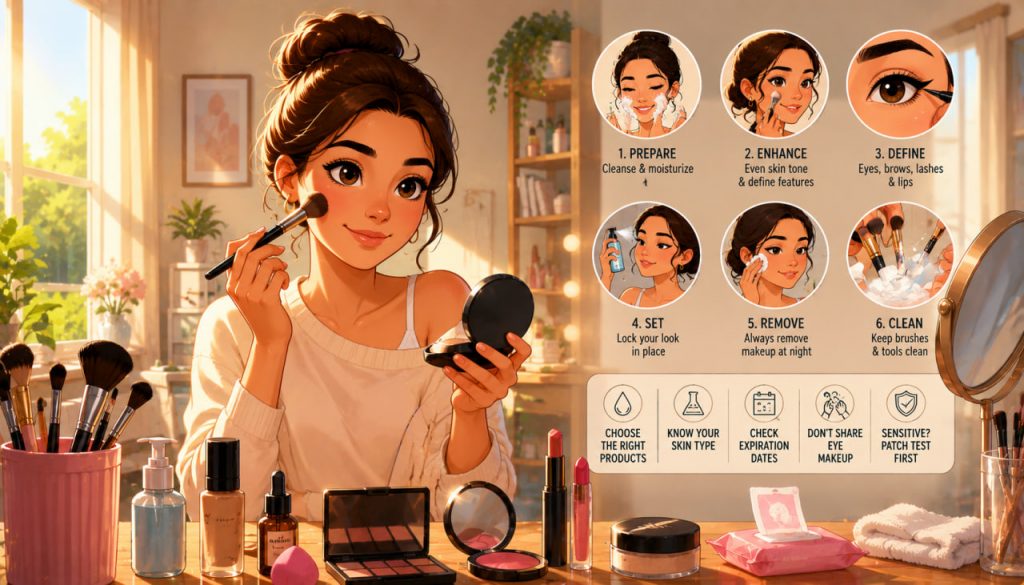
Makeup is more than color on the face. It is a set of cosmetic products used to enhance features, even skin tone, express personal style, protect confidence, and sometimes support professional image. For some people, makeup is art. For others, it is a practical tool: concealer for redness, mascara for definition, tinted moisturizer for a polished look, or lipstick for a quick mood boost.
But makeup also touches the skin, eyes, and lips directly, so it should be chosen and used wisely. Dermatologists and cosmetic safety experts usually do not say that makeup is “bad.” Instead, they recommend using the right products for your skin type, removing makeup before sleep, avoiding shared products, cleaning brushes, and paying attention to irritation.
Good makeup should make you feel better without damaging your skin barrier, clogging pores, or increasing the risk of infection.
What Makeup Actually Is
Makeup includes cosmetic products designed to change or enhance appearance.
Common makeup categories include:
- Foundation
- Concealer
- Powder
- Blush
- Bronzer
- Highlighter
- Eyeshadow
- Eyeliner
- Mascara
- Brow products
- Lipstick
- Lip gloss
- Tinted moisturizer
- Setting spray
Some products are purely decorative. Others combine makeup with skin care benefits, such as sunscreen, moisturizing ingredients, or oil control.
The U.S. FDA regulates cosmetics under cosmetic safety laws, but cosmetic products usually do not need premarket approval before being sold, except for color additives in many cases. This means consumers still need to choose products carefully and watch for reactions.
Makeup is not medical treatment, but it is still something that should be safe, clean, and suitable for your skin.
Why People Use Makeup
People use makeup for many reasons.
Some want to even out skin tone. Some enjoy creativity. Some use it for photography, work, performance, cultural traditions, or self-expression.
Makeup can help with:
- Reducing the appearance of redness
- Covering dark circles
- Defining eyes and brows
- Adding color to the face
- Creating a polished look
- Expressing personality
- Supporting confidence
There is no rule that everyone must wear makeup.
There is also nothing wrong with enjoying it.
Makeup is optional. Skin health is not.
What Dermatologists Recommend for Acne-Prone Skin
People with acne often worry that makeup will make breakouts worse.
The American Academy of Dermatology says people with acne can wear makeup, but the key is choosing products that do not cause acne and building a routine that suits acne-prone skin.
Look for labels such as:
- Non-comedogenic
- Oil-free
- Won’t clog pores
- Fragrance-free if sensitive
- Water-based
Mayo Clinic similarly advises avoiding oily or greasy skin care, sunscreen, and hair products if they worsen acne, and choosing products labeled water-based or noncomedogenic.
If makeup consistently causes breakouts, the problem may be the formula, not makeup itself.
Never Sleep in Makeup
One of the clearest expert recommendations is simple: remove makeup before bed.
The American Academy of Dermatology warns that even non-comedogenic makeup can contribute to acne if you sleep in it, and recommends removing makeup before going to bed.
Sleeping in makeup can leave oil, pigment, sunscreen, pollution, and sweat on the skin overnight.
This may contribute to:
- Clogged pores
- Breakouts
- Irritation
- Dullness
- Eye discomfort
- Dirty pillowcases
- Weakened skin barrier
A gentle cleanser or makeup remover is usually enough. Waterproof mascara or long-wear foundation may need a dedicated remover or cleansing balm followed by a mild cleanser.
The best makeup routine ends with clean skin.
Eye Makeup Needs Extra Care
Eye makeup deserves special attention because the eye area is delicate.
Mascara, eyeliner, false lashes, glitter, and eyeshadow can cause problems if products are contaminated, expired, shared, or used incorrectly.
The FDA warns consumers not to share or swap eye cosmetics because contamination with harmful microorganisms can be a problem.
Good eye makeup habits include:
- Do not share mascara or eyeliner.
- Do not add water or saliva to dried mascara.
- Replace eye products if they smell strange or change texture.
- Remove eye makeup gently.
- Avoid applying eyeliner inside the lash line if it irritates your eyes.
- Stop using a product if it causes burning, swelling, or redness.
Cleveland Clinic also advises not sharing items that touch the eye, including eye makeup, as part of eye infection prevention.
Eye makeup should be beautiful, but never at the cost of eye health.
Clean Brushes and Sponges Matter
Makeup tools can collect oil, dead skin cells, bacteria, old product, and dust.
Dirty brushes may contribute to irritation, breakouts, and uneven application.
Cleveland Clinic recommends washing brushes used with wet products like concealer or foundation once a week, brushes used around the eyes every two weeks, and many dry-product brushes about once a month.
Sponges often need even more care because they stay damp and can trap product inside.
Basic tool hygiene:
- Wash brushes regularly.
- Let them dry completely.
- Do not store damp tools in closed bags.
- Replace damaged sponges.
- Avoid sharing tools.
- Clean makeup bags occasionally.
Clean tools make makeup look better and help protect the skin.
Be Careful With “Hypoallergenic” Claims
Many people trust the word “hypoallergenic,” but it does not guarantee that a product will never cause a reaction.
The FDA explains that “hypoallergenic” cosmetics are products manufacturers claim produce fewer allergic reactions than others, but the term does not mean a product is allergy-proof for every person.
Sensitive skin users should still patch test new products.
A simple patch test can involve applying a small amount of product to a discreet area and watching for redness, itching, burning, swelling, or rash.
Hypoallergenic is a marketing claim, not a personal guarantee.
How to Choose Makeup for Your Skin Type
For oily skin, lightweight matte or oil-control formulas may work better.
For dry skin, creamy or hydrating formulas may look smoother.
For sensitive skin, fragrance-free and minimal-ingredient products are often safer.
For mature skin, very heavy powder may emphasize texture, while lighter hydrating products may look more natural.
For acne-prone skin, non-comedogenic formulas are a smart starting point.
For very reactive skin, introduce one new product at a time.
Your skin type should guide your makeup bag more than trends do.
Specialist Perspective
Dermatologists generally recommend makeup habits that protect the skin barrier: choose non-comedogenic products when acne-prone, remove makeup before sleep, avoid irritating ingredients, and keep tools clean. The American Academy of Dermatology specifically says acne patients can wear makeup when they choose cosmetics carefully and maintain a suitable skin care routine.
Cosmetic safety experts also emphasize hygiene, especially around the eyes. The FDA’s eye cosmetic safety guidance warns against sharing eye makeup and highlights contamination risks.
The expert message is balanced: makeup is fine for most people, but hygiene and product choice matter.
Makeup Mistakes Specialists Often Warn About
Common mistakes include sleeping in makeup, using expired products, sharing mascara, applying too many layers on irritated skin, ignoring allergic reactions, and using harsh removers.
Another mistake is using makeup to hide a medical problem without treating it.
See a dermatologist if you have:
- Severe acne
- Painful cysts
- Persistent redness
- Swelling around the eyes
- Burning after many products
- Rash or peeling
- Sudden skin changes
- Infection signs
Makeup can cover symptoms, but it cannot replace medical diagnosis.
A Simple Beginner Makeup Routine
A beginner routine can be very simple.
Start with:
- Moisturizer
- Sunscreen in the morning
- Tinted moisturizer or light foundation
- Concealer only where needed
- Brow gel or pencil
- Mascara if tolerated
- Cream blush
- Lip balm or lipstick
This creates a natural look without overwhelming the skin.
For evening, remove everything gently and moisturize.
The best makeup routine is one you can apply easily and remove completely.
Is Makeup Necessary?
No, makeup is not necessary for health.
But it can be useful, creative, and enjoyable.
What matters is that makeup does not become a substitute for skin care, sleep, sunscreen, hydration, or medical attention when needed.
A healthy approach is simple:
Use makeup if you like it. Choose it wisely. Keep it clean. Remove it every night. Listen to your skin.
Interesting Facts
- Makeup has been used for thousands of years in different cultures for beauty, ritual, identity, and status.
- Non-comedogenic makeup can still cause problems if left on overnight.
- Mascara and liquid eyeliner are more contamination-prone than many dry powder products.
- “Hypoallergenic” does not mean a product is guaranteed not to cause allergies.
- Dirty brushes can affect both skin comfort and makeup application quality.
- Makeup can influence facial recognition systems, which is why it is also studied in computer vision research.
- The safest eye makeup habit is never sharing products that touch the eye area.
Glossary
- Makeup — Cosmetic products used to enhance, color, define, or change appearance.
- Non-Comedogenic — A product designed not to clog pores.
- Foundation — A complexion product used to even out skin tone.
- Concealer — A more targeted product used to cover spots, redness, or dark circles.
- Hypoallergenic — A claim suggesting a product may cause fewer allergic reactions, but not a guarantee.
- Patch Test — Applying a small amount of product to a limited skin area to check for irritation.
- Skin Barrier — The outer protective layer of skin that helps retain moisture and block irritants.
- Cosmetic Contamination — The presence of unwanted microorganisms or impurities in a cosmetic product.