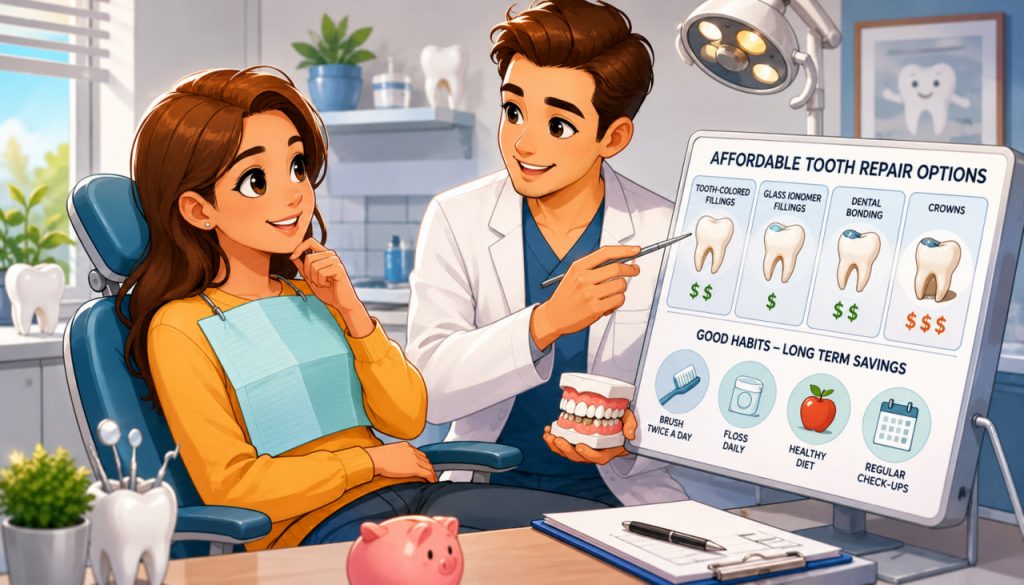
Dental treatment is often associated with high costs, leading many people to postpone necessary care. However, dentists frequently point out that affordable treatment does not necessarily mean poor-quality treatment. In many situations, cost-effective solutions can successfully restore dental health while preventing much larger expenses in the future.
The key is understanding which treatments provide the best balance between price, durability, and effectiveness. Knowing when to act and which options to discuss with your dentist can save both money and teeth.
Why Delaying Treatment Usually Costs More
Many patients avoid dental visits because they fear expensive procedures.
Unfortunately, untreated dental problems almost always become more costly over time.
For example:
- A small cavity may only require a simple filling.
- A deeper cavity may need a root canal and crown.
- A severely damaged tooth may require extraction and an implant.
The cheapest dental treatment is often the treatment performed early.
Regular checkups help identify issues before they become major problems.
What Dentists Mean by “Affordable Dentistry”
Affordable dentistry is not about choosing the lowest possible price.
Instead, it means selecting treatments that provide the best long-term value.
Dentists generally consider several factors:
- Initial treatment cost
- Expected lifespan
- Maintenance requirements
- Risk of future complications
- Preservation of natural tooth structure
A cheaper procedure that fails after a year may ultimately cost more than a slightly more expensive treatment that lasts a decade.
Composite Fillings: The Most Common Budget-Friendly Repair
For small and medium cavities, composite fillings are usually the first recommendation.
These tooth-colored materials bond directly to the tooth and provide both cosmetic and functional benefits.
Advantages include:
- Relatively low cost
- Natural appearance
- Quick placement
- Preservation of healthy tooth tissue
Modern composite materials can often last between 5 and 10 years or longer with proper care.
For most routine cavities, composite fillings offer one of the best price-to-performance ratios in dentistry.
Glass Ionomer Fillings: A Low-Cost Alternative
Glass ionomer materials are another affordable option.
They are especially useful in:
- Children’s dentistry
- Temporary restorations
- Non-load-bearing areas
One advantage is their ability to release fluoride, which may help reduce future decay.
However, they are generally less durable than composite fillings and may wear down more quickly in areas exposed to strong chewing forces.
Dental Bonding for Chips and Minor Damage
Small chips, cracks, and cosmetic imperfections do not always require expensive crowns or veneers.
Dental bonding uses composite resin to rebuild damaged areas quickly and affordably.
Bonding can often repair:
- Chipped front teeth
- Small gaps
- Minor shape irregularities
- Surface defects
The procedure is usually completed in a single visit and requires minimal removal of natural tooth structure.
When Crowns Are Worth the Extra Cost
Crowns are more expensive than fillings, but dentists often recommend them when a tooth has lost significant structural strength.
Situations that may require a crown include:
- Large fractures
- Extensive decay
- Teeth after root canal treatment
- Severely worn teeth
Although crowns cost more initially, they may prevent future tooth loss and reduce the need for repeated repairs.
Sometimes the most economical choice is investing in a stronger restoration from the beginning.
Root Canals: Saving Teeth Instead of Replacing Them
When infection reaches the dental pulp, root canal treatment may become necessary.
Some patients hesitate because of the cost.
However, dentists frequently point out that replacing an extracted tooth with an implant or bridge usually costs significantly more.
A successful root canal can:
- Eliminate infection
- Relieve pain
- Preserve chewing function
- Maintain natural appearance
Saving a natural tooth is often the most cost-effective long-term solution.
Prevention: The Best Financial Strategy
Virtually every dental organization agrees that prevention provides the greatest savings.
Preventive measures include:
- Brushing twice daily
- Flossing regularly
- Using fluoride toothpaste
- Limiting sugary foods and drinks
- Attending routine dental examinations
Professional cleanings and checkups may seem like an expense, but they often prevent far more costly procedures later.
A small investment in prevention can save thousands of dollars in restorative treatment.
Expert Perspective
The American Dental Association (ADA) consistently emphasizes the value of preventive care as the foundation of affordable oral health.
According to ADA guidance, regular dental visits allow dentists to identify problems early, when treatment is generally simpler, less invasive, and less expensive.
“Prevention and early detection remain among the most effective ways to reduce the need for complex dental treatment.”
This principle explains why dentists frequently encourage routine examinations even when patients are not experiencing pain.
By the time discomfort appears, treatment is often more complicated and expensive.
What Dentists Do Not Recommend
When trying to save money, some people turn to questionable alternatives found online.
Dentists strongly discourage:
- DIY fillings
- Superglue repairs
- Homemade dental cements
- Ignoring infections
- Unlicensed treatment providers
These approaches can lead to severe complications, including infection, tooth loss, and additional treatment expenses.
What seems like a cheap solution today can become a costly emergency tomorrow.
How to Reduce Dental Costs Responsibly
Patients can often lower costs without compromising quality by:
- Seeking treatment early
- Comparing treatment plans
- Asking about alternative materials
- Using dental insurance when available
- Visiting dental schools for supervised care
- Maintaining excellent oral hygiene
Open communication with your dentist is essential.
Many dentists are willing to discuss multiple treatment options that fit different budgets while still meeting clinical standards.
Interesting Facts
- Tooth decay is one of the most common health conditions worldwide.
- Composite fillings have become increasingly durable due to advances in dental materials.
- Professional fluoride treatments can help strengthen enamel and reduce cavity risk.
- A dental implant may cost several times more than a filling that could have prevented tooth loss.
- Enamel cannot regenerate once it is significantly damaged.
- Preventive dental care is generally considered one of the most cost-effective healthcare investments.
- Modern anesthetics make most restorative procedures virtually painless.
Glossary
- Composite Filling — A tooth-colored material used to restore cavities and minor tooth damage.
- Glass Ionomer — A dental restorative material that releases fluoride and bonds to tooth structure.
- Dental Bonding — A procedure that uses composite resin to repair chips, cracks, and cosmetic defects.
- Crown — A protective cap placed over a damaged tooth to restore strength and function.
- Root Canal Treatment — A procedure that removes infected tissue from inside a tooth while preserving the tooth itself.
- Dental Pulp — The soft inner tissue containing nerves and blood vessels.
- Fluoride — A mineral that strengthens enamel and helps prevent tooth decay.
- Preventive Dentistry — Dental care focused on avoiding disease before treatment becomes necessary.