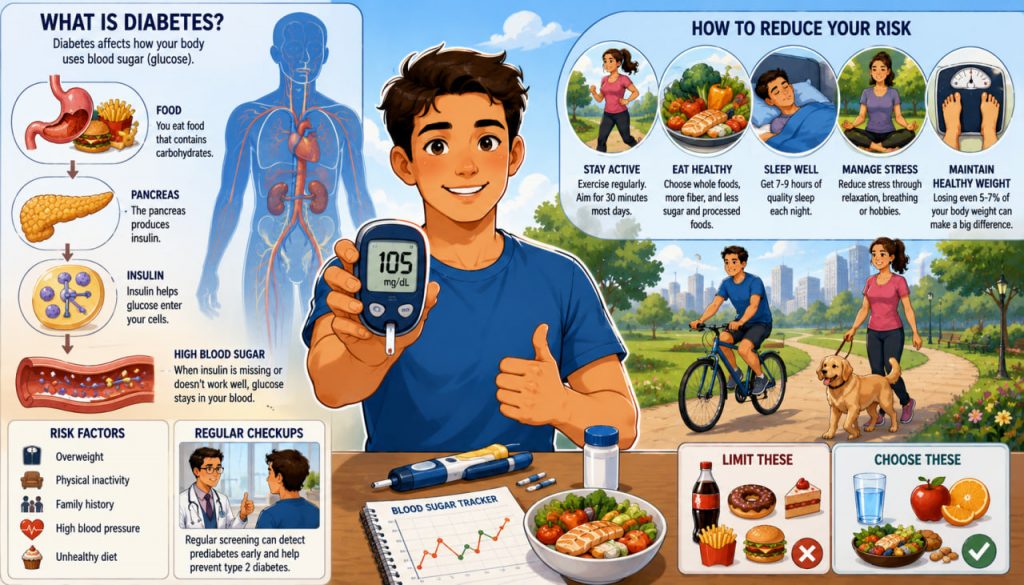
Diabetes is one of the most widespread chronic diseases in the world, affecting hundreds of millions of people. It is a condition that alters the way the body processes glucose, the primary source of energy for cells. When blood sugar levels remain too high for long periods, serious complications can develop, affecting the heart, blood vessels, kidneys, eyes, and nervous system.
While some forms of diabetes cannot currently be prevented, many cases of Type 2 Diabetes can be delayed or avoided through healthy lifestyle choices. Understanding how diabetes develops and learning effective prevention strategies can help people protect their long-term health.
The encouraging reality is that even small improvements in diet, physical activity, and body weight can significantly reduce diabetes risk.
What Is Diabetes?
Diabetes mellitus is a group of metabolic disorders characterized by elevated blood glucose levels.
Glucose enters cells with the help of a hormone called insulin, which is produced by the pancreas.
When insulin is absent, insufficient, or ineffective, glucose remains in the bloodstream instead of entering cells where it is needed for energy.
Over time, elevated blood sugar can damage multiple organs and tissues.
The Main Types of Diabetes
There are several forms of diabetes, but the most common are:
- Type 1 Diabetes
- Type 2 Diabetes
- Gestational Diabetes
Each has different causes and characteristics.
Type 1 Diabetes
Type 1 Diabetes is an autoimmune condition.
The immune system mistakenly attacks insulin-producing cells in the pancreas.
As a result:
- Little or no insulin is produced
- Blood sugar rises
- Lifelong insulin therapy becomes necessary
Type 1 Diabetes is not currently preventable and often develops during childhood or early adulthood, although it can occur at any age.
Type 2 Diabetes
Type 2 Diabetes accounts for the majority of diabetes cases worldwide.
In this condition:
- Cells become resistant to insulin
- The pancreas struggles to compensate
- Blood sugar levels gradually increase
Type 2 Diabetes is strongly influenced by lifestyle, genetics, and environmental factors.
This is the form most closely associated with prevention efforts.
Gestational Diabetes
Gestational diabetes develops during pregnancy.
Hormonal changes can affect insulin function and raise blood sugar levels.
Although it often resolves after childbirth, women who develop gestational diabetes have a higher future risk of Type 2 Diabetes.
Why High Blood Sugar Is Dangerous
Persistently elevated blood sugar can damage blood vessels and nerves throughout the body.
Potential complications include:
- Heart disease
- Stroke
- Kidney disease
- Vision loss
- Nerve damage
- Poor wound healing
Many complications develop gradually over years, making prevention and early detection especially important.
Common Symptoms of Diabetes
Early symptoms may include:
- Increased thirst
- Frequent urination
- Fatigue
- Blurred vision
- Unexplained weight changes
- Increased hunger
However, Type 2 Diabetes can develop slowly, and some individuals experience few noticeable symptoms initially.
Risk Factors for Type 2 Diabetes
Several factors increase risk.
Common examples include:
- Excess body weight
- Physical inactivity
- Family history
- Increasing age
- High blood pressure
- Previous gestational diabetes
- Unhealthy dietary patterns
Having risk factors does not guarantee diabetes, but risk rises as factors accumulate.
Maintaining a Healthy Weight
One of the most effective prevention strategies is achieving and maintaining a healthy body weight.
Excess body fat, particularly around the abdomen, contributes to insulin resistance.
Research consistently shows that moderate weight loss can significantly reduce diabetes risk in high-risk individuals.
Even losing a relatively small percentage of body weight may provide substantial benefits.
Physical Activity Protects Against Diabetes
Exercise improves the body’s ability to use insulin efficiently.
Benefits include:
- Better blood sugar control
- Improved metabolism
- Increased insulin sensitivity
- Weight management support
Recommended activities include:
- Walking
- Cycling
- Swimming
- Strength training
- Gardening
Consistency is more important than extreme workouts.
The Importance of a Balanced Diet
Healthy eating patterns can reduce diabetes risk.
Experts generally recommend:
- Vegetables
- Fruits
- Whole grains
- Legumes
- Lean proteins
- Healthy fats
Limiting excessive consumption of:
- Sugary beverages
- Highly processed foods
- Refined carbohydrates
may help support healthy blood sugar regulation.
Why Sugary Drinks Are a Concern
Sugar-sweetened beverages provide large amounts of rapidly absorbed sugar.
Examples include:
- Soft drinks
- Energy drinks
- Sweetened teas
- Some fruit-flavored beverages
Frequent consumption has been associated with increased risk of obesity and Type 2 Diabetes.
Water remains one of the healthiest beverage choices.
Sleep and Diabetes Risk
Sleep influences many metabolic processes.
Insufficient sleep may affect hormones involved in:
- Appetite regulation
- Glucose metabolism
- Insulin sensitivity
Adults who consistently experience poor sleep may face a higher risk of metabolic disorders.
Prioritizing sleep supports overall health.
Managing Stress
Chronic stress can affect hormone levels and health behaviors.
Stress may contribute to:
- Overeating
- Reduced physical activity
- Poor sleep
Stress-management techniques such as:
- Walking
- Meditation
- Relaxation exercises
- Time outdoors
may support healthier lifestyles and metabolic health.
The Role of Regular Health Checkups
Many people develop prediabetes before progressing to Type 2 Diabetes.
Prediabetes occurs when blood sugar levels are elevated but not yet high enough for a diabetes diagnosis.
Regular health screenings can help identify problems early, when intervention is often most effective.
Expert Perspective
Endocrinologist Ralph A. DeFronzo has made major contributions to understanding insulin resistance and Type 2 Diabetes. His research highlights that diabetes develops through complex interactions involving insulin production, insulin sensitivity, metabolism, and lifestyle factors. This understanding has helped shape modern prevention and treatment strategies worldwide.
Can Diabetes Be Prevented?
Type 1 Diabetes currently cannot be prevented through lifestyle changes.
However, many cases of Type 2 Diabetes can be delayed or prevented.
The strongest evidence supports:
- Healthy body weight
- Regular physical activity
- Balanced nutrition
- Good sleep habits
- Routine medical monitoring
These measures benefit overall health regardless of diabetes risk.
Conclusion
Diabetes is a serious metabolic disorder that affects how the body regulates blood sugar. While Type 1 Diabetes remains largely beyond current prevention methods, many cases of Type 2 Diabetes are closely linked to modifiable lifestyle factors.
Maintaining a healthy weight, staying physically active, eating a balanced diet, sleeping well, managing stress, and attending regular health screenings can substantially reduce risk. Prevention is not about perfection—it is about making consistent, sustainable choices that support long-term health and help the body regulate blood sugar effectively.
Interesting Facts
- The pancreas produces insulin, the hormone that helps cells absorb glucose.
- Type 2 Diabetes often develops gradually over many years.
- Physical activity can improve insulin sensitivity within a single exercise session.
- Prediabetes can often be reversed through lifestyle changes.
- Diabetes affects multiple organs, not just blood sugar levels.
- Early detection greatly improves long-term outcomes.
Glossary
- Diabetes Mellitus — A group of disorders characterized by elevated blood glucose levels.
- Insulin — A hormone that helps glucose enter cells.
- Glucose — The body’s primary source of energy.
- Insulin Resistance — Reduced responsiveness of cells to insulin.
- Prediabetes — Blood sugar levels that are elevated but not yet within the diabetes range.
- Pancreas — An organ that produces insulin and digestive enzymes.
- Metabolism — The collection of chemical processes that convert food into energy.