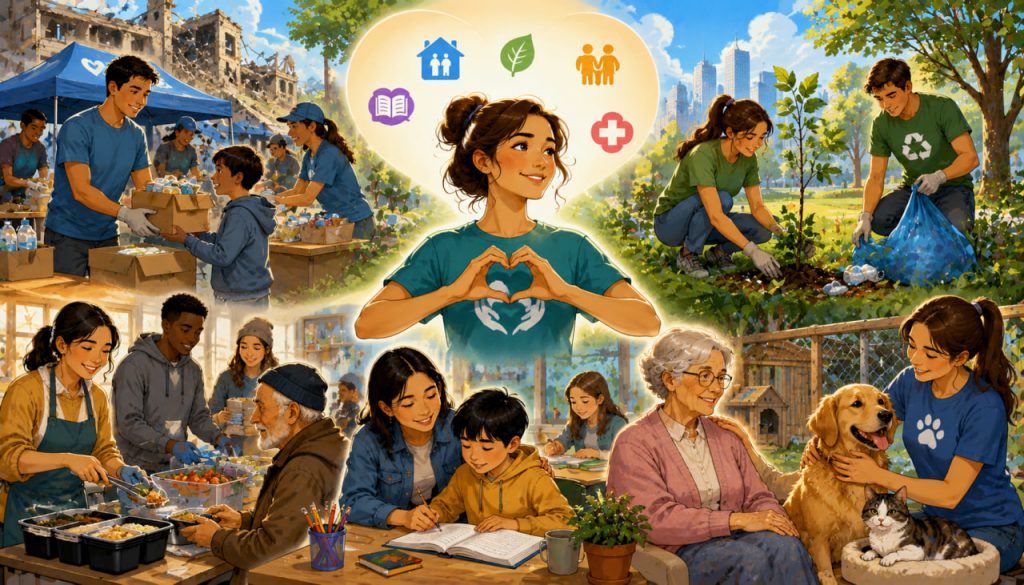
Volunteering is one of the most powerful ways individuals can improve the world around them. Every year, millions of people donate their time, skills, and energy to support causes they care about. Whether helping disaster victims, mentoring children, supporting hospitals, protecting nature, or assisting animal shelters, volunteers play an essential role in addressing social challenges.
However, with thousands of volunteer organizations available, many people struggle to decide where their efforts can make the greatest difference. Choosing the right organization requires understanding both personal values and the real-world impact of different types of volunteer work.
The best volunteer experience is one that benefits both the community and the volunteer while creating meaningful, lasting change.
Why Volunteering Matters
Volunteer work benefits society in numerous ways.
Volunteers help provide:
- Emergency assistance
- Educational support
- Healthcare services
- Food distribution
- Disaster relief
- Community development
- Environmental conservation
In many regions, charitable organizations depend heavily on volunteers to deliver essential services.
Without volunteer support, countless programs would struggle to operate effectively.
Understanding Different Types of Volunteer Organizations
Volunteer opportunities generally fall into several major categories:
- Humanitarian aid
- Healthcare support
- Education and mentoring
- Community development
- Environmental protection
- Animal welfare
- Disaster response
- Social services
Each category serves important purposes, but they differ significantly in the scale and nature of their impact.
Helping People in Need
Many volunteer organizations focus directly on helping vulnerable individuals.
Examples include programs that support:
- Homeless populations
- Low-income families
- Refugees
- Elderly individuals
- Children in difficult circumstances
- People with disabilities
- Disaster victims
These organizations often address urgent human needs such as:
- Food
- Shelter
- Medical care
- Education
- Emotional support
Because human suffering can involve immediate risks to health, safety, and survival, many volunteers find this type of work especially meaningful.
Why Human-Focused Volunteering Often Has Broad Social Impact
Helping people frequently creates ripple effects that extend beyond individual beneficiaries.
For example:
- Educating a child may improve future opportunities.
- Supporting a family during hardship may prevent long-term problems.
- Assisting disaster victims may help entire communities recover.
Many social scientists argue that programs addressing fundamental human needs often generate far-reaching benefits for society as a whole because improved health, education, and stability can positively affect future generations.
This does not diminish the value of other causes, but it helps explain why many volunteers prioritize direct human assistance.
What About Animal Welfare Organizations?
Animal welfare organizations also perform valuable work.
They may focus on:
- Rescue operations
- Shelter management
- Wildlife rehabilitation
- Adoption programs
- Prevention of cruelty
These efforts improve the lives of countless animals and contribute to more compassionate communities.
However, when comparing causes, many volunteers choose to prioritize organizations that directly assist vulnerable people facing immediate threats to health, safety, education, or survival.
Ultimately, the most appropriate choice depends on personal values and the specific impact an individual wishes to create.
Education and Mentoring Programs
Education-based volunteering remains one of the most effective forms of long-term social investment.
Volunteers may:
- Tutor students
- Teach languages
- Mentor young people
- Support literacy programs
Educational opportunities can influence entire lifetimes.
A few hours of mentoring each week may have lasting positive effects on a young person’s future.
Healthcare and Medical Support
Some volunteer organizations support healthcare systems.
Activities may include:
- Hospital assistance
- Patient support
- Health education
- Community outreach
These programs can improve quality of life and increase access to important services.
Healthcare volunteering often requires additional training but can be highly rewarding.
Disaster Relief and Emergency Response
Disaster-response organizations provide assistance during:
- Floods
- Earthquakes
- Hurricanes
- Wildfires
- Humanitarian crises
Volunteers may help distribute:
- Food
- Water
- Medical supplies
- Temporary shelter
This type of work can have immediate life-saving effects.
Environmental Volunteer Programs
Environmental organizations focus on protecting ecosystems and natural resources.
Common activities include:
- Tree planting
- Habitat restoration
- Beach cleanups
- Wildlife monitoring
- Conservation projects
Healthy ecosystems support both wildlife and human societies.
Environmental volunteering often combines education, science, and community involvement.
How to Evaluate a Volunteer Organization
Before committing your time, consider several factors.
Ask questions such as:
- What is the organization’s mission?
- How are donations and resources used?
- Are results measurable?
- Is volunteer training provided?
- What impact has the organization achieved?
Transparency and accountability are important indicators of effectiveness.
Matching Volunteering to Your Skills
The most successful volunteer experiences often align with personal strengths.
Useful skills may include:
- Teaching
- Healthcare knowledge
- Technical expertise
- Communication
- Administration
- Construction
- Translation
Organizations frequently need more than just physical labor.
Professional expertise can be extremely valuable.
Benefits for Volunteers
Volunteering also benefits the volunteer.
Potential advantages include:
- New skills
- Professional experience
- Social connections
- Greater purpose
- Improved well-being
Research consistently shows that helping others is associated with increased life satisfaction and stronger community engagement.
Expert Perspective
Psychologist Martin Seligman, known for his work on positive psychology, has emphasized that meaning and service to others are important contributors to long-term well-being. His research suggests that people often experience greater fulfillment when they participate in activities that benefit others and contribute to something larger than themselves.
Choosing the Best Organization for You
There is no universally perfect volunteer organization.
The best choice depends on:
- Personal values
- Available time
- Skills
- Community needs
- Desired impact
For many individuals, organizations that directly help people facing urgent challenges provide a particularly strong sense of purpose because the effects are often immediate and highly visible.
Others may feel drawn to environmental protection, education, healthcare, or animal welfare.
The most important factor is finding a cause that motivates sustained commitment.
Conclusion
Volunteer organizations play an essential role in addressing challenges that governments and institutions cannot solve alone. From helping vulnerable people and supporting healthcare to protecting nature and rescuing animals, volunteers contribute countless hours of valuable service each year.
When choosing where to volunteer, many people prioritize organizations that directly assist individuals in need because these efforts often address urgent human challenges and can generate broad social benefits. Nevertheless, every legitimate volunteer cause contributes positively to society in its own way.
The most effective volunteer experience is one that matches your skills, values, and desire to make a meaningful difference in the lives of others.
Interesting Facts
- Millions of people worldwide participate in volunteer activities every year.
- Volunteers contribute billions of hours of service annually.
- Mentoring programs can significantly improve educational outcomes for children.
- Many disaster-response organizations rely heavily on trained volunteers.
- Volunteering has been associated with improved mental well-being and social connection.
- Professional skills such as teaching, medicine, and technology are highly valuable in volunteer programs.
Glossary
- Volunteer — A person who provides services without financial compensation.
- Humanitarian Aid — Assistance provided to people facing hardship or crisis.
- Mentoring — Guidance and support offered to help another person develop skills and confidence.
- Disaster Relief — Emergency assistance provided after natural or human-made disasters.
- Community Development — Efforts to improve social and economic conditions within a community.
- Conservation — Protection and management of natural resources and ecosystems.
- Nonprofit Organization — An organization that operates primarily to achieve a social mission rather than generate profit.