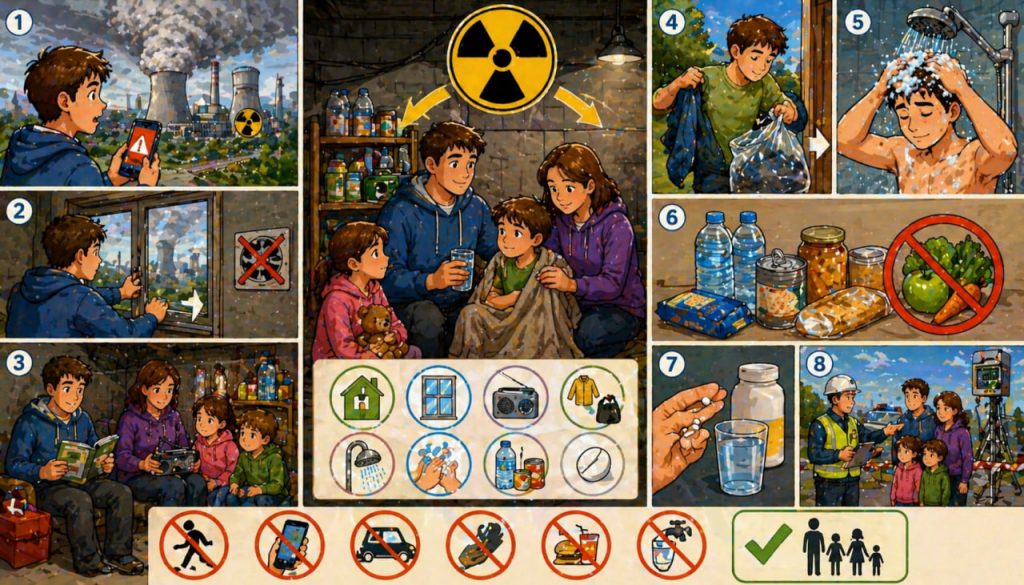
Radiation emergencies are rare, but when they occur, they require fast, informed action. Events such as nuclear plant accidents, radioactive material leaks, or even certain types of explosions can release harmful radiation into the environment. Knowing what to do in advance can significantly reduce health risks and protect both you and your family.
This guide explains how radiation affects the body, what immediate steps to take, and how to stay safe during and after a radiation threat.
Understanding Radiation in Simple Terms
Radiation is energy that travels in the form of particles or waves. In everyday life, we are exposed to small amounts of natural radiation from the sun, soil, and even our own bodies. However, high levels of radiation—especially from nuclear accidents—can damage cells and increase the risk of illness.
There are two main types relevant in emergencies:
- External exposure, when radiation comes from outside the body
- Internal contamination, when radioactive particles enter the body through breathing, food, or water
The goal during a radiation emergency is to minimize both types of exposure.
First Actions: Get Inside Immediately
If you receive a warning about radiation or see signs of an incident, your first priority is to find shelter.
Best options:
- A solid building, preferably made of concrete or brick
- A basement or interior room away from windows
- Underground spaces if available
The more material between you and the outside environment, the better the protection. Avoid staying in vehicles or lightweight structures, as they provide little shielding.
Stay Inside and Limit Exposure
Once indoors, remain inside until authorities say it is safe to leave. Radiation levels can decrease over time, especially in the first hours after an incident.
Important steps:
- Close windows and doors
- Turn off ventilation systems that bring in outside air
- Move to the center of the building or basement
Staying sheltered can dramatically reduce radiation exposure.
Remove Contaminated Clothing
If you were outside during the incident, your clothing may carry radioactive particles.
To reduce contamination:
- Remove outer clothing carefully
- Place it in a plastic bag and seal it
- Keep it away from people and living areas
This simple step can eliminate a large portion of contamination.
Wash and Decontaminate
After removing contaminated clothing, clean your body as soon as possible.
Recommended actions:
- Take a shower using soap and water
- Wash hair gently without conditioner, which can trap particles
- If a shower is not available, wipe exposed skin with a clean cloth
Avoid harsh scrubbing, as it can damage the skin and allow particles to enter the body.
Follow Official Instructions
During a radiation emergency, reliable information is critical. Authorities will provide guidance based on real-time data.
Stay informed through:
- Emergency broadcasts
- Official government alerts
- Trusted news sources
Do not rely on rumors or unverified information, as incorrect actions can increase risk.
Food and Water Safety
Radioactive particles can contaminate food and water supplies. It is important to use safe sources.
Guidelines include:
- Consume sealed or packaged food
- Drink bottled water if available
- Avoid fresh produce exposed to the environment
If instructed, authorities may distribute safe food and water supplies.
Potassium Iodide and Protection
In some cases, authorities may recommend taking potassium iodide, a substance that helps protect the thyroid gland from radioactive iodine.
It works by:
- Saturating the thyroid with stable iodine
- Reducing the absorption of radioactive iodine
However, it should only be taken when officially advised, as incorrect use can have side effects.
Protecting Children and Vulnerable Individuals
Children, pregnant women, and older adults are more sensitive to radiation exposure.
Special precautions:
- Ensure they are sheltered quickly
- Provide clean clothing and water
- Monitor them closely for symptoms
Preparedness plans should always consider the needs of vulnerable groups.
Long-Term Safety After Exposure
After the immediate danger has passed, follow-up actions are important.
These may include:
- Medical check-ups
- Monitoring for symptoms
- Following relocation or evacuation instructions
Radiation effects can take time to appear, so continued awareness is essential.
Expert Insight on Radiation Safety
According to the World Health Organization (WHO):
“Prompt protective actions such as sheltering and decontamination can significantly reduce radiation exposure and health risks.”
This highlights the importance of quick and informed responses during emergencies.
Why Preparedness Matters
Radiation emergencies can be unpredictable, but preparation reduces fear and increases safety. Knowing basic steps—shelter, remove contamination, stay informed—can make a critical difference.
Preparedness also helps communities respond more effectively, reducing overall impact and saving lives.
Interesting Facts
- Most radiation exposure during an emergency comes from airborne particles settling on surfaces.
- Sheltering indoors can reduce exposure by more than 50% in many cases.
- The first 24 hours after a radiation release are the most critical for protection.
- Radioactive iodine primarily affects the thyroid gland.
- Simple actions like removing clothing can eliminate up to 90% of contamination.
Glossary
- Radiation — Energy that travels through space or materials in the form of particles or waves.
- Contamination — The presence of radioactive particles on surfaces, skin, or inside the body.
- Decontamination — The process of removing radioactive substances.
- Potassium Iodide — A compound used to protect the thyroid from radioactive iodine.
- Exposure — Contact with radiation, either externally or internally.