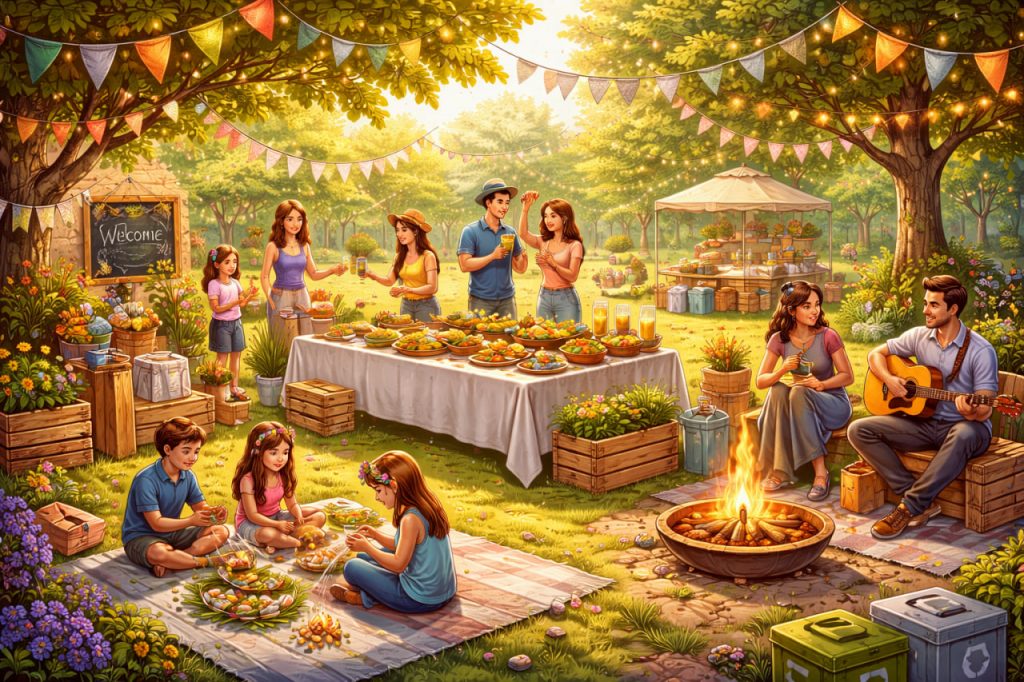
An eco-friendly celebration is a way to enjoy meaningful moments while minimizing harm to the environment. Traditional parties often involve disposable items, excessive food waste, and unnecessary energy use. Eco-celebrations focus on thoughtful choices that reduce waste without sacrificing joy or atmosphere. They emphasize quality over quantity and experience over consumption. With careful planning, an eco-party can be stylish, memorable, and responsible at the same time.
Choosing the Right Location
The foundation of an eco-friendly celebration starts with the location. Hosting the event at home, in a park, or in a community space reduces transportation emissions and resource use. Outdoor venues often require less lighting and climate control. Choosing a nearby location encourages guests to walk, cycle, or use public transport. A thoughtfully selected space already lowers the environmental footprint before the celebration even begins.
Invitations and Communication
Digital invitations are one of the simplest ways to reduce waste. Online messages or event pages replace printed cards and envelopes. Clear communication also helps guests understand the eco-concept of the event. When people know the intention, they are more likely to support it. Transparency turns sustainability into a shared value rather than a restriction.
Eco-Friendly Decorations
Decorations do not need to be disposable to be festive. Reusable items, natural materials, and handmade elements create warmth and authenticity. Plants, fabric banners, candles, and repurposed objects add character without generating waste. Decorations that can be reused or composted after the event align with eco-principles. Minimalism often enhances aesthetics while reducing excess.
Sustainable Food and Drinks
Food choices play a major role in the environmental impact of a celebration. Locally sourced, seasonal ingredients reduce transportation emissions. Plant-based dishes generally require fewer resources and appeal to a wide range of guests. Serving appropriate portions helps prevent food waste. Reusable tableware replaces single-use plastics and adds elegance to the table.
Reducing Waste
Waste reduction should be planned in advance. Clearly labeled containers for recycling and composting help guests dispose of items correctly. Avoiding single-use products is more effective than managing waste afterward. Choosing quality items that can be washed and reused supports long-term sustainability. Waste awareness becomes part of the celebration rather than an afterthought.
Energy and Atmosphere
An eco-party does not need excessive lighting or sound systems. Natural light, candles, and energy-efficient lighting create a calm and inviting atmosphere. Music can be enjoyed at reasonable volume without heavy equipment. Conscious energy use reduces environmental impact and enhances comfort. A relaxed atmosphere often feels more personal and meaningful.
The Social Value of Eco-Celebrations
Eco-friendly celebrations demonstrate that sustainability can be joyful and inclusive. They inspire guests through example rather than instruction. According to sustainability educator Dr. Laura Bennett:
“Celebrations shape social norms.
When people experience sustainability as something positive and festive,
they are more likely to adopt it in everyday life.”
An eco-party becomes a form of quiet environmental education.
Why Eco-Celebrations Matter
Small events may seem insignificant, but their impact adds up. Celebrations influence habits, expectations, and cultural norms. Choosing eco-friendly options shows respect for the environment and future generations. It proves that responsibility and enjoyment are not opposites. Eco-celebrations transform personal joy into shared care.
Interesting Facts
- Most party waste comes from single-use items.
- Digital invitations significantly reduce paper waste.
- Plant-based menus have a lower environmental footprint.
- Reusable decorations often improve visual quality.
- Social events strongly influence behavioral habits.
Glossary
- Eco-Friendly Celebration — an event planned to minimize environmental impact.
- Single-Use Items — products designed to be used once and discarded.
- Sustainable Food — food produced with minimal environmental harm.
- Waste Reduction — strategies to minimize trash generation.
- Conscious Consumption — mindful use of resources and products.