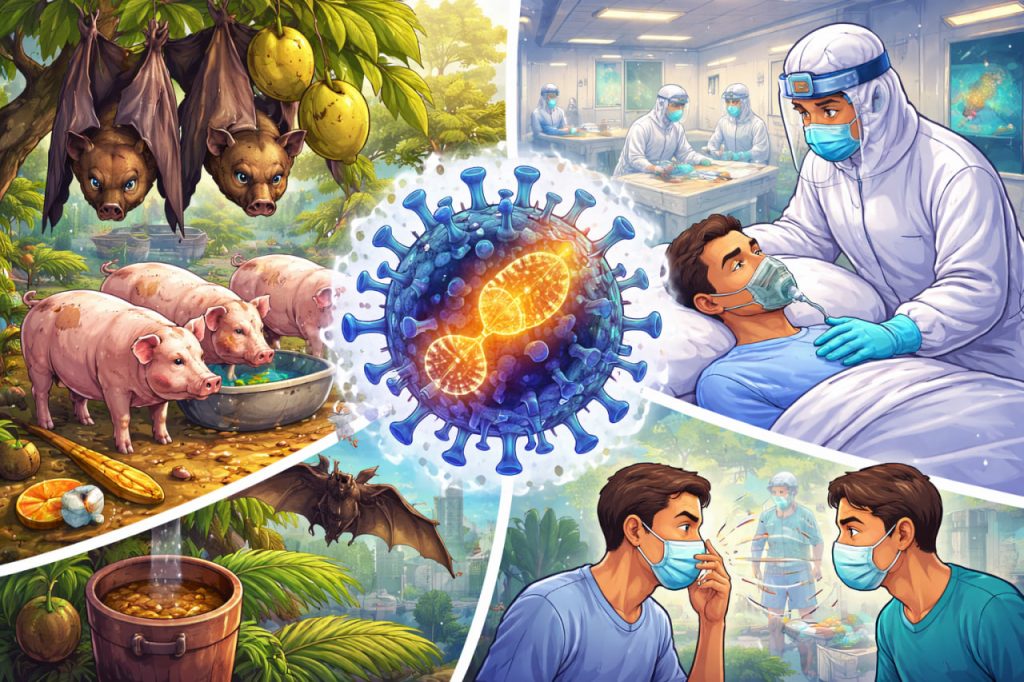
The Nipah virus is a rare but extremely dangerous zoonotic pathogen that can cause severe disease in humans. First identified in the late 20th century, it has since drawn global attention due to its high mortality rate and potential for outbreaks. Nipah virus infections affect the respiratory system and the brain, often leading to encephalitis. Although outbreaks have been limited geographically, the virus is considered a serious public health threat. Its ability to cross from animals to humans makes it especially concerning in a globalized world.
Origin and Natural Reservoir
The Nipah virus is naturally carried by fruit bats, particularly bats of the genus Pteropus. These animals do not usually show signs of illness, allowing the virus to circulate silently in nature. Transmission to humans occurs when people come into contact with bat secretions, contaminated food, or infected animals. In some outbreaks, domestic animals acted as intermediate hosts. The virus’s natural reservoir makes complete eradication impossible.
How the Virus Spreads
Human infection can occur through several routes. Direct contact with infected animals or their bodily fluids is a known transmission pathway. Consumption of contaminated food products has also been linked to outbreaks. In some cases, human-to-human transmission has been documented, particularly in healthcare settings. This ability to spread between people increases outbreak risk. However, transmission usually requires close contact.
Symptoms and Disease Progression
Nipah virus infection often begins with nonspecific symptoms such as fever, headache, and fatigue. As the disease progresses, respiratory distress and neurological symptoms may develop. Encephalitis, characterized by brain inflammation, is one of the most serious outcomes. Patients may experience confusion, seizures, or loss of consciousness. The progression can be rapid, and severe cases may be fatal. Recovery in survivors can involve long-term neurological complications.
Why Nipah Virus Is Especially Dangerous
One of the most concerning aspects of the Nipah virus is its high fatality rate, which can vary widely depending on the outbreak. In addition, there is currently no widely available specific treatment that directly targets the virus. Care is primarily supportive, focusing on managing symptoms and complications. The lack of a licensed vaccine further increases concern. These factors make prevention and early detection critically important.
Prevention and Control Measures
Preventing Nipah virus outbreaks relies on reducing exposure to infected animals and contaminated food sources. Public health measures include monitoring animal populations, improving food safety, and implementing infection control in healthcare settings. Community awareness plays a key role in minimizing risk. Early identification of cases helps limit spread. Prevention strategies focus on behavior, hygiene, and surveillance rather than medical intervention alone.
Global Health Significance
Although outbreaks have been relatively rare, the Nipah virus is considered a priority pathogen due to its pandemic potential. Its zoonotic nature, severity, and limited treatment options place it among the most closely monitored viruses. Research continues into vaccines, antiviral therapies, and improved diagnostic tools. Studying Nipah virus also helps scientists understand how emerging diseases cross from animals to humans. It serves as a reminder of the close link between human health and ecosystems.
Why Awareness Matters
Awareness of the Nipah virus supports early detection and responsible response rather than fear. Understanding how the virus spreads and why it is dangerous helps communities and health systems prepare. Education reduces risky behaviors and improves cooperation with public health measures. While the virus is rare, preparedness is essential. Knowledge remains one of the strongest tools against emerging infectious diseases.
Interesting Facts
- Fruit bats can carry the virus without showing illness.
- Nipah virus affects both the respiratory system and the brain.
- Human-to-human transmission has been documented in some outbreaks.
- The virus has a high mortality rate compared to many infections.
- Prevention relies heavily on public awareness and surveillance.
Glossary
- Nipah Virus — a zoonotic virus capable of causing severe disease in humans.
- Zoonotic Disease — an infection transmitted from animals to humans.
- Encephalitis — inflammation of the brain.
- Reservoir Host — an organism that carries a pathogen without severe illness.
- Outbreak — a sudden increase in cases of a disease in a specific area.