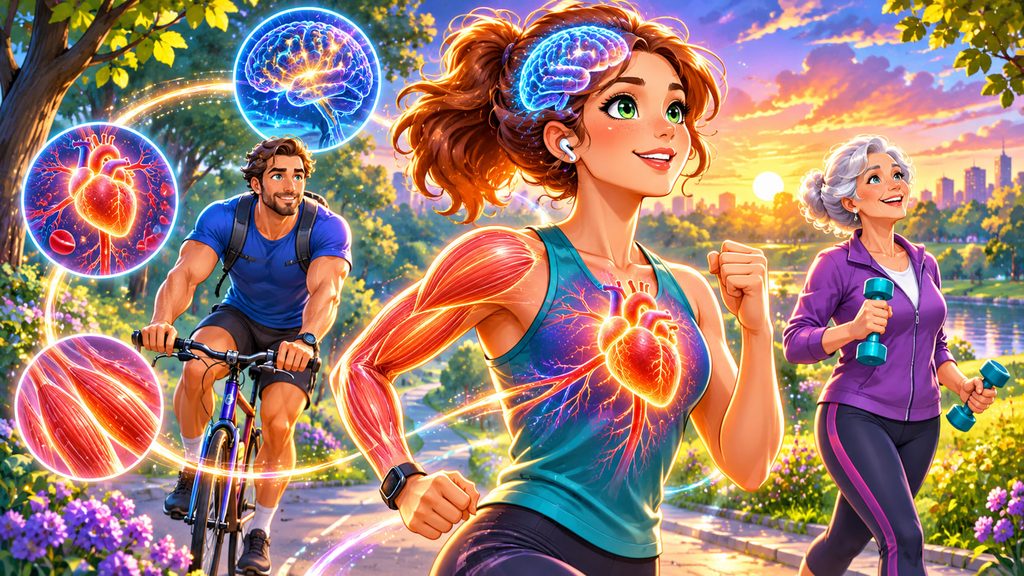
A brisk walk can leave you breathing harder, feeling warmer, and unexpectedly more alert. Those sensations are only the visible beginning of a much larger biological response. While your legs move, your heart, blood vessels, brain, and metabolism receive signals that help them adapt. Regular exercise is one of the most effective ways to protect long-term health, and you do not need to be an athlete to benefit.
The human body is designed to respond to movement rather than remain motionless for most of the day. Every swim, bike ride, football match, or strength-training session challenges different biological systems. With repetition and sufficient recovery, temporary changes develop into lasting improvements. Some of the most remarkable benefits happen where you cannot see them.
Why Physical Activity Is More Than Just Sport
Sport usually involves organized activities, skills, or competition, whereas physical activity includes any movement that uses energy. Gardening, climbing stairs, dancing, and walking to work all count. Structured exercise is the planned part of physical activity intended to improve fitness. These distinctions matter because your body responds to muscular effort whether or not you are wearing sports equipment.
Different activities also provide different benefits. Running and cycling develop aerobic fitness, while strength training challenges muscles and bones. Games involving quick direction changes improve coordination, and dancing combines physical effort with social interaction. A varied routine is often more useful than searching for one supposedly perfect sport.
How Exercise Strengthens Your Heart
During exercise, muscles demand more oxygen, so the heart pumps blood faster and more forcefully. Over time, aerobic activity helps the cardiovascular system deliver oxygen more efficiently. Blood vessels improve their ability to widen in response to changing blood flow, a process involving the endothelium, their delicate inner lining. Regular movement can also lower resting blood pressure, particularly when it is elevated.
These adaptations matter far beyond athletic performance. Physical activity reduces the risk of cardiovascular disease and stroke while supporting healthier blood lipid levels. It also helps maintain circulation to the brain and other vital organs. The goal is not to exhaust the heart, but to challenge it consistently enough to improve its efficiency.
Why Moving Muscles Improves Blood Sugar Control
Your muscles are major consumers of glucose, the sugar circulating in your bloodstream. When muscles contract, they can increase glucose uptake through mechanisms that do not depend entirely on insulin, the hormone regulating blood sugar. Regular training also helps muscle cells respond more effectively to insulin. This improved insulin sensitivity explains part of exercise’s protective effect against type 2 diabetes.
Muscle cells contain structures called mitochondria, which produce much of the energy needed for movement. Endurance training stimulates adaptations that make these cellular energy systems more capable. Even walking after a meal can help working muscles absorb glucose from the bloodstream. Exercise improves metabolic health by changing how the body uses energy, not merely by burning calories.
What Sport Does to Your Brain and Mood
The brain responds to increased circulation, changing chemical signals, and the challenge of learning new movements. Physical activity can reduce anxiety, improve sleep, and support cognitive health as people age. Exercise also influences brain-derived neurotrophic factor (BDNF), a protein involved in the survival and adaptability of nerve cells. These effects help explain why movement can support memory, learning, and emotional well-being.
Research into exercise and mental health has produced encouraging findings. A 2024 scientific review involving 218 randomized trials and more than 14,000 participants found that walking, jogging, yoga, and strength training reduced depressive symptoms. These activities can complement established treatments while also improving physical health. Team sports may provide additional benefits through friendship, cooperation, and social connection.
Stronger Muscles, Bones, and Better Balance
Muscle strength is not only about lifting impressive weights. Strong muscles help people carry groceries, climb stairs, maintain posture, and remain independent as they grow older. Resistance training places controlled demands on muscles, stimulating them to adapt and become stronger. Gradually increasing the challenge encourages progress without requiring exhausting workouts.
Bones also respond to mechanical loading. Walking, jumping, and appropriate strength exercises provide signals that help maintain bone strength, although the best activities depend on age and individual health. Balance and coordination exercises can reduce fall risk, particularly among older adults. Together, muscle strength, bone health, and stability protect the ability to enjoy an active life.
Can Exercise Improve Sleep and Recovery?
Physical activity continues influencing the body long after a workout ends. Regular movement can improve sleep quality, while even one moderate-to-vigorous session may reduce anxiety and blood pressure. Better sleep, in turn, supports muscle recovery, emotional regulation, and daily energy levels. This relationship creates a beneficial cycle between physical activity and rest.
Recovery is an essential part of training rather than a sign of inactivity. Muscles need adequate sleep, nutrition, and time to adapt to physical demands. Excessive training without sufficient recovery can increase fatigue and injury risk. Lasting health improvements come from balancing physical challenges with enough time for the body to recover.
The Surprising Benefits of Just 11 Minutes a Day
Many people assume that exercise must be exhausting or time-consuming to be worthwhile. However, a major 2023 analysis examined 196 published studies covering more than 30 million participants and found substantial benefits below standard exercise recommendations. Approximately 75 minutes of moderate activity weekly was associated with a 23% lower risk of premature death compared with inactivity. Although this population-level association does not guarantee individual outcomes, it demonstrates the value of relatively small amounts of movement.
Seventy-five minutes per week works out to roughly eleven minutes daily. A brisk lunchtime walk, short bicycle ride, or energetic dance session can help someone build toward that amount. Researchers, including Cambridge University scientist Søren Brage, have emphasized the importance of beginning with manageable activity and increasing it gradually. The greatest initial improvement often comes from replacing inactivity with some movement.
How Much Exercise Do You Actually Need?
The World Health Organization recommends that adults accumulate 150–300 minutes of moderate-intensity aerobic activity weekly or 75–150 minutes of vigorous activity. Muscle-strengthening exercises involving major muscle groups are recommended on at least two days per week. Moderate exercise generally allows conversation but makes singing difficult, while vigorous activity makes speaking in full sentences harder. These recommendations provide useful targets rather than rigid starting requirements.
A practical routine might combine brisk walking, swimming, cycling, and two short strength sessions. Older adults can benefit particularly from balance training, while beginners should increase intensity and duration progressively. People with significant medical conditions may require individualized advice before beginning demanding exercise. Choosing suitable activities and allowing recovery helps make exercise both safer and more enjoyable.
How to Make Sports a Lifelong Healthy Habit
The most effective routine is one that fits your lifestyle and interests. Someone who dislikes running might enjoy swimming, dancing, badminton, or hiking instead. Preparing equipment in advance, scheduling regular activity, and exercising with friends can make consistency easier. Improvements in energy, sleep, strength, and mood often provide more meaningful motivation than changes on a scale.
You do not need expensive equipment, competitive ambitions, or perfect athletic performance to experience the benefits. Small choices accumulate into stronger muscles, healthier circulation, and greater physical independence. The important step is making movement a natural part of everyday life. Which sport or physical activity makes you feel better most reliably, and what motivates you to keep doing it? Share your experience in the comments.
Interesting Facts
- The World Health Organization recommends muscle-strengthening activities on at least two days each week.
- A large 2023 analysis included data from more than 30 million participants across 196 published studies.
- Just 75 minutes of moderate weekly activity was associated with a 23% lower risk of premature death compared with inactivity.
- Contracting muscles can absorb additional blood glucose through mechanisms that do not depend entirely on insulin.
- Physical activity can produce immediate benefits, including reduced anxiety and lower blood pressure.
- A 2024 review of 218 randomized trials found improvements in depressive symptoms with several types of exercise.
- Exercise benefits the brain, heart, muscles, bones, and metabolic systems simultaneously.
Glossary
- Physical Activity — Any bodily movement that requires energy expenditure.
- Exercise — Planned and structured physical activity intended to improve or maintain fitness.
- Aerobic Fitness — The ability of the heart, lungs, and muscles to supply and use oxygen during sustained activity.
- Endothelium — The thin layer of cells lining blood vessels that helps regulate blood flow.
- Insulin — A hormone that helps regulate glucose levels in the bloodstream.
- Insulin Sensitivity — How effectively the body’s cells respond to insulin.
- Mitochondria — Cellular structures responsible for producing much of the energy required by cells.
- Brain-Derived Neurotrophic Factor (BDNF) — A protein that supports nerve-cell function, survival, and adaptability.
- Resistance Training — Exercise that challenges muscles against an external load or force to develop strength.