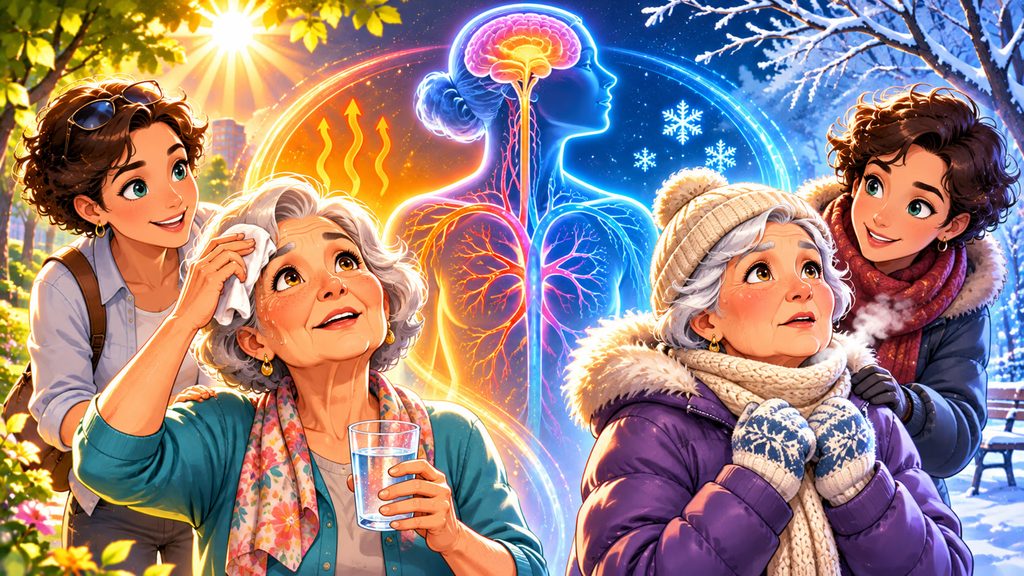
A summer afternoon that once felt pleasant can become exhausting, while a mildly chilly room suddenly demands another sweater. These changes are common as we grow older, and they are not simply a matter of becoming less adventurous about the weather. The body’s internal temperature-control system changes over time, sometimes making extreme conditions dangerous before discomfort becomes obvious.
Our core temperature must remain within a narrow range for organs to function properly. Aging can weaken both sides of this balancing act: releasing excess heat and generating or conserving warmth. Understanding why can help us remain comfortable, active, and safe throughout the year.
How Your Body’s Internal Thermostat Works
The brain’s hypothalamus coordinates thermoregulation, the processes that keep internal temperature relatively stable. Sensors in the skin and deeper tissues detect changing conditions, while the brain directs sweating, blood vessel adjustments, and muscle activity. When temperatures rise, the body releases heat; when they fall, it reduces heat loss and produces warmth.
These automatic responses depend on the heart, circulation, nerves, skin, and muscles. Aging affects these systems differently from person to person. Fitness, medication, and existing health conditions can matter as much as chronological age.
Why Older Adults May Sweat Less Efficiently
Sweat cools the body primarily when it evaporates from the skin, carrying away heat. During sustained heat exposure, older adults often produce less sweat than younger adults under comparable conditions. This can allow additional heat to accumulate, particularly during exercise or prolonged heatwaves.
Sweat glands do not simply disappear at a certain birthday. Their responsiveness and the biological signals controlling them change gradually. Humidity adds another challenge because sweat evaporates less efficiently in moist air, even when the skin feels drenched.
The Hidden Role of Blood Circulation
Cooling also requires cutaneous vasodilation, the widening of blood vessels near the skin. This brings warm blood closer to the surface so heat can escape. Research indicates that older adults may show a smaller increase in skin blood flow during heat stress.
The cardiovascular system must simultaneously supply vital organs and support cooling. Heart disease, reduced cardiovascular capacity, or dehydration may complicate that balancing act. A hot day can therefore strain circulation even when someone is sitting quietly rather than exercising.
Why Thirst Becomes a Less Reliable Warning
With age, the sensation of thirst may become weaker, and the kidneys may be less efficient at conserving water under certain conditions. Some older adults consequently drink less than their bodies require during hot weather. Dehydration reduces the fluid available for sweating and circulation, worsening heat strain.
A regular drinking routine can help, especially during warm weather or physical activity. However, people with heart failure, kidney disease, or prescribed fluid restrictions should follow individualized medical guidance. Staying hydrated requires planning rather than waiting for intense thirst.
Why Cold Weather Also Becomes More Challenging
When the environment turns cold, blood vessels in the skin narrow through vasoconstriction, reducing heat loss. Meanwhile, muscles contract involuntarily through shivering thermogenesis to generate warmth. Both protective responses may become less effective with age, although their strength varies considerably.
The result can be a reduced ability to maintain body temperature during prolonged exposure. Cold rooms deserve attention as well as snowy streets, particularly for people with limited mobility or inadequate heating. Feeling only slightly cold does not always mean the body’s internal temperature is safe.
What Muscle Loss Has to Do With Feeling Cold
Skeletal muscle creates heat during movement and shivering. Age-related loss of muscle mass and strength, called sarcopenia, can reduce the body’s capacity to generate warmth. This helps explain why someone who has become less active may increasingly depend on warm clothing.
Muscle loss does not occur at the same rate for everyone. Resistance training, adequate nutrition, and regular activity can help preserve strength and everyday function. Exercise improves physical resilience, although it cannot eliminate the risks of severe weather.
The Surprising Role of Brown Fat
Most body fat stores energy, but brown adipose tissue can burn fuel to release heat without obvious shivering. Researchers call this non-shivering thermogenesis. Studies suggest that detectable brown fat activity tends to decline with age, although individual differences are considerable.
This specialized tissue cannot replace adequate heating or protective clothing. Nevertheless, it reveals how thermal comfort depends on microscopic biological processes alongside familiar behaviors such as putting on a coat. The body’s ability to tolerate cold emerges from several systems working together.
How Medicines and Health Conditions Affect Temperature Tolerance
Certain medications alter sweating, circulation, hydration, or alertness. Diuretics may increase fluid loss, while some anticholinergic medications reduce sweating. Other treatments can affect blood pressure or the body’s response to temperature changes.
Conditions involving the heart, kidneys, thyroid, or nervous system can also influence temperature tolerance. The effects depend on the individual and their specific treatment. Anyone experiencing unusual sensitivity should discuss medications and symptoms with a healthcare professional rather than independently stopping prescribed drugs.
Why Temperature Alone Does Not Tell the Whole Story
Physiologist Ollie Jay of the University of Sydney has emphasized that heat strain depends on humidity, wind, radiant heat, and individual physiology, not simply the temperature reported in a forecast. A humid afternoon challenges evaporative cooling, while direct sunlight increases the heat absorbed by the body. During cold weather, wind and wet clothing accelerate heat loss.
Living conditions also influence vulnerability. Shade, reliable heating and cooling, and comfortable indoor spaces can reduce exposure. People living alone may benefit from regular check-ins during extreme weather.
Practical Ways to Stay Comfortable in Every Season
During hot weather, seek cooler indoor spaces, avoid strenuous activity during peak heat, wear breathable clothing, and maintain appropriate hydration. Cool showers and damp cloths can provide relief. Fans may help under suitable conditions, but they should not be relied upon alone during dangerous indoor heat.
In winter, keep rooms adequately heated, wear several loose clothing layers, and replace damp garments promptly. Gentle movement can help maintain comfort when appropriate. The most effective protection comes from preparing for temperature changes instead of waiting until discomfort becomes severe.
Recognizing Dangerous Heat and Cold Exposure
Heat exhaustion may cause dizziness, headache, nausea, weakness, and heavy sweating. Heatstroke is more serious: confusion, collapse, seizures, or altered consciousness during heat exposure require emergency assistance and immediate cooling. A person experiencing heatstroke may still be sweating, so dry skin is not a necessary warning sign.
Severe cold exposure can cause hypothermia, a dangerous reduction in core temperature below 35°C (95°F). Warning signs include confusion, clumsiness, slurred speech, and unusual drowsiness; shivering may eventually stop. Suspected hypothermia requires urgent medical attention and gentle warming while help arrives.
Aging changes how our bodies respond to the environment, but many risks can be reduced through sensible habits and preparation. Which change have you noticed most over the years: summer heat feeling heavier, winter cold becoming sharper, or sudden temperature changes becoming harder to handle? Share your experience in the comments.
Interesting Facts
- Sweating cools the body through evaporation, not simply by making the skin wet.
- Older adults can accumulate more body heat during comparable heat exposure than younger adults.
- High humidity can reduce sweat evaporation even when sweating is heavy.
- Muscle contractions during shivering produce warmth without deliberate exercise.
- Brown fat generates heat through a mechanism different from ordinary muscle shivering.
- Hypothermia can develop indoors when heating is inadequate, particularly among vulnerable older adults.
- Heatstroke can occur even when a person continues sweating.
Glossary
- Hypothalamus — A brain region coordinating temperature regulation and other essential functions.
- Thermoregulation — The body’s processes for balancing heat production and heat loss.
- Cutaneous Vasodilation — Widening of blood vessels near the skin to release heat.
- Dehydration — A shortage of body water relative to physiological needs.
- Vasoconstriction — Narrowing of blood vessels, which helps limit heat loss.
- Shivering Thermogenesis — Heat production through involuntary muscle contractions.
- Sarcopenia — Age-associated loss of skeletal muscle mass and strength.
- Brown Adipose Tissue — Specialized fat tissue capable of producing heat.
- Non-Shivering Thermogenesis — Heat generation without muscle shivering.
- Heatstroke — A life-threatening illness involving severe overheating and nervous system dysfunction.
- Hypothermia — A dangerous drop in core body temperature below 35°C (95°F).