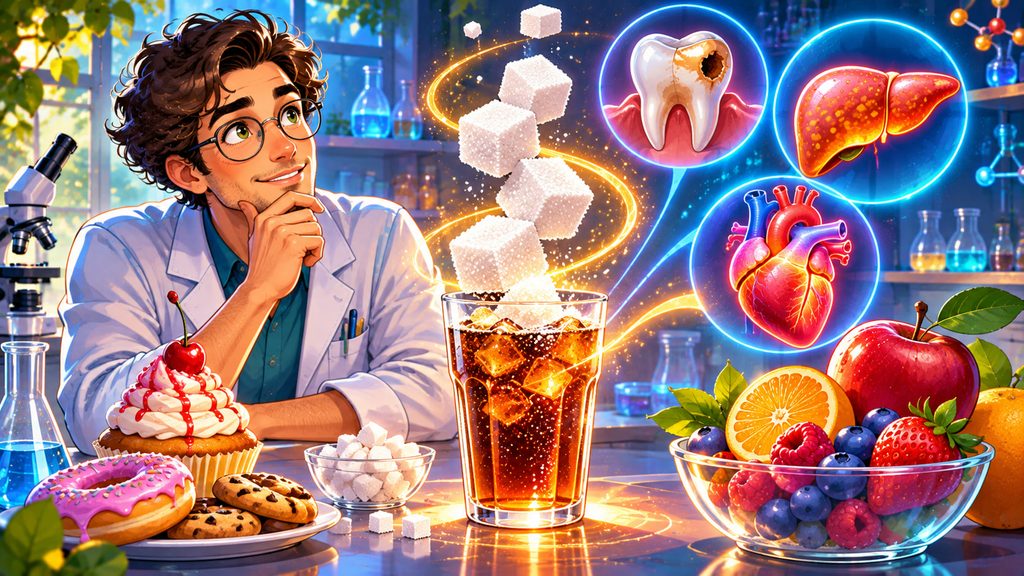
A spoonful in coffee, a sweetened yogurt, a bottle of iced tea: sugar slips into daily life with remarkable ease. Its appeal is obvious, and food manufacturers know it. The less obvious question is whether we gain anything nutritionally from adding so much sweetness to our diets.
The human body needs glucose, but it does not need added sugar. That distinction changes the debate. Sugar is not a poison that makes every dessert dangerous, yet routinely consuming large amounts of it can harm teeth, encourage weight gain, and contribute to serious metabolic problems. The strongest case against excess sugar comes from understanding what it does, not from frightening claims.
Myth 1: Your Brain Needs Sugar, So You Must Eat Sweets
The brain uses glucose as a major source of energy. However, that does not mean it requires soft drinks, candy, or sugar stirred into coffee. Your digestive system releases glucose from carbohydrate-rich foods, including oats, beans, potatoes, and whole grains; your liver can also make glucose when necessary.
Ordinary table sugar, or sucrose, contains glucose and fructose. It provides energy but virtually no vitamins, minerals, protein, or fiber. There is no physiological requirement to consume added sugar, even though carbohydrates and other nutritious foods can play valuable roles in a healthy diet.
Myth 2: Sugar Is Harmless If You Are Not Overweight
Body weight tells only part of the story. Frequent exposure to sugary foods and drinks provides fuel for oral bacteria, which produce acids that damage tooth enamel. The resulting dental caries can develop in people of any body size.
Excess sugar consumption, particularly through sweetened drinks, is also associated with type 2 diabetes and cardiovascular disease. A 2023 review in The BMJ evaluated 73 meta-analyses and identified numerous harmful associations, especially involving metabolic health. The overall scientific evidence supports reducing high sugar intakes to protect long-term health.
Myth 3: A Sugary Drink Is Just Another Source of Calories
Liquid sugar presents a particular problem because it is easy to consume quickly and may not satisfy hunger as effectively as solid food. A typical 330-milliliter can of regular soda can contain around 35 grams of sugar, equivalent to almost nine teaspoons. It delivers calories without the fiber and chewing that help make whole foods filling.
A 2025 global modeling study estimated that sugar-sweetened beverages contributed to approximately 2.2 million new cases of type 2 diabetes and 1.2 million new cases of cardiovascular disease in 2020. Nutrition scientist Dariush Mozaffarian, a coauthor of the research, has emphasized the public-health importance of reducing sugary-drink consumption, particularly where these beverages are heavily marketed. These figures are population-level estimates rather than individually confirmed diagnoses. Replacing sugary drinks with water is one of the simplest meaningful dietary changes.
Myth 4: Brown Sugar, Honey, and Agave Are Healthy Alternatives
Brown sugar may retain tiny amounts of minerals from molasses, while honey contains trace bioactive compounds. But neither provides enough beneficial nutrients in ordinary servings to transform added sweetness into a health food. Agave syrup, maple syrup, and coconut sugar also contribute substantial amounts of sugar.
The World Health Organization groups sugars in honey, syrups, and fruit juices with other free sugars. The body processes their component molecules through familiar metabolic pathways, regardless of fashionable packaging. Choosing honey for flavor is reasonable; consuming unlimited honey for health is not.
Myth 5: Fruit Is Just as Bad as Candy
Whole fruit contains naturally occurring sugars, but it arrives with water, fiber, vitamins, and other plant compounds. Its physical structure slows eating and contributes to fullness. For most people, apples, berries, and oranges are healthy foods rather than something to avoid because they taste sweet.
Fruit juice is different: squeezing several oranges into one glass removes much of the intact structure and makes concentrated sugars easy to drink. That is why juice sugars count as free sugars under WHO guidance, while sugars naturally enclosed in whole fruit do not. The food surrounding sugar matters enormously.
What Excess Sugar Does to the Liver and Metabolism
After a meal, the hormone insulin helps cells take up glucose from the bloodstream. Fructose is handled largely by the intestine and liver, where very high intakes can contribute to the production and storage of fat. Over time, diets with excessive calories and sugary drinks can promote insulin resistance and fat accumulation in the liver.
This does not mean every gram of fructose causes fatty liver disease. The dose, overall diet, body composition, and energy balance all matter. Nevertheless, sweetened drinks make large sugar intakes particularly easy, creating a reason to limit them even without banning occasional desserts.
How Much Sugar Is Too Much?
The WHO recommends keeping free sugars below 10% of daily energy intake and suggests reducing them below 5% for additional benefits, particularly for dental health. For someone consuming 2,000 calories daily, those figures correspond to less than 50 grams and ideally less than 25 grams of free sugar. Individual energy needs vary.
These recommendations are upper limits, not targets to reach. One sweetened beverage can exhaust the lower limit before breakfast, lunch, or dinner is considered. Reading ingredient lists and nutrition labels can reveal sugar hidden in flavored yogurts, breakfast cereals, sauces, and ready-to-drink coffees.
Does Sugar Cause Addiction or Hyperactivity?
Sweet foods activate the brain’s reward systems, and strong preferences can make habits difficult to change. However, calling sugar addictive in precisely the same clinical sense as a drug goes beyond established evidence. Similarly, controlled research has not consistently shown that sugar itself makes children hyperactive, despite the popular belief.
The real concerns do not require those claims. Highly palatable foods, aggressive marketing, easy availability, and large portions can all encourage habitual overconsumption. Sugar’s established effects on dental health and its contribution to unhealthy dietary patterns provide sufficient reasons to control intake.
How to Reduce Added Sugar Without Making Food Miserable
Start with beverages: choose water, unsweetened tea, or coffee without syrups more often. Gradually reduce sugar in familiar drinks, compare plain and sweetened yogurt, and keep whole fruit available when you want something sweet. Small changes are often easier to sustain than a dramatic ban.
Look for added sugars on labels where they are listed, remembering that ingredient names may include dextrose, maltose, syrups, and fruit juice concentrate. Regular meals containing protein, fiber, and satisfying foods can help prevent impulsive snacking. A healthy diet does not require zero sweetness; it benefits from making sweetness a choice rather than a constant background ingredient.
Our bodies are remarkably capable of obtaining the energy they need without spoonfuls of refined sugar. What would be hardest for you to give up: sweetened drinks, desserts, or the sugar that seems to hide in everyday packaged foods? Share your experience in the comments.
Interesting Facts
- One gram of sugar supplies approximately four calories but no dietary fiber.
- A typical 330-milliliter can of regular soda may contain around 35 grams of sugar.
- WHO guidance recommends free sugars below 10% of daily energy intake, ideally below 5%.
- A 2023 umbrella review examined 73 meta-analyses linking sugar intake with a wide range of health outcomes.
- A 2025 modeling study estimated that 2.2 million new diabetes cases worldwide in 2020 were attributable to sugar-sweetened beverages.
- Sugars in whole fruit are not classified as free sugars by the WHO, whereas sugars in fruit juice are.
- Brown sugar and honey are not nutritionally equivalent to eating whole fruit.
Glossary
- Glucose — A simple sugar used by cells as an important energy source.
- Sucrose — Table sugar, composed of glucose and fructose.
- Dental Caries — Tooth decay caused by acids produced when oral bacteria metabolize sugars.
- Free Sugars — Sugars added to foods and drinks, plus sugars naturally present in honey, syrups, and fruit juices.
- Insulin — A hormone that helps regulate blood glucose and energy storage.
- Insulin Resistance — Reduced cellular responsiveness to insulin, making glucose regulation more difficult.
- Added Sugars — Sugars incorporated into foods or beverages during processing or preparation.