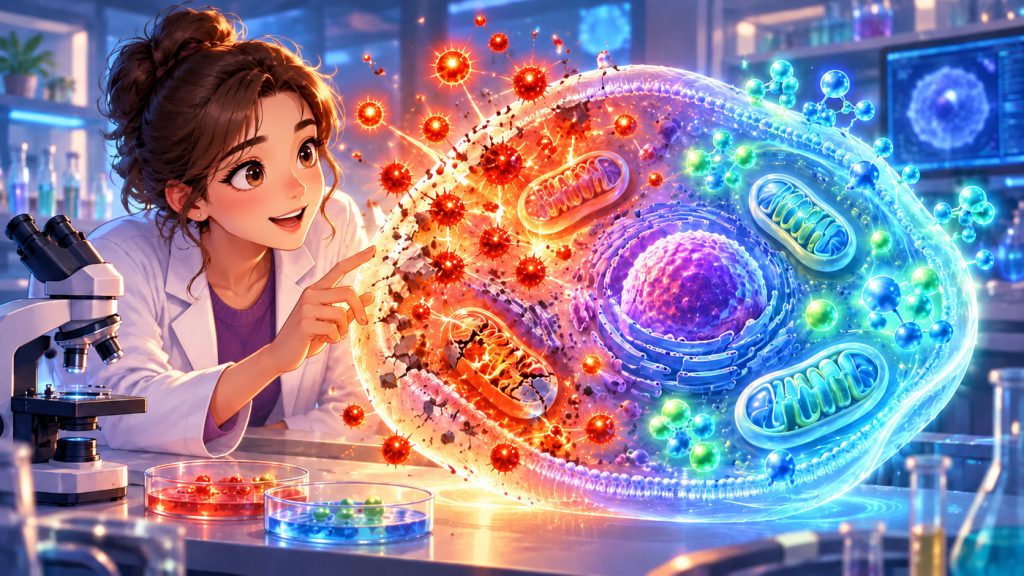
Oxidative stress is one of the most widely discussed processes in modern health science. It is linked with aging, inflammation, cardiovascular disease, metabolic disorders, neurodegeneration, and cellular damage.
But oxidative stress is often oversimplified. It is not simply “bad oxidation,” and the body does not need to eliminate every reactive molecule.
In fact, some oxidation is completely normal.
Oxidative stress begins when reactive molecules are produced faster than the body can control and neutralize them.
Understanding that balance is the key to understanding both the risks and the best ways to protect yourself.
What Is Oxidative Stress?
During normal metabolism, cells produce chemically reactive molecules called reactive oxygen species.
These include molecules such as superoxide and hydrogen peroxide.
In small amounts, reactive oxygen species are useful. They participate in cell signaling, immune defense, and adaptation to exercise.
Problems begin when their production becomes excessive.
The body normally controls these molecules using antioxidant enzymes and other protective systems.
When reactive molecules overwhelm those defenses, oxidative stress develops.
This imbalance can damage important cellular structures.
Where Reactive Oxygen Species Come From
One major source is the mitochondria.
Mitochondria produce most of the usable energy required by cells. During energy production, electrons move through a series of reactions.
A small percentage of these electrons can escape and react with oxygen, producing reactive oxygen species.
This is normal biology.
Reactive molecules are also produced intentionally by immune cells when they attack bacteria and other pathogens.
External factors can further increase production.
These may include:
- Cigarette smoke
- Air pollution
- Excessive ultraviolet radiation
- Heavy alcohol consumption
- Chronic inflammation
- Certain toxins
- Excessive calorie intake
- Some forms of radiation
- Severe physical stress
Oxidative stress usually results from multiple influences rather than one single cause.
What Happens to a Cell Under Oxidative Stress?
Reactive molecules can attack fats, proteins, and DNA.
Cell membranes contain lipids that are especially vulnerable to oxidation.
When these fats are damaged, a chain reaction called lipid peroxidation can occur.
This can alter membrane structure and interfere with normal cell function.
Proteins may also become oxidized, changing their shape and reducing their ability to perform normal tasks.
DNA can suffer oxidative damage as well.
Most damage is repaired successfully, but persistent stress can increase the burden on repair systems.
Why Mitochondria Can Become Part of a Vicious Cycle
Mitochondria are both a source and a target of oxidative stress.
If mitochondrial structures are damaged, energy production may become less efficient.
Damaged mitochondria can then release even more reactive oxygen species.
This can create a self-reinforcing cycle.
Cells have defense mechanisms to prevent this, including systems that remove damaged mitochondria.
However, chronic stress, aging, inflammation, and disease can reduce the efficiency of these protective systems.
Antioxidants Are the Body’s Defense System
An antioxidant is a substance that can reduce oxidative reactions or neutralize reactive molecules.
The body produces powerful antioxidant enzymes of its own.
These include superoxide dismutase, catalase, and glutathione-related enzymes.
Another major protective molecule is glutathione, which helps neutralize reactive compounds and supports detoxification processes inside cells.
Food also supplies antioxidant nutrients and plant compounds.
Vitamin C, vitamin E, carotenoids, selenium, and numerous polyphenols contribute to the body’s antioxidant network.
The important point is that protection comes from a coordinated system, not from one “super antioxidant.”
Oxidative Stress and Inflammation
Oxidative stress and inflammation often reinforce each other.
During inflammation, immune cells release reactive molecules to defend tissues.
If inflammation continues for too long, oxidative damage may increase.
At the same time, damaged cells can release signals that trigger further inflammation.
This creates another feedback loop.
Chronic low-level inflammation is therefore closely associated with conditions in which oxidative stress is also elevated.
Does Oxidative Stress Cause Aging?
Oxidative damage has long been associated with aging.
As cells grow older, damage gradually accumulates in proteins, DNA, membranes, and mitochondria.
However, modern researchers view aging as far more complicated than a simple buildup of free-radical damage.
Reactive oxygen species also act as important signals.
In moderate amounts, they can stimulate repair systems and help cells adapt to stress.
This adaptive process is sometimes described as hormesis.
Exercise provides a good example.
Physical activity temporarily increases reactive oxygen species, yet regular exercise strengthens the body’s antioxidant defenses and improves metabolic health.
This is why completely eliminating oxidative molecules would not necessarily be beneficial.
Can Too Many Antioxidant Supplements Be Harmful?
The idea that more antioxidants are always better is incorrect.
High-dose antioxidant supplements do not necessarily provide the same benefits as eating antioxidant-rich foods.
In some circumstances, excessive supplementation may interfere with normal cellular signaling or even produce unwanted effects.
Large clinical studies have shown that certain high-dose antioxidant supplements have failed to prevent disease and, in some groups, have increased risk.
For example, very high doses of beta-carotene supplements have been associated with increased lung cancer risk in smokers.
Experts generally emphasize food-based nutrition rather than relying on megadoses of isolated antioxidants.
Which Foods Help Support Antioxidant Defenses?
A varied diet rich in plant foods provides a wide range of antioxidant compounds.
Useful choices include:
- Berries
- Citrus fruits
- Leafy green vegetables
- Tomatoes
- Nuts
- Seeds
- Legumes
- Whole grains
- Olive oil
- Herbs and spices
- Cocoa
- Tea and coffee
Colorful fruits and vegetables provide different polyphenols, carotenoids, vitamins, and minerals.
Rather than focusing on one “superfood,” aim for variety.
A diverse diet supplies many compounds that work through different protective mechanisms.
Exercise: Stress That Makes the Body Stronger
Regular exercise is one of the most effective ways to support cellular resilience.
During exercise, oxygen use increases and temporary oxidative stress rises.
This sounds negative, but the body adapts.
Repeated moderate exercise stimulates antioxidant enzymes, improves mitochondrial efficiency, and strengthens repair systems.
This is another example of hormesis.
The problem appears when physical stress becomes excessive and recovery is inadequate.
Extreme overtraining combined with poor sleep and inadequate nutrition can increase oxidative burden.
Sleep Matters More Than Most People Realize
Poor sleep can increase inflammation and impair metabolic regulation.
Chronic sleep deprivation may also weaken antioxidant defenses.
Most adults function best with consistent, adequate sleep.
Good sleep supports hormone regulation, immune function, mitochondrial maintenance, and cellular repair.
One of the simplest ways to reduce unnecessary physiological stress is to protect your sleep.
Smoking Is a Major Source of Oxidative Damage
Cigarette smoke contains enormous numbers of reactive chemicals and free radicals.
It can overwhelm antioxidant defenses and damage blood vessels, lungs, DNA, and other tissues.
Smoking also promotes inflammation.
Avoiding tobacco exposure is therefore one of the most powerful ways to reduce avoidable oxidative stress.
Secondhand smoke can also contribute to oxidative damage.
Alcohol and Oxidative Stress
Alcohol metabolism can increase reactive oxygen species, especially in the liver.
Heavy or frequent alcohol consumption increases oxidative stress and inflammation and can damage liver cells.
Moderation reduces this burden.
People with certain liver diseases or other medical conditions may need to avoid alcohol completely.
Pollution and Ultraviolet Radiation
Air pollution contains particles and chemicals capable of increasing oxidative reactions in the lungs and cardiovascular system.
Although pollution cannot always be avoided completely, reducing exposure during periods of severe air pollution can help.
Ultraviolet radiation from sunlight also generates reactive oxygen species in skin cells.
Repeated excessive exposure contributes to skin aging and DNA damage.
Shade, protective clothing, and appropriate sunscreen reduce this stress.
Expert Perspective: Balance Matters More Than Elimination
Cell biologists and oxidative-stress researchers generally emphasize that reactive oxygen species are not simply toxins.
They are normal components of cellular signaling.
The real problem is persistent imbalance.
Trying to eliminate all oxidation is neither realistic nor desirable.
A healthier strategy is to support the body’s natural regulatory systems through nutrition, sleep, physical activity, avoidance of smoking, sensible sun protection, and management of chronic disease.
Practical Ways to Reduce Excess Oxidative Stress
You cannot completely prevent oxidation, and you should not try to.
Instead, reduce unnecessary sources of stress while supporting natural defenses.
The most effective strategies are surprisingly basic:
Eat a varied diet rich in vegetables, fruits, legumes, nuts, and whole grains.
Exercise regularly without chronically overtraining.
Sleep consistently.
Avoid smoking.
Limit excessive alcohol intake.
Protect skin from repeated intense ultraviolet exposure.
Manage conditions associated with chronic inflammation.
Avoid unnecessary megadoses of antioxidant supplements unless medically recommended.
Healthy habits work together. There is no single pill that replaces the body’s own antioxidant network.
Interesting Facts
- Reactive oxygen species are produced naturally every day inside healthy cells.
- The immune system deliberately generates reactive molecules to help destroy pathogens.
- Mitochondria are both an important source and a major target of oxidative stress.
- Exercise temporarily increases oxidative stress but also strengthens long-term antioxidant defenses.
- Antioxidant supplements do not always reproduce the benefits associated with antioxidant-rich foods.
- Glutathione is one of the most important antioxidant molecules produced inside the human body.
- Oxidative stress and chronic inflammation frequently reinforce each other.
- Sunlight can generate reactive oxygen species directly inside skin cells.
- Moderate biological stress can sometimes trigger protective adaptations through hormesis.
Glossary
- Reactive Oxygen Species — Chemically reactive oxygen-containing molecules involved in normal signaling but capable of causing damage when produced excessively.
- Oxidative Stress — An imbalance in which reactive molecules exceed the body’s ability to control or neutralize them.
- Mitochondria — Cellular structures that produce most of the usable energy needed by cells.
- Lipid Peroxidation — A chain reaction in which reactive molecules damage fats in cell membranes.
- Antioxidant — A substance or system that helps reduce or neutralize damaging oxidative reactions.
- Glutathione — A major antioxidant molecule produced by cells that helps neutralize reactive compounds.
- Inflammation — An immune response that protects tissues but can contribute to damage when it becomes chronic.
- Hormesis — A biological response in which a small or temporary stress stimulates protective adaptations.