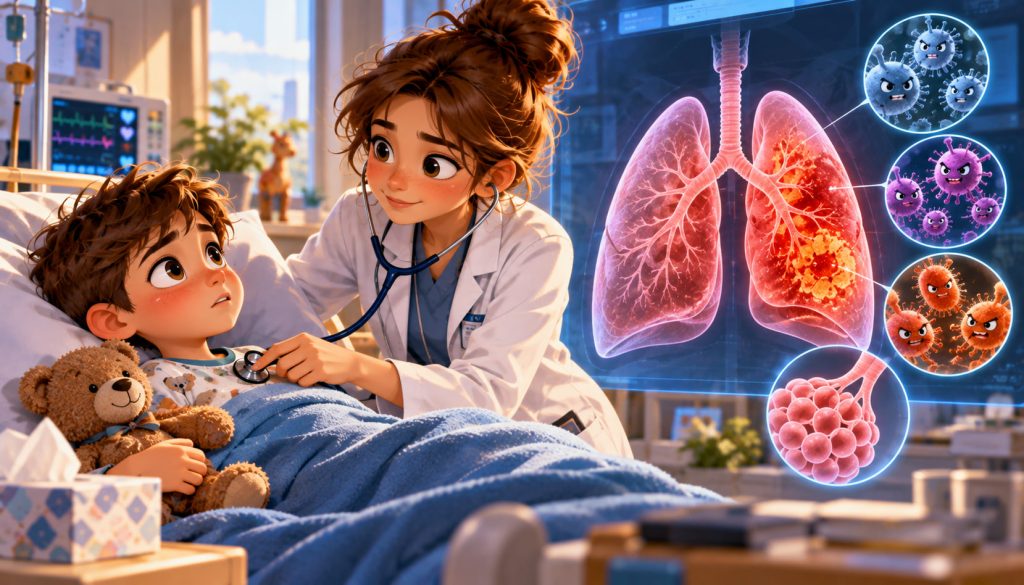
Pneumonia is an infection that inflames the air sacs in one or both lungs. These tiny sacs, called alveoli, normally fill with air. During pneumonia, they can fill with fluid or pus, making it harder for oxygen to move into the bloodstream.
The illness can range from mild to life-threatening. Some people recover at home within a few weeks, while others need hospital treatment, oxygen, or intensive care.
Pneumonia is not a single disease with a single cause. It can be triggered by bacteria, viruses, fungi, and, less commonly, other organisms.
Understanding the cause, symptoms, and risk factors helps explain why treatment can vary so much from one patient to another.
What Happens Inside the Lungs?
The lungs contain millions of microscopic air sacs.
When a person inhales, oxygen reaches these sacs and then passes into nearby blood vessels. Carbon dioxide moves in the opposite direction and is exhaled.
During pneumonia, infection causes inflammation.
The air sacs may fill with fluid, inflammatory cells, and mucus. This reduces the lungs’ ability to exchange gases efficiently.
That is why people with pneumonia may experience shortness of breath, rapid breathing, fatigue, or low oxygen levels.
In more severe cases, the infection can affect large areas of the lungs and place significant strain on the heart and other organs.
What Causes Pneumonia?
Bacteria are a common cause of pneumonia.
One well-known bacterial cause is Streptococcus pneumoniae. Other bacteria can also infect the lungs, particularly in hospitals or people with weakened immune systems.
Viruses are another major cause.
Influenza viruses, respiratory syncytial virus, and several other respiratory viruses can cause pneumonia directly or make it easier for a secondary bacterial infection to develop.
Fungal pneumonia is less common in healthy people but can become important in people with weakened immunity or after exposure to certain environmental fungi.
The cause matters because antibiotics work against bacteria, but they do not treat viral pneumonia.
What Are the Main Symptoms?
Symptoms can develop suddenly or gradually.
Common signs include:
- Cough
- Fever
- Chills
- Shortness of breath
- Chest pain, especially when breathing deeply or coughing
- Fatigue
- Rapid breathing
- Loss of appetite
- Weakness
A cough may be dry or may produce mucus.
Some patients develop yellow, green, or rust-colored sputum, although mucus color alone cannot reliably determine whether an infection is bacterial.
Older adults may show less typical symptoms.
Instead of a high fever, they may develop confusion, unusual sleepiness, weakness, or a sudden decline in normal activity.
Young children may breathe rapidly, become unusually tired, feed poorly, or show signs of respiratory distress.
Who Is Most at Risk?
Anyone can develop pneumonia, but some people have a higher risk of severe disease.
These include:
- Adults over 65
- Infants and very young children
- People with chronic lung disease
- People with heart disease
- People with diabetes
- Smokers
- People with weakened immune systems
- Patients recovering from major illness or surgery
People who have difficulty swallowing also face a risk of aspiration pneumonia.
This occurs when food, liquid, saliva, or vomit enters the lungs instead of the stomach.
Community-Acquired vs. Hospital-Acquired Pneumonia
Doctors often classify pneumonia based on where it was acquired.
Community-acquired pneumonia develops outside hospitals or similar healthcare facilities.
Hospital-acquired pneumonia develops during a hospital stay.
This distinction matters because hospital-acquired infections may involve bacteria that are more resistant to antibiotics.
Ventilator-associated pneumonia is a particular concern in patients who require mechanical ventilation.
These infections can be more difficult to treat and may require broader antibiotic coverage.
How Is Pneumonia Diagnosed?
Diagnosis usually begins with symptoms and a physical examination.
A clinician may listen to the lungs for crackling, reduced breath sounds, or other abnormalities.
A chest X-ray is commonly used when pneumonia is suspected.
Blood tests may help assess the severity of infection, while oxygen levels can be measured using a pulse oximeter.
In some cases, sputum samples, blood cultures, CT scans, or other tests may be required.
The goal is not only to confirm pneumonia, but also to estimate its severity and identify whether hospital care is necessary.
How Is Bacterial Pneumonia Treated?
Bacterial pneumonia is generally treated with antibiotics.
The specific medication depends on several factors, including age, medical history, severity, recent antibiotic use, and the suspected organism.
People with mild illness may take oral antibiotics at home.
More severe cases may require intravenous antibiotics in hospital.
Patients are usually advised to complete the prescribed antibiotic course unless their clinician specifically changes the treatment.
Symptoms do not necessarily disappear immediately after treatment begins.
Fever may improve first, while cough and fatigue can persist much longer.
What About Viral Pneumonia?
Antibiotics do not kill viruses.
Treatment for viral pneumonia often focuses on rest, hydration, fever control, and monitoring breathing.
For certain viral infections, antiviral medications may be useful, especially when treatment begins early or when the patient is at high risk of complications.
A viral infection can occasionally be followed by bacterial pneumonia.
A person who begins improving and then develops a new high fever, worsening cough, chest pain, or breathing problems may need reassessment.
When Is Hospital Treatment Needed?
Severe pneumonia may require oxygen, intravenous fluids, antibiotics, respiratory support, or intensive monitoring.
Doctors consider several factors when deciding whether someone should be hospitalized.
These include breathing rate, blood pressure, oxygen level, age, mental status, kidney function, and other medical conditions.
Some patients can develop respiratory failure, meaning the lungs cannot provide enough oxygen or remove carbon dioxide effectively.
Others may develop sepsis, a dangerous whole-body response to infection.
Pneumonia becomes particularly dangerous when breathing becomes difficult, oxygen levels fall, or infection begins affecting other organs.
Warning Signs That Need Urgent Medical Attention
Immediate medical assessment is important if a person with suspected pneumonia develops severe shortness of breath, blue or gray lips, confusion, fainting, persistent chest pain, or extreme weakness.
Rapidly worsening symptoms are also concerning.
Infants, older adults, and people with significant chronic illness should be assessed promptly because serious pneumonia may progress quickly.
Someone who feels unable to breathe normally should not wait for symptoms to resolve on their own.
Can Pneumonia Be Prevented?
Not every case is preventable, but risk can be reduced.
Vaccination is one of the most important tools.
Vaccines can protect against pneumococcal disease, influenza, and several viral infections that can lead to pneumonia.
Stopping smoking is also important because tobacco smoke damages the respiratory system’s natural defenses.
Regular handwashing and avoiding close contact with people who are actively ill can reduce exposure to respiratory infections.
For people with swallowing disorders, proper feeding techniques and medical management can help reduce aspiration risk.
How Long Does Recovery Take?
Recovery varies greatly.
A young, otherwise healthy person with mild pneumonia may improve significantly within days, but cough and tiredness can continue for several weeks.
Older adults and people with severe disease may require much longer recovery.
Lung inflammation does not disappear immediately when the infection is controlled.
Energy levels can therefore remain reduced even after fever and major symptoms improve.
Feeling tired for several weeks after pneumonia can occur, especially after a moderate or severe infection.
Expert Perspective: Early Assessment Matters
Respiratory specialists generally emphasize that the seriousness of pneumonia depends less on the word “pneumonia” itself and more on the patient’s overall condition.
A small infection in a healthy adult can be manageable at home.
The same infection in an elderly patient with heart disease or reduced immunity can become dangerous quickly.
For this reason, treatment decisions consider the whole patient, not simply the chest X-ray.
Early recognition of breathing difficulties, low oxygen, dehydration, confusion, or rapid deterioration can significantly improve the chances of timely treatment.
Pneumonia Is Treatable, but It Should Not Be Ignored
Modern medicine can treat many cases of pneumonia successfully.
Antibiotics, antiviral medications, oxygen therapy, vaccines, and improved intensive care have dramatically changed outcomes.
However, pneumonia remains potentially serious.
The safest approach is to take persistent fever, worsening cough, chest pain, and breathing difficulty seriously—especially in people with known risk factors.
Early diagnosis and appropriate treatment can prevent a manageable infection from developing into a much more dangerous illness.
Interesting Facts
- The lungs contain hundreds of millions of tiny air sacs involved in oxygen exchange.
- Pneumonia can affect one lung, both lungs, or only a small section of lung tissue.
- Older adults may develop confusion rather than a dramatic fever.
- A viral respiratory infection can sometimes be followed by a secondary bacterial pneumonia.
- Smoking increases vulnerability by damaging the normal protective mechanisms of the airways.
- Pneumonia can occasionally occur after aspiration of food, liquid, or stomach contents.
- Recovery often continues after the infection itself has been controlled.
- Vaccination can reduce the risk of several important causes of pneumonia.
Glossary
- Pneumonia — An infection that causes inflammation in the lungs, particularly the air sacs.
- Alveoli — Tiny air sacs in the lungs where oxygen and carbon dioxide are exchanged.
- Sputum — Mucus coughed up from the lower respiratory tract.
- Aspiration Pneumonia — Pneumonia caused when foreign material enters the lungs.
- Community-Acquired Pneumonia — Pneumonia contracted outside a hospital or healthcare facility.
- Hospital-Acquired Pneumonia — Pneumonia that develops during hospitalization.
- Pulse Oximeter — A small device that estimates the oxygen level in the blood.
- Respiratory Failure — A condition in which the lungs cannot adequately provide oxygen or remove carbon dioxide.
- Sepsis — A dangerous systemic response to infection that can damage organs.
- Antibiotic — A medication used to treat bacterial infections.
- Antiviral Medication — A drug designed to inhibit certain viruses.
- Mechanical Ventilation — Machine-assisted breathing used when a patient cannot breathe adequately without support.