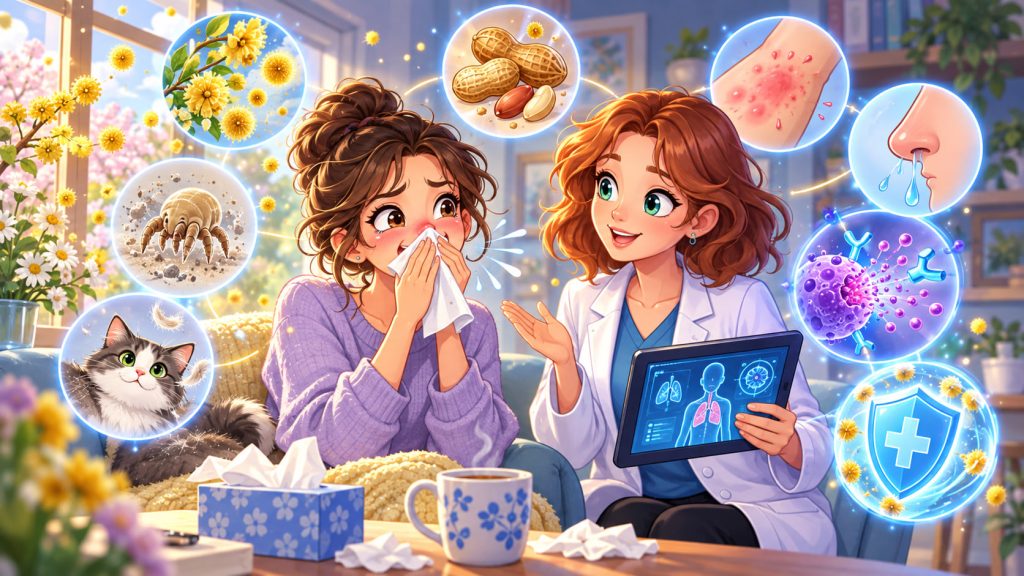
Allergies are extremely common, but they are often misunderstood. A harmless substance such as pollen, dust, food, or animal dander can trigger a surprisingly strong reaction in someone whose immune system treats it as a threat.
Some allergic reactions are mild and annoying. Others can interfere with sleep, breathing, digestion, skin health, or daily life. In rare cases, allergies can cause a life-threatening reaction called anaphylaxis.
The key idea is simple: an allergy is an exaggerated immune response to a substance that is normally harmless to most people.
What Happens During an Allergic Reaction?
The immune system normally protects the body from infections and other genuine threats.
In an allergic person, the immune system becomes sensitized to a specific substance called an allergen.
When the person encounters that allergen again, immune cells may release chemicals such as histamine.
Histamine can cause:
- Sneezing
- Itching
- Swelling
- Watery eyes
- Runny nose
- Skin rashes
- Wheezing
- Digestive symptoms
The exact reaction depends on the allergen, the amount of exposure, and the individual immune response.
Common Types of Allergies
Allergies can affect different organs and appear in very different ways.
Common forms include:
- Pollen allergy
- Dust mite allergy
- Animal dander allergy
- Food allergy
- Insect sting allergy
- Medication allergy
- Allergic asthma
- Allergic contact dermatitis
Some people have only one allergy, while others react to several unrelated substances.
Having one allergic condition can increase the likelihood of developing another.
Seasonal Allergies
Seasonal allergic rhinitis, often called hay fever, is usually triggered by airborne pollen.
Tree pollen tends to be more common in certain parts of spring, while grasses and weeds dominate at different times of year.
Typical symptoms include sneezing, nasal congestion, itchy eyes, watery eyes, and a runny nose.
Unlike a viral infection, seasonal allergies usually do not cause fever.
Symptoms may worsen outdoors, on windy days, or when pollen levels are high.
Dust Mites and Indoor Allergies
Dust mites are microscopic organisms that live in household dust, bedding, carpets, and upholstered furniture.
People are not usually allergic to the mites themselves, but to proteins associated with their waste and body fragments.
Symptoms can continue throughout the year.
Reducing humidity, washing bedding regularly, and using allergen-resistant mattress and pillow covers may reduce exposure.
Indoor allergies can also come from mold spores, cockroaches, or pets.
Pet Allergies
Pet allergy is usually caused by proteins found in skin flakes, saliva, and urine.
Cat allergens are particularly persistent and can remain in indoor environments for long periods.
The problem is not simply animal fur.
This is why so-called “hypoallergenic” pets may still trigger symptoms.
Regular cleaning, keeping pets out of bedrooms, using effective air filtration, and limiting direct exposure may help reduce symptoms.
Food Allergy Is Different From Food Intolerance
Food allergy involves the immune system.
Food intolerance usually does not.
For example, lactose intolerance happens because the body has difficulty digesting lactose, the sugar found in milk. It can cause bloating, gas, and diarrhea, but it is not usually an immune reaction.
Food allergy can cause itching, hives, swelling, vomiting, wheezing, or more severe reactions.
Common food allergens include:
- Peanuts
- Tree nuts
- Milk
- Eggs
- Fish
- Shellfish
- Wheat
- Soy
- Sesame
A true food allergy can sometimes become dangerous very quickly.
What Is Anaphylaxis?
Anaphylaxis is a severe allergic reaction that can affect several body systems at once.
It may develop within minutes after exposure to an allergen.
Warning signs can include:
- Difficulty breathing
- Swelling of the tongue or throat
- Widespread hives
- Dizziness
- Sudden weakness
- Vomiting
- Rapid drop in blood pressure
Anaphylaxis is a medical emergency.
Epinephrine is the first-line emergency treatment.
People known to be at risk may be prescribed an epinephrine auto-injector and should know how and when to use it.
Why Do Allergies Develop?
There is no single cause.
Genetics plays an important role.
Children with allergic parents are more likely to develop allergic conditions, although they may not develop exactly the same allergy.
Environment also matters.
Exposure to pollution, tobacco smoke, indoor allergens, infections, diet, and patterns of microbial exposure may influence how the immune system develops.
Allergies can begin in childhood, but they can also appear for the first time in adulthood.
Can Allergies Disappear?
Yes, some allergies change over time.
Children may outgrow certain food allergies, especially to milk or eggs.
Other allergies, such as peanut, tree nut, or shellfish allergy, are more likely to persist.
Seasonal allergies can also become weaker or stronger over the years.
The immune system changes throughout life, so allergy patterns are not always permanent.
How Are Allergies Diagnosed?
Diagnosis starts with medical history.
Doctors consider what triggers symptoms, how quickly they appear, how long they last, and whether they are seasonal or continuous.
Tests may include:
- Skin-prick testing
- Blood tests for specific antibodies
- Patch testing
- Carefully supervised food challenges
A positive allergy test does not always mean a person will have symptoms in real life.
Test results must be interpreted together with the clinical history.
Expert Perspective: Avoiding the Trigger Is Only Part of Treatment
Allergy specialists usually emphasize that treatment depends on both the trigger and the severity of symptoms.
For some people, reducing exposure is enough.
Others benefit from antihistamines, nasal corticosteroid sprays, eye drops, inhalers, or other medications.
In selected cases, allergen immunotherapy can gradually reduce sensitivity.
This approach involves exposing the immune system to carefully controlled amounts of an allergen over time.
It can be given through injections or, for some allergens, tablets or drops placed under the tongue.
Antihistamines and Other Treatments
Antihistamines block some of the effects of histamine.
They are commonly used for itching, hives, sneezing, and runny nose.
Newer antihistamines are less sedating than many older ones.
For persistent nasal allergies, corticosteroid nasal sprays can be especially effective because they reduce inflammation.
Asthma linked to allergies may require inhaled medications.
Skin allergies may require topical treatments.
Treatment should match the condition rather than simply suppressing symptoms randomly.
Can Allergy Be Prevented?
Not every allergy can be prevented.
However, some strategies can reduce exposure and lower symptom burden.
For pollen allergy, keeping windows closed during high-pollen periods and showering after spending time outdoors may help.
For dust mites, washing bedding and reducing indoor humidity can be useful.
For food allergy, avoiding the confirmed allergen is essential.
People with severe allergy should also check ingredient labels carefully and communicate clearly when eating outside the home.
Allergy and Asthma
Allergies and asthma often occur together.
Exposure to allergens can trigger airway inflammation in susceptible people.
This can cause wheezing, chest tightness, coughing, and shortness of breath.
Not all asthma is allergic, but allergic asthma is common.
Good allergy control can sometimes make asthma easier to manage.
Breathing symptoms should never be ignored, especially if they are worsening quickly.
When to Seek Medical Advice
Medical assessment is useful when allergy symptoms are frequent, severe, unexplained, or interfering with sleep and everyday activities.
A specialist can help identify triggers and create a treatment plan.
Urgent help is needed for severe breathing difficulty, throat swelling, fainting, or suspected anaphylaxis.
The most dangerous allergic reactions can progress rapidly, so emergency symptoms require immediate action.
Interesting Facts
- Allergies occur when the immune system reacts to substances that are harmless to most people.
- Histamine is responsible for many classic allergy symptoms.
- Allergies can begin at almost any age.
- Pollen can travel long distances through the air.
- Cat allergens can remain indoors even after a cat is no longer present.
- Food intolerance and food allergy are biologically different conditions.
- Some children outgrow certain food allergies.
- Allergic diseases often run in families.
- Immunotherapy can reduce sensitivity to specific allergens over time.
- Anaphylaxis can affect breathing, circulation, skin, and the digestive system simultaneously.
Glossary
- Allergy — An exaggerated immune reaction to a substance that is usually harmless.
- Allergen — A substance capable of triggering an allergic reaction.
- Histamine — A chemical released during many allergic reactions that causes itching, swelling, and other symptoms.
- Allergic Rhinitis — Inflammation of the nasal passages caused by allergens such as pollen or dust mites.
- Hay Fever — A common name for seasonal allergic rhinitis.
- Anaphylaxis — A severe, potentially life-threatening allergic reaction.
- Epinephrine — The first-line emergency medication used to treat anaphylaxis.
- Antihistamine — A medication that blocks the effects of histamine.
- Immunotherapy — Treatment designed to gradually reduce sensitivity to a specific allergen.
- Skin-Prick Test — A test in which small amounts of possible allergens are introduced into the skin to look for a reaction.
- Food Intolerance — Difficulty processing a food that does not usually involve an allergic immune response.
- Allergic Asthma — Asthma in which symptoms are triggered or worsened by allergens.
- Sensitization — The process by which the immune system becomes reactive to a particular allergen.