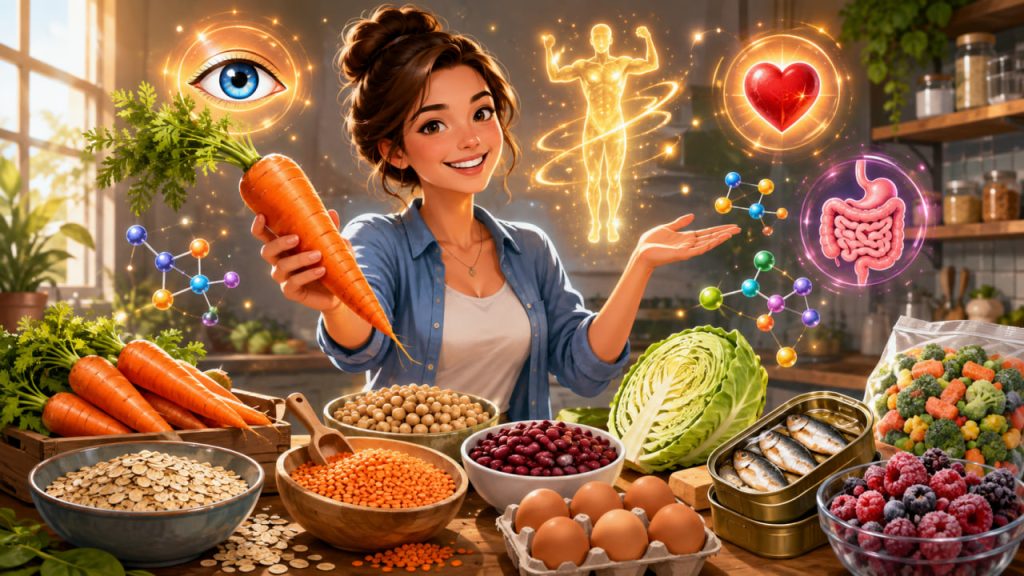
Carrots are one of the simplest healthy foods you can buy. They are cheap, easy to store, naturally sweet, and useful in soups, salads, stews, juices, lunch boxes, and quick snacks.
But carrots are more than a crunchy orange vegetable. They provide fiber, potassium, vitamin K, and especially beta-carotene, a plant pigment that the body can convert into vitamin A. Eating carrots regularly can support eye health, digestion, immune function, skin health, and an overall nutrient-rich diet.
The best part is that carrots prove an important point: healthy food does not have to be expensive, exotic, or difficult to cook.
Why Carrots Are So Nutritious
Carrots are famous for beta-carotene, the orange pigment that gives them their bright color.
Beta-carotene is a provitamin A carotenoid, meaning the body can convert it into vitamin A when needed. Vitamin A supports normal vision, immune function, reproduction, growth, and the health of organs such as the heart, lungs, and skin. The National Institutes of Health lists carrots among the major plant sources of vitamin A carotenoids.
A half-cup of raw carrots provides about 459 micrograms of vitamin A RAE, or roughly 51% of the Daily Value, according to the NIH Office of Dietary Supplements.
That makes carrots one of the most affordable everyday sources of vitamin A activity in the diet.
Carrots and Eye Health
The old idea that carrots are good for your eyes is partly true.
Carrots will not give you superhuman vision, but vitamin A is essential for normal eyesight. Low vitamin A intake can harm vision, especially in low-light conditions. Beta-carotene from carrots helps the body maintain healthy vitamin A levels when the overall diet is balanced.
Carrots also fit into the broader rule that colorful vegetables support long-term health. Harvard’s Nutrition Source recommends eating a variety of fruits and vegetables, including yellow and orange produce, dark leafy greens, legumes, citrus, and red fruits and vegetables.
Carrots are useful not because they replace other vegetables, but because they help build a colorful, varied plate.
Carrots Support Digestion
Carrots contain dietary fiber, which supports normal digestion and helps food feel more satisfying.
Fiber is one reason whole vegetables are usually better than juices. When you eat a carrot, you get crunch, volume, water, and fiber. When you drink a sweet vegetable or fruit juice, it is much easier to consume calories quickly without the same fullness.
Carrots are especially practical because they can be eaten raw or cooked. Raw carrots are crunchy and convenient. Cooked carrots are softer, sweeter, and easier for some people to digest.
For everyday health, the best carrot is the one you will actually eat regularly.
Raw or Cooked Carrots: Which Is Better?
Both raw and cooked carrots can be healthy.
Raw carrots are excellent as a snack, especially with hummus, yogurt dip, cottage cheese, or a small handful of nuts. Cooked carrots work well in soups, stews, roasted vegetable trays, omelets, and grain bowls.
Because vitamin A and carotenoids are fat-soluble, eating carrots with a small amount of healthy fat can help the meal make better nutritional sense. Try carrots with olive oil, avocado, eggs, fish, yogurt, nuts, seeds, or tahini.
A simple rule works well: eat carrots in different ways across the week instead of searching for one perfect preparation method.
Is It Safe to Eat Carrots Every Day?
For most healthy people, eating carrots every day in normal food portions is safe and beneficial.
The NIH notes that getting beta-carotene from plant foods such as carrots is not the same concern as getting too much preformed vitamin A from animal foods or supplements.
However, eating very large amounts of carrots or other beta-carotene-rich foods every day can sometimes give the skin a yellow-orange tint, a harmless condition called carotenemia. It usually improves when intake is reduced.
One carrot a day is very different from eating a whole bag every day. Moderation still matters.
Cheap Superfoods: What Should You Add Next?
The word “superfood” is popular, but the smartest version is simple: affordable foods that are nutrient-dense, easy to use, and helpful in a balanced diet.
You do not need expensive powders or rare berries. Many of the best superfoods are basic pantry and fridge staples.
Harvard’s budget nutrition guidance highlights affordable staples such as lentils, dried beans, frozen fruits and vegetables, canned beans, and tinned fish.
Beans and Lentils
Beans and lentils are among the best cheap superfoods.
They provide plant protein, fiber, minerals, and slow-digesting carbohydrates. The American Heart Association recommends beans and other legumes as part of a healthy eating pattern, noting that their fiber can help you feel full longer.
Use lentils in soup, beans in salads, chickpeas in hummus, or black beans in rice bowls.
If you want affordable nutrition, start with legumes.
Oats
Oats are cheap, filling, and easy to prepare.
They work as oatmeal, overnight oats, homemade granola, smoothie thickener, or a base for pancakes. Harvard’s Healthy Eating Plate includes oats among whole and intact grains that have a milder effect on blood sugar and insulin than refined grains.
Add carrots, cinnamon, walnuts, raisins, or apple slices for a simple breakfast.
Eggs
Eggs are inexpensive, versatile, and protein-rich.
They can turn vegetables into a real meal. Add eggs to salads, soups, rice bowls, vegetable stir-fries, or whole-grain toast.
For many households, eggs are one of the easiest ways to make healthy cooking faster and more satisfying.
Cabbage
Cabbage is one of the most underrated budget vegetables.
It lasts longer than many leafy greens, costs less than many salad vegetables, and can be eaten raw, fermented, sautéed, roasted, or added to soups.
Cabbage brings crunch, fiber, and volume to meals. It also pairs well with carrots, onions, beans, potatoes, fish, chicken, and eggs.
Frozen Vegetables and Berries
Frozen produce is not a second-class option.
The American Heart Association notes that canned and frozen foods can be nutritious and affordable, and encourages choosing a wide variety of fruits and vegetables.
Frozen vegetables are useful for soups, stews, omelets, pasta, and quick side dishes. Frozen berries can upgrade oatmeal, yogurt, smoothies, and cottage cheese.
Healthy eating becomes easier when your freezer helps you.
Sardines and Canned Fish
Canned fish such as sardines, salmon, tuna, and herring can be affordable sources of protein and healthy fats.
Harvard Health notes that canned fish, including sardines, herring, and tuna, can be affordable options in heart-healthy eating patterns.
Pair sardines with whole-grain bread, boiled potatoes, salad, carrots, or beans for a fast nutrient-dense meal.
Expert Perspective
A useful expert view comes from the American Heart Association: healthy eating can be affordable when people focus on beans, whole grains, frozen vegetables, lean proteins, and simple swaps. In a 2025 statement, AHA registered dietitian Arlen Vanessa Marin emphasized that swaps such as frozen vegetables instead of fresh or lentils instead of processed meat can support nutrition without sacrificing flavor.
The practical message is clear: a strong diet is built from repeatable habits, not expensive health trends.
Carrots, beans, oats, cabbage, eggs, frozen vegetables, and canned fish can do more for everyday nutrition than many overpriced “wellness” products.
How to Build a Cheap Superfood Plate
A simple affordable meal could look like this:
- Roasted carrots
- Lentils or beans
- Cabbage salad
- Boiled egg or canned fish
- Oats, brown rice, or whole-grain bread
- Yogurt, nuts, seeds, or olive oil for balance
This kind of meal is filling, colorful, and realistic.
The secret is not eating one superfood. The secret is combining simple foods into a pattern you can keep.
Interesting Facts
- Carrots can be orange, purple, yellow, red, or white.
- Purple carrots contain anthocyanins, the same pigment family found in many purple and blue plant foods.
- Baby carrots are often regular carrots cut and shaped into small pieces.
- Cooking carrots can make them taste sweeter.
- Lentils cook faster than many dried beans and do not always require soaking.
- Cabbage can stay fresh longer than delicate salad greens.
- Frozen berries are often cheaper than fresh berries outside the growing season.
Glossary
- Beta-Carotene — An orange plant pigment that the body can convert into vitamin A.
- Vitamin A — A fat-soluble vitamin important for vision, immunity, growth, and cell function.
- Carotenoids — Plant pigments found in orange, yellow, red, and green vegetables and fruits.
- Fiber — A type of carbohydrate that supports digestion and helps improve fullness.
- Superfood — A popular term for nutrient-dense foods that can support a healthy diet.
- Legumes — Beans, lentils, peas, chickpeas, and related plant foods.
- Whole Grains — Grains that keep their bran, germ, and endosperm, such as oats and brown rice.
- Carotenemia — A harmless yellow-orange skin tint that can occur after very high beta-carotene intake.
- Nutrient-Dense Food — A food that provides many useful nutrients relative to its calories.
- Balanced Diet — A regular eating pattern that includes vegetables, fruits, protein, whole grains, healthy fats, and enough variety.