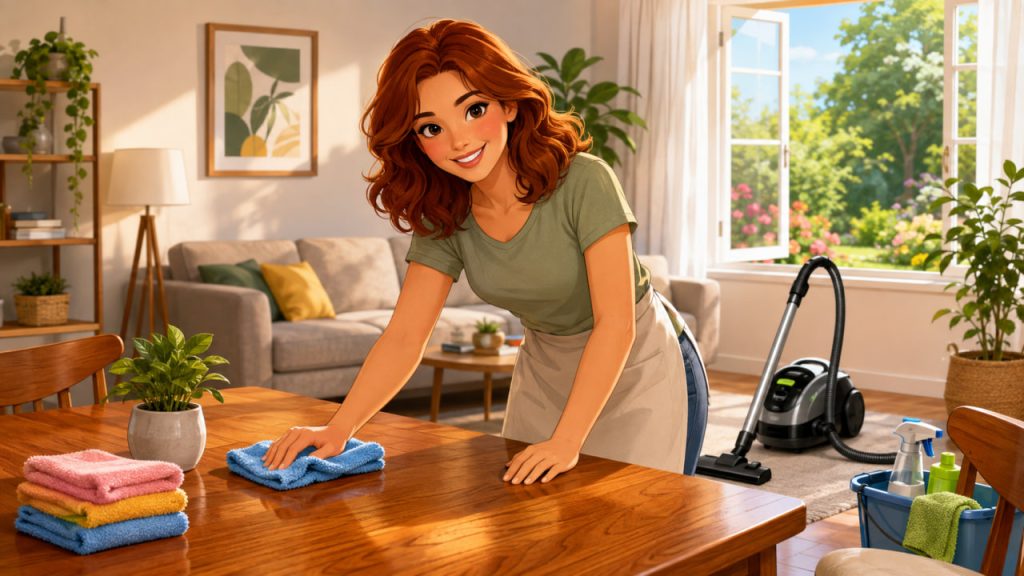
A clean home is not only about beauty, order, and pleasant smells. Done properly, house cleaning can reduce dust, allergens, mold risk, germs, pests, indoor particles, and stress.
But cleaning can also be done badly.
Too much fragrance, poor ventilation, harsh chemical mixing, dusty dry sweeping, and ignoring moisture problems can make indoor air worse instead of better. Healthy cleaning is not about making a home smell “strongly clean.” It is about removing dirt, reducing triggers, and creating a safer indoor environment.
The best approach combines smart habits, correct tools, safe products, and a realistic routine.
Why Cleaning Matters for Health
Every home collects dust, skin flakes, pollen, pet dander, food crumbs, fabric fibers, mold spores, bacteria, and particles from cooking or outdoor air.
These pollutants can irritate the nose, throat, lungs, and skin. For people with allergies or asthma, they can become real triggers.
CDC notes that cleaning removes germs, dirt, and impurities from surfaces and helps families stay healthy. Disinfecting is different: it kills germs on surfaces after cleaning, while sanitizing reduces germs to safer levels.
The healthiest home is not sterile. It is well-maintained, dry, ventilated, and free from avoidable buildup.
Clean First, Disinfect Only When Needed
Many people overuse disinfectants.
For everyday home care, regular cleaning with soap or detergent and water is often enough for most surfaces. Disinfection is more useful after illness, on high-touch surfaces, in bathrooms, around raw meat preparation, or when someone in the home is vulnerable.
CDC separates cleaning from disinfecting because cleaning physically removes dirt and many germs, while disinfecting uses chemicals to kill germs after cleaning.
Common high-touch surfaces include door handles, light switches, faucet handles, phones, remote controls, toilet handles, appliance handles, and kitchen counters.
Do not disinfect dirty surfaces first. Clean them, then disinfect if necessary.
Ventilation Makes Cleaning Safer
Cleaning products can release vapors and particles into the air.
That is why ventilation matters. Open windows when outdoor air is safe. Use exhaust fans in bathrooms and kitchens. Avoid spraying products into the air. Keep product containers closed when not in use.
EPA says ventilation is important when cleaning or sanitizing indoors and recommends using EPA-registered products according to label directions to reduce indoor air pollution risks while maintaining effectiveness.
This is especially important for small bathrooms, kitchens, laundry rooms, and homes with children, older adults, asthma, or chemical sensitivity.
Choose Safer Cleaning Products
A product does not need to smell aggressive to work.
Look for simpler formulas, low-fragrance options, and products with credible safety labels. EPA’s Safer Choice program helps consumers identify products made with safer ingredients for people and the environment.
Avoid mixing cleaning chemicals. Never mix bleach with ammonia, vinegar, acids, or toilet cleaners. Dangerous gases can form.
Also be careful with “green” claims. EPA warns that vague terms such as “eco safe” or “environmentally friendly” can be misleading unless supported by recognized standards.
The best cleaning product is effective for the task, properly labeled, safely used, and not stronger than necessary.
Dust Control: The Foundation of Healthy Cleaning
Dust is not just gray powder. It can contain allergens, fibers, skin cells, soil particles, pollen, pet dander, pest particles, and residues from indoor activities.
Dry dusting can push particles back into the air. Instead, use a damp microfiber cloth or an electrostatic cloth. Work from top to bottom so falling dust is removed last from floors.
Good dust-control habits include:
- Wipe shelves, window sills, and electronics regularly.
- Wash bedding weekly or often enough for your household.
- Vacuum carpets and rugs with a quality vacuum.
- Clean under beds and sofas.
- Reduce clutter that traps dust.
- Remove shoes at the entrance.
For people with asthma or allergies, dust mites, mold, pests, and pet dander can be major indoor triggers. CDC identifies dust mites and mold as asthma triggers and recommends controlling exposure as part of asthma management.
Vacuuming: Use the Right Technique
Vacuuming quickly in the middle of the room is not enough.
Move slowly so the vacuum can lift dust and particles. Focus on carpets, rugs, upholstery, pet areas, entrances, and under furniture.
A vacuum with a HEPA filter can be especially useful for allergy-prone homes. Older CDC/ATSDR asthma guidance notes that HEPA-filter vacuum cleaning can help remove allergens and decrease asthma symptoms in some contexts.
If your vacuum leaks dust back into the air, it can make symptoms worse. Empty bags or containers outdoors when possible, and clean filters according to the manufacturer’s instructions.
A good vacuum used slowly is better than a powerful vacuum used carelessly.
Kitchen Cleaning for Better Health
The kitchen needs special attention because it combines food, moisture, heat, grease, and high-touch surfaces.
Clean counters after preparing food. Wash cutting boards, knives, and sinks after contact with raw meat, fish, or poultry. Wipe cabinet handles, refrigerator handles, stove controls, and faucets.
Do not forget the refrigerator. Remove expired foods, wipe spills quickly, and keep raw meat sealed on lower shelves.
Cooking also affects indoor air. EPA lists cooking, cleaning products, smoke, and consumer products among indoor sources of particulate matter. It recommends source control, ventilation, and filtration when needed to improve indoor air quality.
Use a range hood that vents outside if available, especially when frying, grilling indoors, or cooking at high heat.
Bathroom Cleaning and Mold Prevention
Bathrooms need cleaning, but they also need moisture control.
Mold grows where moisture stays. It can appear on grout, ceilings, shower curtains, silicone seals, walls, and hidden leaks.
CDC says that if mold is growing in a home, the mold should be cleaned up and the moisture problem fixed. Mold exposure can cause symptoms such as stuffy nose, sore throat, coughing, wheezing, burning eyes, or skin rash in some people.
After showers, run the fan, open a window if safe, wipe wet areas, and repair leaks quickly. Wash bath mats and towels regularly.
Cleaning mold without fixing moisture is only a temporary solution.
Bedroom Cleaning for Better Sleep
A clean bedroom can support better breathing and rest.
Dust mites often live in bedding, mattresses, pillows, carpets, and upholstered furniture. Pet dander can also collect in soft materials.
Wash sheets and pillowcases regularly. Vacuum around the bed. Dust nightstands and lamps. Keep laundry from piling up. Reduce unnecessary fabric clutter if allergies are a problem.
A clean sleeping environment can feel calmer and reduce nighttime exposure to dust and allergens.
If you use an air purifier, place it where airflow is not blocked and choose one appropriately sized for the room. EPA says portable air cleaners and upgraded HVAC filters can help improve indoor air quality when selected and maintained properly.
Laundry, Fabrics, and Hidden Allergens
Soft surfaces hold dust, dander, pollen, odors, and moisture.
Wash bedding, towels, pet blankets, washable curtains, and throw pillow covers regularly. Dry everything completely before storing it.
Laundry baskets can also collect germs and soil. CDC recommends cleaning clothes hampers or laundry baskets according to surface-cleaning guidance.
Do not leave wet laundry sitting in the machine for long periods. Damp fabric can develop musty odors and support microbial growth.
A Healthy Weekly Cleaning Routine
A practical routine is better than occasional exhausting deep cleaning.
Daily tasks can include wiping kitchen surfaces, washing dishes, taking out food waste, managing clutter, and airing rooms when appropriate.
Weekly tasks can include vacuuming, mopping, bathroom cleaning, dusting, laundry, changing bedding, and cleaning high-touch surfaces.
Monthly tasks can include cleaning vents, washing curtains, checking under sinks for leaks, wiping cabinet fronts, cleaning behind appliances, and inspecting filters.
Consistency protects health better than panic cleaning.
Expert Perspective
Public health agencies consistently emphasize a balanced approach: clean surfaces to remove dirt and germs, disinfect when appropriate, ventilate when using cleaning products, reduce asthma triggers, and fix moisture problems instead of covering them up.
The practical expert lesson is clear: healthy cleaning is source control. Remove what causes problems instead of masking it with fragrance or overusing chemicals.
This approach is especially valuable for homes with children, older adults, pets, allergies, asthma, or anyone sensitive to indoor air quality.
How Cleaning Supports Mental Well-Being
A cleaner home can also reduce mental overload.
Clutter makes it harder to find things, rest, cook, work, and sleep. A simple, repeatable cleaning routine creates a sense of control.
The goal is not perfection. A healthy home should be livable, functional, and easier to maintain.
Start with the areas that affect health most: kitchen, bathroom, bedroom, floors, dust, moisture, and ventilation.
A clean home should make life easier, not turn into another source of stress.
Interesting Facts
- Cleaning and disinfecting are not the same thing.
- A strong chemical smell does not prove that a surface is cleaner.
- Dust can contain pollen, dander, fibers, skin cells, and outdoor particles.
- Mold control requires moisture control, not just surface scrubbing.
- Dry sweeping can send particles back into the air.
- Cooking and cleaning can both affect indoor air quality.
- HEPA filtration can help reduce airborne particles when the device or vacuum is well-designed and maintained.
- Consistent small cleaning habits are usually more effective than rare deep-cleaning marathons.
Glossary
- Cleaning — Removing dirt, dust, impurities, and many germs from surfaces.
- Disinfecting — Using chemicals to kill germs on surfaces after cleaning.
- Sanitizing — Reducing germs to levels considered safe for a specific use.
- Allergen — A substance that can trigger allergic reactions, such as pollen, dust mites, mold, or pet dander.
- Dust Mites — Tiny organisms that live in dust and soft materials and can trigger allergies or asthma.
- HEPA Filter — A high-efficiency filter designed to capture very small airborne particles.
- Ventilation — Bringing fresh air indoors and removing stale or polluted indoor air.
- Indoor Air Quality — The condition of air inside a building, including particles, gases, humidity, and pollutants.
- Mold — Fungi that grow in damp conditions and may affect breathing or allergies.
- Source Control — Reducing pollution by removing or limiting the source.
- High-Touch Surface — A surface touched often, such as a handle, switch, faucet, or remote control.
- Microfiber Cloth — A cleaning cloth made from very fine fibers that can trap dust effectively.