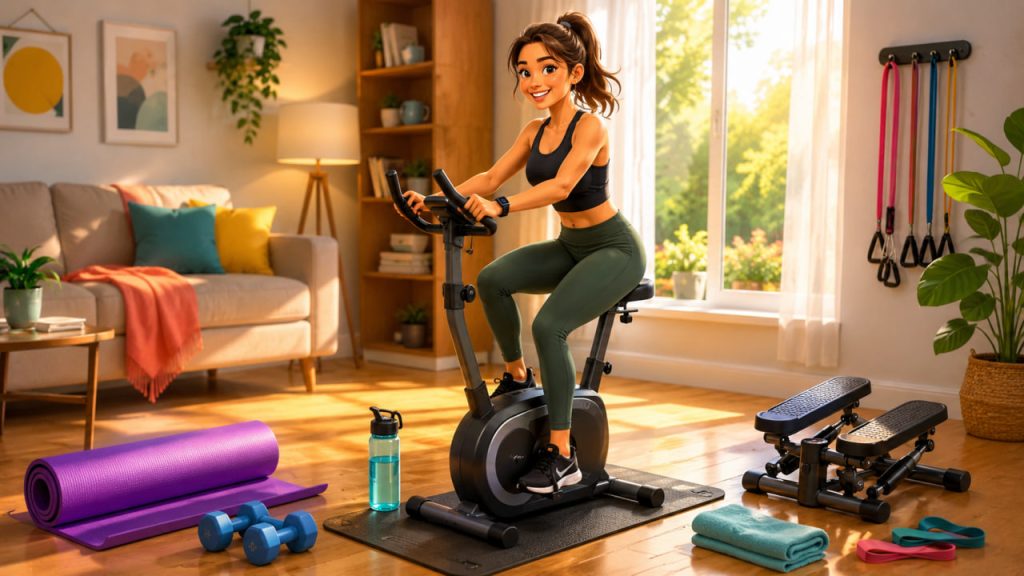
A home workout setup does not need to be expensive. You do not need a luxury treadmill, a full garage gym, or a room filled with complicated machines to build strength, burn calories, and improve your health.
The right budget exercise machine can help you move more often, train consistently, and stay active even when the weather is bad or the gym feels inconvenient.
But there is one important rule: the best budget exercise machine is not the cheapest one. It is the machine you will actually use regularly.
A low-cost machine that sits in the corner is more expensive than a simple tool that helps you exercise three times a week.
Why Home Exercise Equipment Makes Sense
Home fitness equipment saves time.
You do not need to travel to a gym, wait for machines, or plan workouts around opening hours. This matters because consistency is the real secret behind fitness progress.
A budget-friendly home trainer can support:
- Weight management
- Cardiovascular health
- Muscle tone
- Mobility
- Stress reduction
- Better energy
- More daily movement
Even short workouts can help when they are repeated regularly.
A simple 20-minute workout at home is often better than a perfect gym plan you never start.
What Counts as a Budget Exercise Machine?
A budget exercise machine is affordable, compact, reliable, and useful for regular training.
It may not have premium screens, advanced apps, luxury materials, or professional gym-level construction. But it should still be safe, stable, and practical.
Common budget home exercise options include:
- Exercise bikes
- Mini steppers
- Rowing machines
- Compact treadmills
- Elliptical trainers
- Resistance cable machines
- Foldable walking pads
- Pedal exercisers
- Adjustable benches with resistance bands
The best choice depends on your space, goals, body comfort, and training style.
Exercise Bike: The Best All-Around Budget Choice
For many people, a basic exercise bike is the best budget home trainer.
It is compact, quiet, beginner-friendly, and low-impact. That means it is easier on the joints than running, especially for people with knee discomfort, extra weight, or low fitness levels.
An exercise bike is useful for cardio, calorie burning, warm-ups, and endurance training.
It also fits easily into daily life. You can ride while watching a show, listening to a podcast, or doing a short morning workout.
If you want one affordable machine for general health, a simple magnetic resistance exercise bike is often the safest choice.
Look for a stable frame, adjustable seat, quiet resistance, comfortable pedals, and a weight limit that fits your body.
Walking Pad or Compact Treadmill
A walking pad is a slim, compact treadmill designed mostly for walking.
It is popular for apartments and home offices because it can often slide under a bed or sofa. Some people use walking pads under standing desks to increase daily steps.
Walking is one of the most natural forms of exercise. It is gentle, accessible, and easy to repeat.
A walking pad is a smart choice if your goal is daily movement rather than intense athletic training.
However, budget walking pads usually have smaller motors, shorter belts, and lower speed limits than full treadmills. They are usually better for walking than running.
Choose a walking pad if you want to move more every day, not if you need serious sprint training.
Mini Stepper: Small, Cheap, and Surprisingly Intense
A mini stepper is one of the most affordable home exercise machines.
It simulates stair climbing and trains the legs, glutes, and cardiovascular system. Many models are small enough to store in a closet.
Mini steppers can feel easy at first, but they become intense quickly. They are useful for short workouts, interval training, and people with very limited space.
The downside is that some cheaper models may feel unstable or less durable. They may also become uncomfortable for long sessions.
A mini stepper is best for people who want compact, simple, sweat-friendly workouts.
Rowing Machine: Full-Body Training on a Budget
A rowing machine can be excellent because it uses the legs, back, arms, and core together.
It provides cardio and strength endurance in one movement. A good rowing workout can feel efficient because so many muscles are involved.
Budget rowers can be useful, but quality varies. Cheap models may have weak resistance, rough motion, or poor durability.
If you choose a rower, pay attention to smooth movement, seat comfort, rail length, foot straps, and storage size.
A rowing machine is a strong choice if you want full-body workouts and have enough space to use proper technique.
Technique matters. Poor rowing form can reduce results and strain the back.
Elliptical Trainer: Low-Impact Cardio
An elliptical trainer gives a smooth, low-impact cardio workout.
It can be easier on the knees than running and more dynamic than cycling. Many models also include moving handles to involve the upper body.
The challenge is size and stability. Very cheap ellipticals may have short stride length, wobble, or feel uncomfortable for taller users.
A compact elliptical can work well for light home cardio, but test stride comfort carefully if possible.
For small apartments, an exercise bike or walking pad may be more practical.
Resistance Machines and Cable Trainers
Some budget home trainers focus on strength rather than cardio.
Resistance cable stations, compact pulley systems, and bench-band combinations can train the chest, back, shoulders, arms, legs, and core.
These systems are useful if your goal is muscle tone and strength at home.
They are often cheaper and smaller than full weight machines. However, they require more planning than a bike or treadmill because you need to know which exercises to perform.
For strength training, resistance bands and adjustable dumbbells can sometimes be better than a cheap machine.
A “machine” is not always necessary for a strong home workout.
What to Check Before Buying
Before buying any budget exercise machine, check the basics.
Look at:
- Maximum user weight
- Machine dimensions
- Folded storage size
- Noise level
- Resistance type
- Stability
- Seat or handle adjustability
- Warranty
- Replacement parts
- Realistic workout comfort
- Safety features
Do not buy only because a machine looks good in photos.
Measure your space first. Leave enough room around the machine for safe movement. Also consider the floor surface, neighbors below, and whether you need a mat to reduce vibration.
Match the Machine to Your Goal
For weight loss and general health, choose an exercise bike, walking pad, treadmill, elliptical, or rower.
For joint-friendly cardio, choose an exercise bike or elliptical.
For daily steps, choose a walking pad.
For full-body training, choose a rowing machine.
For small spaces, choose a mini stepper, foldable bike, or resistance bands.
For strength, choose resistance equipment, dumbbells, or a compact cable system.
Your goal should choose the machine, not the other way around.
Expert Perspective
Fitness professionals often emphasize consistency, progressive overload, and safe movement over expensive equipment.
A certified trainer would usually recommend starting with equipment that fits your current fitness level and allows regular use without pain. For beginners, low-impact machines such as exercise bikes, walking pads, and ellipticals are often easier to maintain than intense equipment that feels punishing.
The expert lesson is simple: the best home trainer is the one that helps you build a habit first and intensity second.
Best Budget Pick for Most People
For most beginners, the best budget exercise machine is a magnetic resistance exercise bike.
It is quiet, compact, low-impact, affordable, and easy to use. It works for short workouts, longer cardio sessions, and gentle recovery days.
The second-best option is a walking pad if your main goal is increasing daily steps.
A mini stepper is best for the smallest budget and smallest space.
A rowing machine is best if you want stronger full-body workouts and are willing to learn proper form.
The smartest setup may be even simpler: one cardio machine plus resistance bands or dumbbells.
That combination can train both heart and muscles without requiring a full gym.
Interesting Facts
- Many people quit home workouts because the equipment is inconvenient, not because they lack motivation.
- Low-impact machines can still provide intense cardio training.
- Walking pads are popular because they turn sitting time into movement time.
- Rowing uses both upper and lower body muscles.
- A mini stepper can create a strong workout in a very small space.
- A quiet machine is more useful in apartments than a powerful but noisy one.
- The best budget home gym often combines simple cardio with basic strength tools.
Glossary
- Exercise Machine — A device designed to support physical training at home or in a gym.
- Cardio — Exercise that raises heart rate and improves endurance.
- Low-Impact Exercise — Movement that places less stress on joints.
- Magnetic Resistance — A quiet resistance system often used in exercise bikes.
- Walking Pad — A compact treadmill mainly designed for walking.
- Mini Stepper — A small machine that simulates stair climbing.
- Rowing Machine — A trainer that mimics rowing and works the legs, back, arms, and core.
- Elliptical Trainer — A cardio machine with smooth stepping motion and low joint impact.
- Resistance Bands — Elastic bands used for strength training.
- Progressive Overload — Gradually increasing workout difficulty to improve fitness.
- User Weight Limit — The maximum body weight a machine is designed to support safely.
- Workout Consistency — The habit of exercising regularly over time.