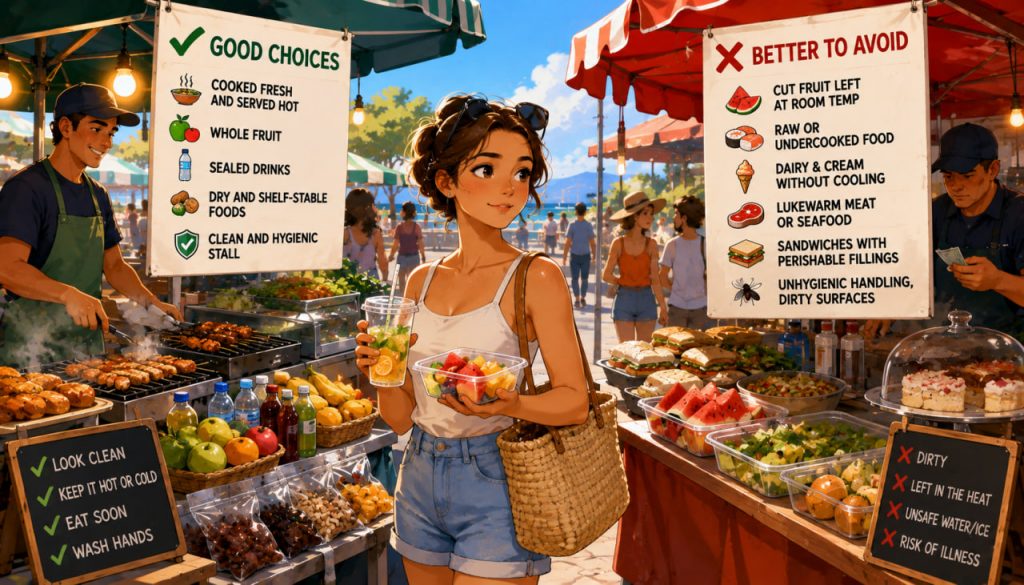
Summer markets, festivals, beach stalls, roadside kiosks, and street vendors can offer fresh fruit, cold drinks, grilled food, pastries, and regional specialties. These purchases are convenient and often part of the atmosphere of travel or outdoor events.
However, heat changes the safety equation. Bacteria multiply more quickly when perishable food is kept at unsafe temperatures, while direct sunlight, insects, dust, dirty water, and repeated handling can create additional contamination risks.
The safest summer street purchases are foods that are either cooked thoroughly and served steaming hot, kept reliably refrigerated, or naturally stable without refrigeration.
A tidy stall is encouraging, but appearance alone cannot prove that food has been stored safely. Buyers should pay attention to temperature, preparation methods, packaging, hygiene, and how quickly the product will be eaten.
Why Summer Heat Makes Food Riskier
Many harmful microorganisms grow rapidly in warm food.
Food safety authorities generally advise keeping cold food at approximately 4–5°C or below and hot food above 60°C. The temperature range between roughly 4°C and 60°C is often called the food safety “danger zone” because bacteria can multiply quickly there.
Perishable food should normally not remain unrefrigerated for more than two hours. When the outdoor temperature exceeds about 32°C, the recommended limit falls to one hour.
This matters especially for:
- Meat, poultry, and fish
- Dairy products
- Eggs
- Cooked rice and pasta
- Cream-filled desserts
- Prepared salads
- Cut fruit
- Sauces containing eggs or dairy
- Sandwiches with perishable fillings
Food may look and smell normal even when dangerous bacteria or toxins are present. Smell is therefore not a reliable safety test.
Safer Foods to Buy From Street Vendors
Freshly cooked food is usually one of the better options when it is prepared in front of you and served immediately.
Grilled meat, kebabs, cooked seafood, fried dishes, soups, and hot pastries are safer when they are thoroughly cooked and visibly steaming. CDC travel guidance recommends choosing fully cooked food served hot rather than food that has been sitting at room temperature.
Dry and shelf-stable foods are also relatively low-risk choices. These may include:
- Bread and plain baked goods
- Crackers
- Nuts and seeds
- Sealed snacks
- Dried fruit from a clean, protected container
- Whole uncut fruit with an intact peel
- Factory-sealed drinks
- Hot tea or coffee made with safely heated water
Whole bananas, oranges, melons, apples, and similar fruit are generally safer than fruit that was peeled or cut long before purchase. Wash the surface before eating whenever possible, particularly if the peel will be consumed.
Sealed bottled or canned drinks are preferable when the safety of local water or ice is uncertain. Check that the cap or seal has not been opened.
Be Careful With Cut Fruit and Fresh Salads
Bright displays of sliced watermelon, berries, mango, melon, and prepared vegetables can look refreshing on a hot day. Yet cutting removes the fruit’s natural protective barrier.
Once fruit is sliced, microorganisms from hands, knives, boards, water, insects, or the outer skin can reach the moist edible surface. Cut produce then becomes more dependent on safe refrigeration.
Buy cut fruit only when it is:
- Stored over sufficient clean ice or inside working refrigeration
- Protected from direct sunlight, dust, and insects
- Prepared with clean utensils
- Sold by a vendor with good hand hygiene
- Eaten shortly after purchase
Avoid cut fruit that appears warm, dried around the edges, excessively soft, leaking, or surrounded by flies.
Prepared salads are even more vulnerable when they contain meat, eggs, mayonnaise, cheese, seafood, or cooked grains.
Avoid Lukewarm Meat and Seafood
Meat and seafood should be clearly hot or properly chilled, not somewhere in between.
Avoid skewers, burgers, sausages, poultry, fish, shellfish, and meat-filled pastries that were cooked earlier and are now sitting lukewarm without active heating.
Also avoid raw or undercooked animal products from street stalls, including raw shellfish, lightly cooked eggs, rare poultry, and meat whose center remains visibly uncooked.
Cross-contamination is another concern. A vendor should not use the same cutting board, knife, plate, or tongs for raw and cooked meat unless the equipment has been thoroughly cleaned.
Watch how the food is handled. Cooked food placed back onto a tray that previously held raw meat can become contaminated again.
Dairy Products and Frozen Desserts Need Reliable Cooling
Milk, soft cheese, yogurt, cream desserts, custards, and dairy-based sauces require consistent refrigeration.
Purchase these products only when they come from a working refrigerator, refrigerated display, or well-maintained cooler. Packaging should feel properly cold rather than merely shaded.
Ice cream and frozen desserts should retain their normal firm texture. Products that are unusually soft, partially melted, misshapen, or covered with large ice crystals may have thawed and refrozen.
Homemade dairy drinks and desserts deserve extra caution when you cannot confirm whether pasteurized milk was used or whether the product remained cold.
Pregnant people, older adults, young children, and people with weakened immune systems should be particularly careful with unpasteurized dairy products because foodborne infections may cause more severe complications. CDC identifies these groups as being at increased risk from unsafe food.
Check the Vendor’s Hygiene
The condition of the stall can reveal how seriously the vendor treats food safety.
Positive signs include:
- Clean work surfaces and utensils
- Food protected by covers or display cases
- Separate handling of money and ready-to-eat food
- Tongs, gloves, or clean serving tools
- Access to safe water for washing
- Covered rubbish containers
- Refrigeration or sufficient clean ice
- Active protection from flies and other pests
Be cautious when the same person handles cash, touches food with bare hands, and immediately serves the next customer without washing or changing gloves.
Disposable gloves are not automatically hygienic. They can spread contamination when used for money, phones, raw food, and cooked food without being changed.
A long queue can be a positive sign because fast turnover means food spends less time waiting. However, popularity does not replace proper cooking and temperature control.
Foods Best Avoided in Extreme Heat
On very hot days, the safest choice is often to avoid products whose temperature history cannot be verified.
High-risk examples include:
- Cream cakes displayed without refrigeration
- Sandwiches containing meat, fish, eggs, or mayonnaise
- Prepared salads left in the sun
- Warm dairy drinks
- Pre-cooked meat sitting without heat
- Raw seafood
- Unpasteurized milk or soft cheese
- Cut melon stored at room temperature
- Homemade sauces in open containers
- Food exposed to flies, dust, or repeated touching
- Products in swollen, leaking, or damaged packaging
Avoid anything with a broken seal, unusual color, visible mold, fermentation where none is expected, or damaged packaging.
When you cannot tell whether a perishable product has been kept hot or cold, leaving it behind is the safer decision.
Buying Eggs, Meat, and Fish at Outdoor Markets
Raw ingredients can be purchased safely from outdoor markets when refrigeration and cleanliness are adequate.
Fish should be displayed on abundant clean ice, smell fresh rather than strongly unpleasant, and have firm flesh. Meat should remain cold and should not sit in pooled liquid or direct sunlight.
Eggs should be clean, uncracked, and stored according to local safety rules. Storage practices vary by country because eggs are processed differently, so follow national guidance.
Carry raw meat, poultry, seafood, and eggs separately from ready-to-eat foods. An insulated bag with ice packs is useful, especially when the journey home will take more than a few minutes.
WHO advises shoppers during heatwaves to use insulated bags for perishable food, go directly home, and refrigerate meat, poultry, and seafood promptly.
Never leave groceries in a parked car. Interior temperatures can rise rapidly, turning the vehicle into an unsafe storage environment.
How to Carry Street Food Safely
Food intended for immediate consumption should be eaten soon after purchase.
For takeaway food, use separate containers for hot and cold products. Keep cold items inside an insulated bag with frozen packs, and do not place them beside hot meals.
Refrigerate leftovers promptly. If perishable food has remained in summer heat for longer than the recommended safe period, throwing it away is safer than trying to rescue it by reheating. Some bacterial toxins may remain even after the food becomes hot again.
Wash or sanitize your hands before eating. This simple step is especially important at festivals, public beaches, transport stations, and markets where many surfaces are touched by large numbers of people.
CDC summarizes basic food safety through four principles: Clean, Separate, Cook, and Chill.
What to Do if Street Food Makes You Ill
Foodborne illness may cause nausea, vomiting, diarrhea, stomach cramps, and fever. Symptoms may begin within hours or after several days, depending on the organism or toxin involved.
Drink safe fluids in small, frequent amounts to reduce the risk of dehydration.
Seek medical advice promptly for:
- Blood in the stool
- Persistent vomiting
- Severe abdominal pain
- High fever
- Confusion or extreme weakness
- Very little urine
- Dry mouth and dizziness
- Symptoms lasting several days
- Illness in a baby, older person, pregnant person, or immunocompromised individual
Emergency help may be necessary when a person collapses, becomes difficult to wake, cannot keep fluids down, or shows signs of severe dehydration.
Expert Perspective
The World Health Organization recommends five essential principles for safer food: keep clean, separate raw and cooked products, cook thoroughly, maintain safe temperatures, and use safe water and ingredients. During summer, WHO particularly emphasizes prompt refrigeration and keeping cooked food above 60°C before serving.
CDC guidance reaches a similar practical recommendation for street purchases: food that is fully cooked and served steaming hot is generally safer than raw, lukewarm, or unrefrigerated food.
Interesting Facts
- Hot weather shortens the time that perishable food can remain safely unrefrigerated.
- Above approximately 32°C, perishable food should generally be refrigerated within one hour.
- Whole fruit is usually safer than fruit that was peeled or sliced long before sale.
- Reheating spoiled food does not always make it safe because some toxins resist heat.
- Frozen products that have thawed and refrozen may develop large ice crystals or distorted packaging.
- A busy vendor may have safer product turnover, but hygiene and temperature control still matter.
- Cold food should be served cold and hot food should be served hot.
- Foodborne diseases remain a major global health burden, although many cases are preventable.
Glossary
- Foodborne Illness — Disease caused by consuming food or drink contaminated with harmful microorganisms, chemicals, or toxins.
- Perishable Food — Food that can spoil or become unsafe unless it is refrigerated or kept hot.
- Danger Zone — The temperature range in which many bacteria multiply rapidly, approximately 4°C to 60°C.
- Cross-Contamination — The transfer of harmful microorganisms from one food, surface, utensil, or hand to another.
- Pasteurization — Controlled heating used to reduce harmful microorganisms in milk, juice, and other products.
- Cold Chain — Continuous temperature-controlled storage and transport of refrigerated or frozen products.
- Shelf-Stable Food — A product that can be stored safely at room temperature while unopened.
- Ready-to-Eat Food — Food intended to be consumed without further cooking.
- Dehydration — A condition caused by losing more fluid than the body takes in.
- Food Safety Seal — Packaging designed to show whether a product has been opened or tampered with.
- Contamination — The presence of harmful biological, chemical, or physical material in food.
- Insulated Bag — A container designed to slow temperature change during transportation.