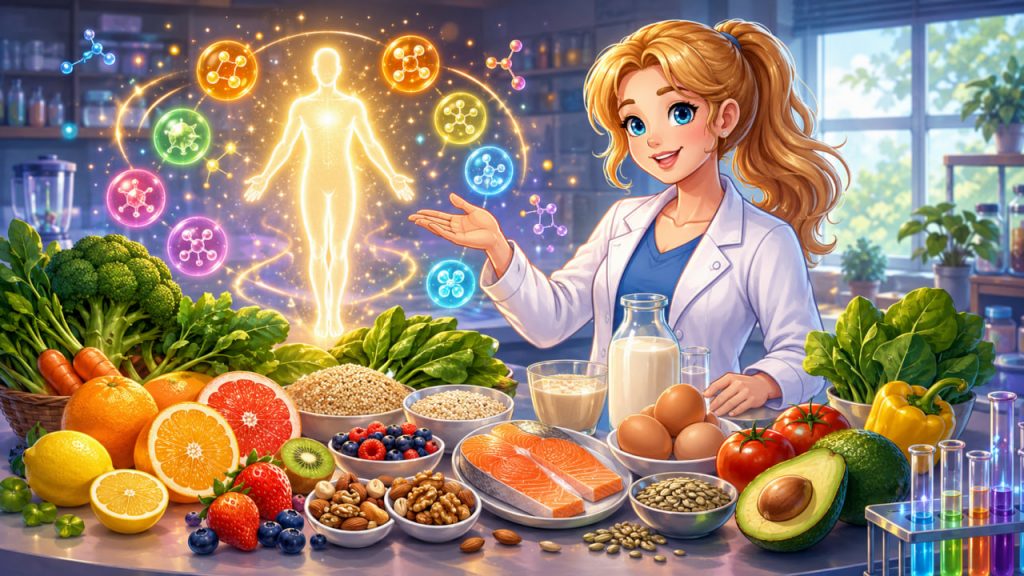
Vitamins are essential nutrients that help the human body grow, produce energy, maintain tissues, support immunity, and regulate numerous chemical reactions. Although we need them only in small quantities, vitamin deficiencies can have serious consequences.
There are 13 essential vitamins: vitamins A, C, D, E, and K, plus eight B vitamins. Each performs a different function, which means that no single “superfood” or supplement can replace a varied diet.
For most healthy people, the best strategy is simple: eat a broad range of vegetables, fruits, whole grains, legumes, nuts, seeds, and suitable animal or fortified foods. Supplements are useful in specific situations, but taking high doses without a medical reason can be ineffective or harmful.
Vitamin A: Vision, Immunity, and Healthy Tissues
Vitamin A supports normal vision, immune function, reproduction, and the maintenance of skin and other tissues.
The body obtains it in two main forms. Preformed vitamin A comes from animal foods, while plant foods provide carotenoids, including beta-carotene, which the body can convert into vitamin A.
Good sources include:
- Carrots, pumpkin, and sweet potatoes
- Spinach, kale, and other dark-green vegetables
- Eggs and dairy products
- Fish
- Liver
Liver is extremely rich in vitamin A, so eating it frequently or combining it with vitamin A supplements may result in excessive intake. Large amounts of preformed vitamin A can be harmful, particularly during pregnancy.
B Vitamins: Energy Metabolism, Blood, and the Nervous System
The B-vitamin family includes thiamine, riboflavin, niacin, pantothenic acid, vitamin B6, biotin, folate, and vitamin B12.
These vitamins help the body use energy from food, support the nervous system, participate in DNA production, and contribute to the formation of healthy blood cells.
Useful food sources include:
- Whole grains and fortified cereals
- Beans, peas, and lentils
- Nuts and seeds
- Meat, poultry, and fish
- Eggs and dairy products
- Leafy vegetables
Folate is especially important before and during early pregnancy because adequate intake reduces the risk of serious neural-tube defects in the developing baby. National recommendations for folic acid supplementation differ, so pregnancy planning should include advice from a doctor or qualified maternity professional.
Vitamin B12 deserves special attention because it occurs naturally mainly in animal-derived foods. Vegans need a reliable source from fortified foods or supplements. Older adults and people with certain digestive disorders or previous gastrointestinal surgery may also absorb B12 poorly.
Vitamin C: Collagen, Antioxidant Protection, and Iron Absorption
Vitamin C is needed to produce collagen, a structural protein found in skin, blood vessels, cartilage, and connective tissues. It also supports immune function and acts as an antioxidant.
Another important benefit is that vitamin C improves the absorption of non-heme iron found in plant foods.
Good sources include:
- Citrus fruits
- Bell peppers
- Kiwi fruit
- Strawberries
- Broccoli
- Cabbage
- Tomatoes
- Potatoes
Vitamin C is sensitive to prolonged heat and water. Steaming vegetables briefly or eating some produce raw can help retain more of it.
A severe deficiency causes scurvy, which can produce fatigue, bleeding gums, poor wound healing, and bruising. However, very high supplemental doses do not automatically prevent infections or create “super immunity.”
Vitamin D: Bones, Muscles, and Calcium Regulation
Vitamin D helps regulate calcium and phosphate, making it essential for healthy bones, teeth, and muscles. A severe deficiency can cause rickets in children and osteomalacia in adults.
Unlike most vitamins, vitamin D can be produced in the skin after exposure to sunlight. However, production varies according to season, latitude, skin pigmentation, clothing, age, time spent outdoors, and sun-protection practices.
Food sources are relatively limited:
- Oily fish such as salmon, sardines, and mackerel
- Egg yolks
- Liver
- Fortified milk or plant-based alternatives
- Fortified cereals
- Some UV-exposed mushrooms
Vitamin D supplementation recommendations vary between countries and population groups. People with limited sun exposure, darker skin in low-sunlight regions, malabsorption disorders, or an increased risk of osteoporosis may need individualized advice and, in some cases, blood testing.
Sunburn is not necessary for vitamin D production and increases skin-cancer risk.
Vitamin E: Cell Protection
Vitamin E is a fat-soluble antioxidant that helps protect cells from oxidative damage. It also contributes to immune function.
Good sources include:
- Almonds and hazelnuts
- Sunflower seeds
- Vegetable oils
- Avocado
- Peanuts
- Spinach
- Wheat germ
Vitamin E deficiency is uncommon in healthy people eating a varied diet. It is more likely in disorders that severely interfere with fat absorption.
More is not necessarily better. High-dose vitamin E supplements can cause problems and may increase bleeding risk, especially in people taking anticoagulant medicines. Most people can obtain adequate vitamin E from food.
Vitamin K: Blood Clotting and Bone Health
Vitamin K is required to activate proteins involved in normal blood clotting. It also participates in bone metabolism.
Its main food sources include:
- Kale
- Spinach
- Broccoli
- Brussels sprouts
- Cabbage
- Vegetable oils
- Fermented foods
People taking warfarin or similar vitamin K-sensitive anticoagulants should not suddenly eliminate leafy vegetables. Instead, they generally need to keep vitamin K intake reasonably consistent and follow medical advice, because major dietary changes can affect medication action.
Newborn babies have low vitamin K stores, which is why vitamin K is routinely offered shortly after birth in many healthcare systems.
Water-Soluble and Fat-Soluble Vitamins
Vitamins A, D, E, and K are fat-soluble. They are absorbed with dietary fat and can be stored in body tissues.
Because they accumulate more readily, excessive supplemental doses may cause toxicity.
Vitamin C and the B vitamins are water-soluble. The body generally stores less of them, although vitamin B12 can be stored for a long time.
Water-soluble does not mean harmless in unlimited doses. Large supplemental quantities can still produce side effects, interfere with medicines, or distort laboratory test results.
Do Healthy People Need Multivitamins?
Most people should be able to obtain the nutrients they need from a varied, balanced diet. Whole foods provide vitamins together with minerals, fiber, protein, beneficial fats, and thousands of other compounds that a tablet cannot fully reproduce.
Supplements may be appropriate for:
- Pregnancy or pregnancy planning
- Vegan diets, particularly for vitamin B12
- Diagnosed deficiencies
- Restricted diets or food allergies
- Malabsorption disorders
- Certain medicines or medical conditions
- Limited sunlight exposure
- Some infants, children, and older adults
A supplement should address an actual need rather than compensate for a consistently poor diet.
Products containing several hundred or thousand percent of the daily requirement are rarely necessary without medical supervision. “Natural” supplements can still cause toxicity or interact with prescription medicines.
Expert Perspective
The World Health Organization describes vitamins and minerals as micronutrients required in very small amounts but essential for normal growth, enzyme activity, hormone production, and health. It emphasizes dietary variety because deficiencies can affect blood production, development, vision, immunity, and other critical functions.
The NIH Office of Dietary Supplements similarly evaluates each vitamin separately because benefits, food sources, recommended amounts, interactions, and toxicity risks differ substantially between nutrients. There is no universal vitamin dose that is ideal for every person.
How to Get More Vitamins From Everyday Food
Build meals around variety rather than searching for one perfect ingredient.
Include several differently colored vegetables and fruits across the week. Choose whole grains, beans, lentils, nuts, and seeds regularly. Add eggs, dairy, fish, meat, or properly fortified alternatives according to your dietary preferences.
Frozen vegetables and fruit remain useful sources of nutrients and may be more affordable than fresh produce. Canned options can also be nutritious, although products with excessive salt or added sugar are best limited.
A colorful, varied plate is generally more useful than an expensive collection of supplements.
Interesting Facts
- There are 13 recognized essential vitamins.
- The body can produce vitamin D after sunlight reaches the skin.
- Gut bacteria produce some vitamin K, although food remains important.
- Vitamin B12 can be stored in the liver for years.
- Cooking can reduce some vitamin C, but it can improve the availability of certain carotenoids.
- A food can be high in one vitamin and contain very little of another.
- Fat improves the absorption of vitamins A, D, E, and K.
- Vitamin deficiencies can occur even when calorie intake is high.
- Fortification adds nutrients such as folic acid, vitamin D, or vitamin B12 to selected foods.
- Supplement labels may list amounts far above normal daily requirements.
- Beta-carotene from vegetables is not identical to high-dose beta-carotene supplements.
- Vitamins cannot replace protein, essential fats, minerals, fiber, sleep, or physical activity.
Glossary
- Vitamin — An organic nutrient required in small quantities for normal body function.
- Micronutrient — A vitamin or mineral needed in relatively small amounts.
- Fat-Soluble Vitamin — A vitamin absorbed with fat and stored in the body: A, D, E, or K.
- Water-Soluble Vitamin — A vitamin that dissolves in water, including vitamin C and the B vitamins.
- Deficiency — An inadequate amount of a nutrient that may impair health.
- Toxicity — Harm caused by excessive exposure to a substance.
- Antioxidant — A substance that helps limit certain forms of oxidative cellular damage.
- Carotenoid — A plant pigment, some forms of which can be converted into vitamin A.
- Collagen — A structural protein found in skin, connective tissue, cartilage, and blood vessels.
- Folate — The naturally occurring form of vitamin B9.
- Folic Acid — A form of vitamin B9 used in supplements and fortified foods.
- Fortified Food — Food to which vitamins or minerals have been added.
- Malabsorption — Reduced ability to absorb nutrients through the digestive system.
- Osteomalacia — Softening of adult bones, often associated with severe vitamin D deficiency.
- Rickets — Impaired bone development in children, commonly associated with severe vitamin D deficiency.
- Anticoagulant — A medicine that reduces the blood’s ability to form clots.