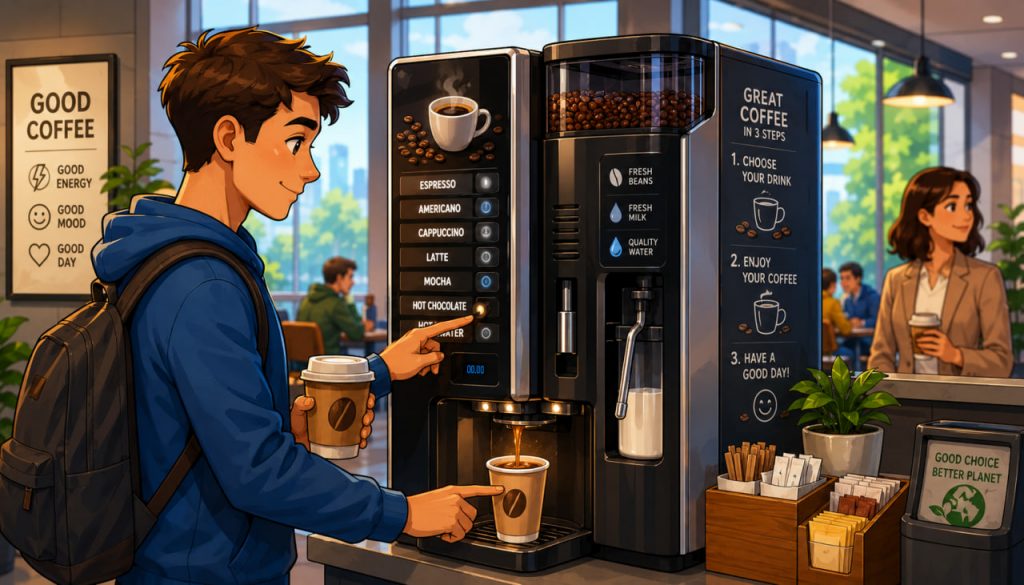
Coffee vending machines are a familiar sight in offices, hospitals, universities, railway stations, shopping centers, and public buildings. With a few button presses, they can prepare espresso, black coffee, cappuccino, hot chocolate, or other drinks within seconds.
Their biggest advantage is obvious: coffee vending machines offer speed, convenience, and relatively low prices. However, the quality of the drink can vary enormously depending on the machine, ingredients, water, maintenance, and frequency of cleaning.
A modern bean-to-cup vending machine can produce a respectable everyday coffee. An old or poorly maintained machine using low-quality instant ingredients may deliver a weak, overly sweet, or unpleasant drink.
What Is a Coffee Vending Machine?
A coffee vending machine is an automated system that prepares and dispenses hot beverages after the customer selects a drink and, in commercial settings, makes a payment.
These machines range from basic instant-drink dispensers to advanced systems that grind whole coffee beans for every order.
The most common types include:
- Instant coffee machines
- Bean-to-cup machines
- Capsule or pod machines
- Liquid coffee concentrate machines
- Traditional vending machines with several powdered ingredients
Instant machines mix soluble coffee powder with hot water. Drinks containing milk usually use powdered milk or a non-dairy creamer.
Bean-to-cup machines grind roasted beans, compress the ground coffee, and force hot water through it. This method is closer to the process used by an automatic espresso machine.
The phrase “coffee vending machine” does not describe one level of quality. It includes technologies ranging from basic powder dispensers to sophisticated automated cafés.
How Coffee Vending Machines Work
Inside a typical vending machine are separate containers for coffee, milk powder, sugar, chocolate, and other ingredients.
After a drink is selected, the machine measures the required ingredients and sends them into a mixing chamber or brewing unit. Hot water is added, and the finished beverage flows into a cup.
A bean-to-cup system follows a more complex process:
- Beans are measured and ground.
- Ground coffee enters the brewing chamber.
- The machine compresses the coffee into a puck.
- Heated water passes through the grounds.
- Milk or foam is added when required.
- Used coffee grounds move into a waste container.
Some machines also offer adjustable strength, sugar quantity, cup size, milk level, and temperature.
The final taste depends on the accuracy of each stage. Small differences in grind size, coffee dose, water temperature, and extraction time can noticeably change the drink.
Is Vending-Machine Coffee Real Coffee?
In many cases, yes.
A bean-to-cup machine uses roasted coffee beans and produces freshly brewed coffee. An instant machine uses coffee that has already been brewed industrially and then dehydrated into soluble granules or powder.
Both are legally and technically coffee, but they do not taste identical.
Freshly ground coffee normally preserves more aroma because grinding exposes the beans to oxygen and accelerates the loss of volatile compounds. A machine that grinds each portion immediately before brewing therefore has an important advantage.
Instant coffee prioritizes consistency, long storage life, and speed. It can be acceptable for a simple caffeine drink, but it usually offers less aroma and complexity than freshly brewed coffee.
Some vending beverages contain only a small proportion of coffee alongside sugar, powdered creamer, flavorings, and other ingredients. Checking the ingredient information is especially useful when ordering cappuccino, mocha, or sweet specialty drinks.
What Determines the Taste?
The machine itself is only one part of the result.
Coffee quality depends on:
- Bean quality and roast freshness
- Grind size
- Coffee dose
- Water temperature
- Extraction time
- Water composition
- Ingredient storage
- Machine calibration
- Cleaning and maintenance
The Specialty Coffee Association treats brewing standards as a way to create greater consistency in variables such as water, extraction, and equipment performance. It has traditionally placed suitable coffee-brewing water in a range close to the low-to-mid 90s Celsius, although research shows that temperature alone does not determine flavor when brew strength and extraction are kept similar.
Water quality matters because coffee is mostly water. Excessively hard water can create mineral deposits inside the machine, while water with an unsuitable mineral balance may produce flat, harsh, or poorly extracted flavors.
A machine can contain excellent beans and still make disappointing coffee when it is incorrectly adjusted.
Are Coffee Vending Machines Hygienic?
A properly maintained vending machine can provide a safe drink. The main concern is not automation itself but whether the machine is cleaned, supplied, and serviced correctly.
Coffee residues, milk ingredients, moisture, and warmth can support microbial growth in waste containers, tubes, mixing chambers, drip trays, and other neglected components.
A study of domestic capsule machines found varied bacterial communities in coffee-waste reservoirs and observed rapid colonization of newly used equipment. The results do not prove that every cup from such a machine is dangerous, but they demonstrate why waste areas require regular cleaning.
A separate investigation of hot-beverage vending machines found microbial contamination in a substantial proportion of sampled beverages. The researchers emphasized the importance of hygienic servicing and correct temperature control.
Food-safety guidance generally stresses that equipment should be designed so that food-contact areas, adjacent compartments, and drip trays can be accessed and cleaned. The FDA’s guidance for installed coffee brewers specifically notes the importance of removable brewers and accessible drip trays.
Warning Signs of a Poorly Maintained Machine
You cannot inspect every internal component before buying a drink, but several visible signs can help.
Avoid or reconsider using a machine when:
- The dispensing nozzle is visibly dirty
- The drip tray contains old liquid or mold
- The surrounding area smells sour
- The cup compartment is exposed to dirt
- The drink is only lukewarm
- Milk-based beverages taste rancid or unusual
- The machine displays repeated errors
- Insects are present nearby
- Ingredients appear clumped because of moisture
The CDC advises travelers that coffee and tea are safer when served steaming hot rather than merely warm, while cautioning that additions such as cream can introduce separate contamination risks.
A strange smell, unexpected acidity, visible particles, or an unusual aftertaste is a reasonable reason not to finish the drink.
Are Milk Drinks Riskier Than Black Coffee?
Milk-based drinks require greater attention because the system must handle additional ingredients.
Many vending machines use milk powder or non-dairy creamer. Dry powders are convenient and stable before mixing, but moisture inside the machine can cause clumping, residue buildup, and hygiene problems.
More advanced machines may use refrigerated liquid milk. These systems can make better-tasting drinks, but their milk lines must be cleaned frequently and the cooling system must remain reliable.
Black coffee has fewer components and therefore fewer potential contamination points. It is also easier to judge by aroma, temperature, and taste.
When the maintenance quality of a machine is uncertain, plain hot coffee is generally the simpler choice.
How Much Caffeine Is in Vending-Machine Coffee?
There is no universal caffeine amount.
Caffeine depends on the type of beans, dose, serving size, extraction method, and whether the machine uses instant coffee or espresso.
A small espresso-style vending drink may be stronger by volume but contain less total caffeine than a large cup of black coffee. Some machines also allow users to select a stronger dose.
Sweet cappuccinos and chocolate-coffee drinks can still contain caffeine even when their coffee flavor is mild.
Anyone who needs to limit caffeine should not rely only on cup size or taste. Product information or the operator’s nutrition data is more useful when available.
Is It Cheaper Than Café Coffee?
Vending-machine coffee is usually cheaper because the system requires fewer employees, occupies little space, and prepares drinks quickly.
Whether it offers good value depends on what you expect.
It may be worth buying when you need:
- A quick caffeine drink
- A low-cost beverage
- Coffee outside café opening hours
- A predictable everyday option
- A drink in a location with no alternative
It may not be worth buying when you prioritize:
- Fresh specialty-grade beans
- Skilled espresso preparation
- Precise milk texture
- Detailed origin information
- Complex aroma and flavor
- Personalized service
A reliable bean-to-cup machine can sometimes outperform a careless café. Conversely, even an expensive vending machine cannot compensate for stale beans, poor water, or inadequate cleaning.
How to Choose Better Vending-Machine Coffee
Look first for a machine that clearly states that it uses whole beans.
A visible bean hopper does not guarantee excellent coffee, but it usually suggests a fresher process than soluble powder. Machines in busy locations may also have an advantage because ingredients are replaced more frequently.
Choose simpler drinks when evaluating an unfamiliar machine. An espresso or black coffee reveals the quality of the beans and extraction more clearly than a heavily sweetened mocha.
Other useful signs include:
- A clean exterior and dispensing area
- Recent service information
- Clear ingredient and allergen labels
- Adjustable coffee strength
- Freshly grinding sounds
- A sealed cup supply
- Hot, aromatic coffee
- Regular use by employees or local customers
For milk drinks, check whether the machine uses fresh milk, powdered milk, or creamer. These ingredients produce very different flavors and nutritional profiles.
Expert Perspective
Coffee researchers and the Specialty Coffee Association emphasize that successful brewing depends on controlling several connected variables rather than relying on a single ideal temperature or expensive machine.
Research summarized by the association found that when brew strength and extraction were controlled, modest temperature differences had less sensory effect than many consumers might expect.
This offers an important lesson for vending coffee: consistent dosing, suitable grinding, clean equipment, good water, and proper extraction are more important than impressive screens or attractive machine design.
Is Coffee From a Vending Machine Worth Buying?
Coffee from a vending machine can be worth buying when the machine is clean, frequently used, properly maintained, and supplied with reasonable ingredients.
A modern bean-to-cup model can provide convenient coffee that is good enough for offices, travel, and everyday breaks. It will not always match a skilled barista using freshly roasted specialty beans, but it may offer a better balance of speed, price, and availability.
The poorest value usually comes from machines that hide weak coffee beneath excessive sugar and powdered creamer.
Judge the machine by its cleanliness, ingredients, temperature, and actual taste—not simply by whether the drink is automated.
Interesting Facts
- Some vending machines grind a separate portion of beans for every cup.
- Instant coffee is brewed coffee that has been dehydrated into a soluble form.
- The waste container can become one of the most microbially active parts of a coffee machine if it is not cleaned regularly.
- Busy machines may use ingredients faster, reducing the time beans and powders remain in storage.
- Mineral deposits from hard water can affect heating performance and water flow.
- A stronger-tasting drink does not always contain more caffeine.
- Powdered cappuccino may contain more sugar and creamer than coffee.
- Vending machines can record sales, ingredient levels, errors, and maintenance needs remotely.
- Some commercial machines clean selected internal circuits automatically, although manual servicing is still necessary.
- Coffee brewed at different temperatures can taste similar when extraction and strength are carefully controlled.
Glossary
- Coffee Vending Machine — An automated machine that prepares and dispenses coffee or other hot beverages.
- Bean-to-Cup Machine — A machine that grinds whole beans and brews each drink immediately.
- Instant Coffee — Previously brewed coffee that has been dried into soluble powder or granules.
- Extraction — The process of dissolving flavor, aroma, caffeine, acids, and other compounds from ground coffee into water.
- Coffee Dose — The quantity of ground coffee used for one beverage.
- Grind Size — The size of the coffee particles after grinding.
- Coffee Puck — The compressed portion of ground coffee used during espresso-style brewing.
- Crema — The foam-like layer that can form on top of freshly extracted espresso.
- Milk Powder — Dehydrated milk that becomes liquid when mixed with water.
- Non-Dairy Creamer — A powdered or liquid coffee whitener that may contain vegetable fats, sugars, and other ingredients.
- Descaling — Removing mineral deposits from the machine’s water and heating system.
- Calibration — Adjusting machine settings to produce the intended dose, water flow, temperature, and extraction.
- Drip Tray — The removable container beneath the dispenser that collects spills and rinse water.
- Cross-Contamination — The transfer of microorganisms or allergens from one surface or ingredient to another.
- Specialty Coffee — Coffee evaluated for distinctive quality and usually produced, roasted, and brewed with greater attention to origin and flavor.