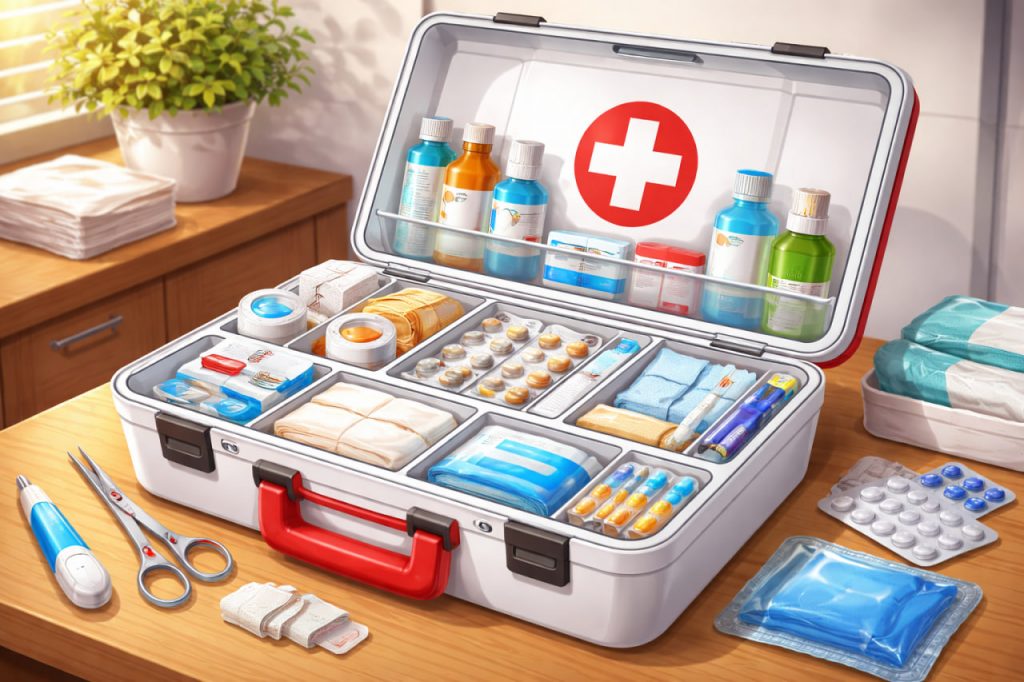
A first aid kit is an essential part of everyday safety, both at home and on the go. It allows you to respond quickly to minor injuries and unexpected situations before professional help becomes available. A well-prepared kit can make a significant difference in preventing complications and ensuring proper initial care. Understanding what to include and how to organize a first aid kit is an important step toward personal and family safety.
Why a First Aid Kit Is Important
Accidents can happen at any time, whether at home, outdoors, or while traveling. Having a first aid kit readily available helps you act quickly in situations such as cuts, burns, or minor injuries. As safety experts note:
“Immediate basic care can reduce the severity of injuries and support better recovery.”
Preparedness is key to handling unexpected situations calmly and effectively.
Basic Components of a First Aid Kit
A standard first aid kit should include essential items for treating common injuries. These typically include bandages, antiseptic wipes, sterile gauze, adhesive tape, and gloves. Scissors and tweezers are also useful for handling dressings and removing debris. These basic tools allow for quick and simple care in many situations.
Additional Useful Items
Depending on your needs, you may include additional items such as thermometers, cold packs, elastic bandages, and basic medications. A small flashlight and emergency contact information can also be helpful. Customizing your kit ensures it suits your lifestyle and environment.
Home vs Travel Kits
A home first aid kit can be more comprehensive, while a travel kit should be compact and portable. For outdoor activities, it is important to include items suited for the environment, such as blister care supplies or insect bite treatment.
How to Organize Your Kit
Keeping your first aid kit organized makes it easier to find items quickly in an emergency. Use labeled compartments or small containers to separate supplies. Regularly check the contents to ensure items are not expired or damaged.
Maintenance and Readiness
A first aid kit should be checked periodically. Replace used or expired items and restock essentials as needed. Keeping the kit in a known and accessible location ensures that it can be used without delay.
Common Mistakes to Avoid
One common mistake is having a kit but not knowing what is inside it. Another is neglecting to update or restock it. Familiarity with your kit and its contents is just as important as having one.
Preparedness in Everyday Life
A first aid kit is a simple but powerful tool for handling minor emergencies. It provides a sense of readiness and helps ensure that basic care can be given quickly when needed. Being prepared is a practical way to improve safety in daily life.
Interesting Facts
- First aid kits can be adapted for home, travel, or outdoor use.
- Basic supplies can handle many minor injuries.
- Regular checks help keep the kit ready and effective.
- Organization allows for quick access in emergencies.
- Preparedness improves confidence in unexpected situations.
Glossary
- First Aid — immediate care given before professional medical help.
- Antiseptic — a substance used to clean and prevent infection.
- Bandage — material used to cover and protect wounds.
- Sterile — free from harmful microorganisms.
- Emergency Preparedness — readiness to respond to unexpected situations.