
A knife slips, a child falls, or someone suddenly becomes dizzy. Searching for a bandage wastes precious moments. A first aid kit keeps essential supplies together. Knowing how to use them makes a real difference.
A first aid kit cannot replace emergency medical care. It helps manage minor injuries and support someone awaiting professional care. Familiarity with its contents saves time when a problem occurs. The most useful kit is one you can find quickly, understand immediately, and maintain regularly. Here is what to pack and how to respond.
What Should Every Home First Aid Kit Contain?
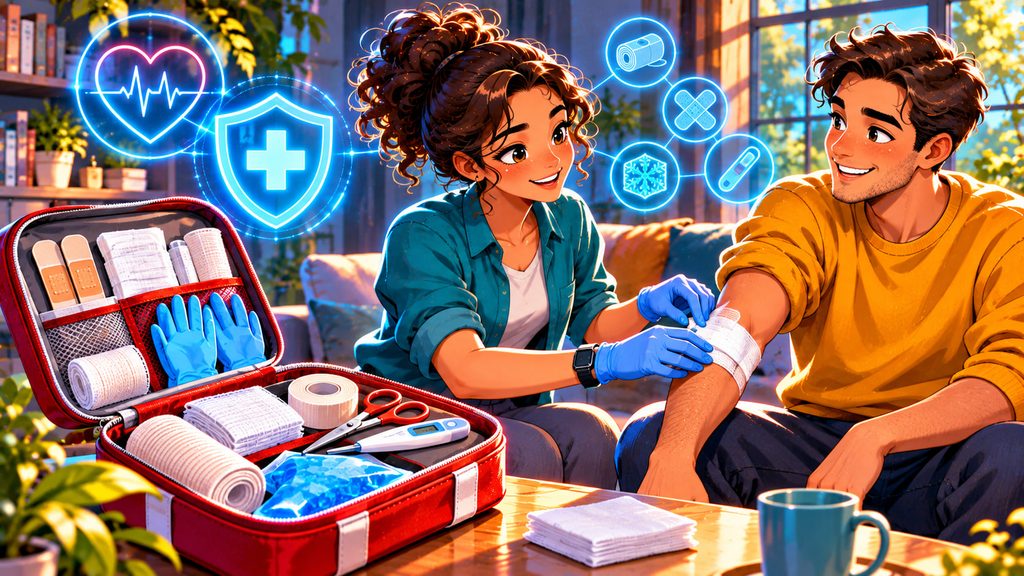
Start with protective supplies. Nitrile gloves limit contact with blood; sterile gauze helps cover wounds or apply pressure. Include adhesive bandages, medical tape, roller bandages, and a triangular bandage. Add blunt scissors, tweezers, and saline or cleansing wipes.
Add a cold pack, thermometer, CPR face shield, and emergency blanket. Keep emergency contacts and medical details in a waterproof pouch. Personal rescue medicines should remain accessible and stored as instructed. The American Red Cross recommends tailoring kit contents to the people and activities involved, rather than assuming one package suits every household.
Your First Step: Check the Scene, Not the Box
First check for traffic, electricity, smoke, or broken glass. Never enter an unsafe area to offer help. Call emergency services for unconsciousness, breathing trouble, chest pain, or severe bleeding. Put your phone on speaker so a dispatcher can guide you while you provide help.
A primary survey identifies immediately life-threatening problems. Ask permission to help when possible. Wear gloves when needed, and avoid moving someone with a suspected spinal injury unless necessary for safety. Follow the emergency dispatcher’s instructions while help is coming. Your safety and a rapid emergency call matter more than finding the perfect item in a kit.
How to Clean and Dress a Minor Cut
For minor cuts, wash your hands and wear gloves. Apply pressure with clean gauze until bleeding settles. Rinse with clean water or saline, then dry the surrounding skin. Cover with a clean, nonstick dressing.
Replace wet or dirty dressings and watch for worsening redness, pain, or discharge. Avoid pouring strong antiseptics or alcohol into an open wound, because they may irritate tissue. A deep, gaping, heavily contaminated, or animal-bite wound needs medical assessment, as do injuries involving possible nerve damage. A clinician can also advise whether a tetanus booster is needed.
How to Stop Dangerous Bleeding
Severe bleeding can quickly threaten life. Call emergency services and press firmly on the wound with clean material. If soaked, add material without repeatedly lifting the dressing. Maintain pressure until bleeding stops or help arrives.
Uncontrolled, life-threatening limb bleeding may require a tourniquet. Correct placement and tightening require training. Never use a thin cord as an improvised substitute or loosen an applied tourniquet while waiting for emergency responders. If an object is embedded in a wound, avoid pulling it out and instead apply pressure around it.
How to Treat a Burn Without Making It Worse
A hot pan or spilled tea can cause a thermal burn. Move away from heat and cool the burn under running water for about 20 minutes. Remove tight jewelry, but not clothing stuck to skin. Cover loosely with a clean, nonstick dressing.
Do not apply ice, butter, toothpaste, or household oils to the burn. Large or deep burns, burns to the face or major joints, and electrical or chemical burns require urgent professional evaluation. Keep the rest of the person warm while cooling the injured area, particularly when treating a child. Do not deliberately burst burn blisters. Cooling with water is useful first aid; home remedies can worsen tissue damage.
What to Do About Sprains, Bruises, and Nosebleeds
For sprains, rest and apply a cold pack wrapped in cloth. Limit applications to 20 minutes at a time. A supportive bandage may improve comfort if applied correctly, but it should never cause numbness or discoloration. Suspected fractures, major deformities, or an inability to bear weight warrant medical assessment.
A nosebleed requires a different response: sit upright, lean slightly forward, and pinch the soft part of the nose continuously for 10 to 15 minutes. Looking upward can direct blood toward the throat rather than stopping the bleeding. If the bleeding is heavy, follows a significant injury, or continues despite sustained pressure, seek prompt medical help. These simple techniques are often more effective than elaborate first aid gadgets.
Recognizing a Severe Allergic Reaction
Anaphylaxis is a rapidly developing allergic emergency that can involve breathing difficulty, throat swelling, faintness, or symptoms affecting several body systems. Call emergency services immediately if it is suspected, even when a person initially seems able to talk. Help the person use their prescribed epinephrine auto-injector according to its device instructions, or administer it if trained and permitted to do so. Epinephrine is the first-line treatment; antihistamines are not a substitute.
Stay with the person and follow the dispatcher’s advice about positioning and further treatment. Symptoms can return after apparent improvement, so medical evaluation remains essential. Someone at risk of anaphylaxis should have an individualized emergency plan and access to their prescribed medication. Check expiry dates and learn the device’s instructions before an emergency happens.
Choking and Cardiac Arrest: When Seconds Matter
For a choking adult who can cough forcefully, encourage continued coughing. If the person cannot breathe, speak, or cough effectively, call emergency services and give up to five firm back blows, followed by up to five abdominal thrusts if needed. Repeat these cycles until the obstruction clears or the person becomes unresponsive. Infant techniques differ, so learning age-appropriate choking first aid through hands-on training is particularly valuable.
For an unresponsive adult not breathing normally, call emergency services and start cardiopulmonary resuscitation (CPR). For an untrained bystander, hands-only CPR means pressing hard and fast in the center of the chest at 100–120 compressions per minute, approximately 5–6 centimeters deep. Send someone to obtain an automated external defibrillator (AED) and follow its spoken instructions as soon as it arrives. CPR and AED training can build the confidence needed to act without delay.
Medicines, Storage, and Regular Maintenance
A basic kit may include familiar over-the-counter medicines such as appropriate pain relievers, but they are not suitable for everyone. Store medicines in their original packaging and check directions, allergies, age restrictions, interactions, and expiration dates. Never share prescription medicines or give adult doses to children. Poison exposures and medication overdoses require advice from poison-control or emergency professionals rather than improvised treatment.
Keep the kit dry, labeled, and inaccessible to young children. Consider smaller kits for travel, cars, and outdoor activities. Inspect everything about twice a year and replace damaged packaging, depleted dressings, and expired products. A short first aid course teaches skills no shopping list can provide.
A first aid kit becomes truly useful when preparation meets practice. Knowing which dressing to reach for matters, but recognizing an emergency and calling for help matters even more. Set aside time to review the contents with the people who share your home. If you opened your first aid kit today, what would you discover was missing? Share your experience in the comments.
Interesting Facts
- Clean running tap water is generally suitable for rinsing many minor cuts and scrapes.
- Cooling a thermal burn under running water for about 20 minutes can limit injury.
- A nosebleed is usually managed by leaning forward and pinching the soft part of the nose.
- Adult CPR compressions are performed at a recommended rate of 100–120 per minute.
- AEDs provide voice or visual prompts to guide users through defibrillation.
- Epinephrine, not an antihistamine, is the first-line medicine for anaphylaxis.
- A first aid kit should be adapted for household members, activities, and local risks.
Glossary
- Primary Survey — An initial check for immediate threats to a person’s life and safety.
- Tourniquet — A specialized device used to control life-threatening bleeding from a limb.
- Thermal Burn — Tissue injury caused by heat, such as flame, steam, or hot liquid.
- Anaphylaxis — A severe, potentially life-threatening allergic reaction.
- Epinephrine Auto-Injector — A device that delivers a measured dose of epinephrine for an allergic emergency.
- Cardiopulmonary Resuscitation (CPR) — Emergency chest compressions, sometimes combined with rescue breaths, for cardiac arrest.
- Automated External Defibrillator (AED) — A device that analyzes heart rhythm and can deliver a shock when indicated.