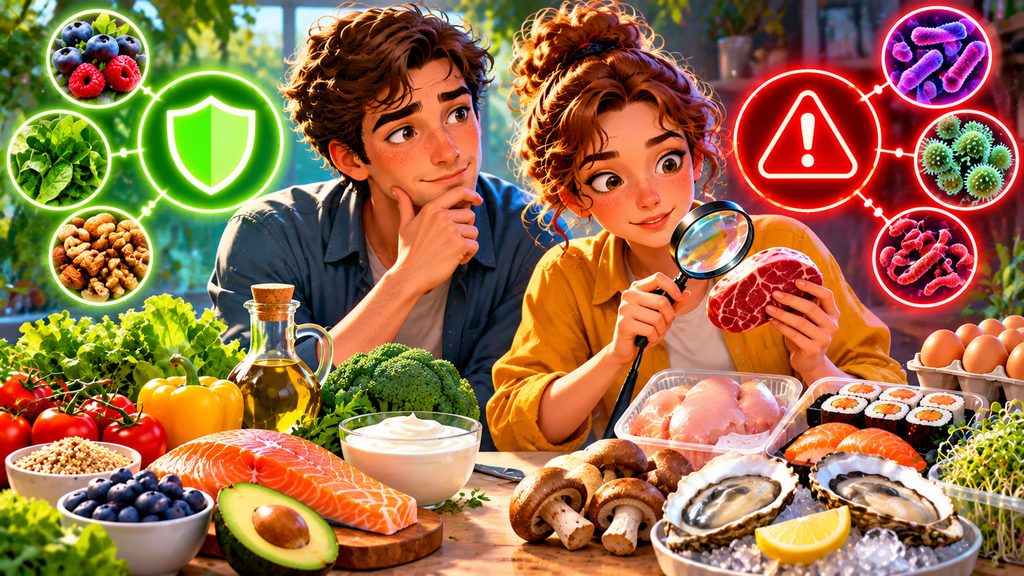
Every day, millions of people open their refrigerators, prepare meals, and eat their favorite foods without thinking about the invisible dangers that might be hiding inside them. A fresh salad, a glass of milk, a piece of fish, or yesterday’s dinner may seem completely harmless, yet certain foods can carry bacteria, natural toxins, or other substances capable of causing serious illness.
Surprisingly, some foods that look perfectly healthy present greater risks than heavily processed products, while others are much safer than their reputation suggests. The difference often depends not on the food itself, but on how it is produced, stored, prepared, and consumed. Understanding these factors can help you enjoy a varied diet while avoiding common food safety mistakes.
Why Can Ordinary Foods Become Dangerous?
Food safety is more complicated than simply separating healthy foods from unhealthy ones. Fresh vegetables, eggs, meat, seafood, and dairy products can all be nutritious, but they may also contain harmful microorganisms if contaminated during production or handling. Some foods naturally contain compounds that require proper preparation, while others become dangerous because of improper refrigeration or cooking.
Scientists distinguish between biological hazards, such as bacteria and parasites, and chemical hazards, including naturally occurring toxins and environmental contaminants. These dangers do not always change a food’s appearance, smell, or flavor. A product can look fresh and taste normal while still containing microorganisms capable of causing foodborne illness.
Raw Meat and Poultry: Why Cooking Matters
Raw chicken and other poultry are among the foods that require particularly careful handling. They may carry bacteria such as Salmonella and Campylobacter, which can cause diarrhea, fever, abdominal pain, and occasionally serious complications. Raw or undercooked ground meat can also carry dangerous strains of Escherichia coli, commonly known as E. coli.
The safest approach is to cook meat and poultry to appropriate internal temperatures, using a food thermometer rather than relying entirely on color. Poultry should reach 74°C (165°F), while ground meats generally require 71°C (160°F). Washing raw chicken is not recommended because splashing water can spread bacteria around the sink and kitchen surfaces.
Thoroughly cooked meat is generally much safer than raw or undercooked meat, provided that cooked food is not contaminated by utensils or surfaces previously used for raw ingredients.
Eggs: Nutritious but Not Always Risk-Free
Eggs provide high-quality protein, vitamins, minerals, and other essential nutrients, making them an important part of many diets. However, raw and undercooked eggs can occasionally contain Salmonella, even when their shells appear clean and undamaged. This is particularly relevant for homemade mayonnaise, desserts, sauces, and uncooked cookie dough.
Cooking eggs until both the whites and yolks are firm reduces the risk of bacterial infection. Pasteurized eggs are a useful alternative for recipes that require eggs to remain raw or lightly cooked because pasteurization reduces harmful microorganisms without fully cooking the product.
For most healthy adults, properly stored and thoroughly cooked eggs can be part of a balanced diet. The greatest food safety concern is not the egg itself, but the possibility of consuming harmful bacteria that have survived insufficient preparation.
Milk and Cheese: The Importance of Pasteurization
Milk contains protein, calcium, and other valuable nutrients, but unpasteurized milk can also carry dangerous microorganisms. Raw dairy products have been associated with infections involving Listeria, Salmonella, Campylobacter, and certain strains of E. coli. These infections can be particularly dangerous for pregnant women, young children, older adults, and people with weakened immune systems.
Pasteurization uses controlled heating to significantly reduce harmful microorganisms while preserving much of milk’s nutritional value. Cheese made from pasteurized milk is generally a safer choice, although some soft cheeses and ready-to-eat dairy products can still become contaminated during manufacturing or storage.
Pasteurized dairy products offer the nutritional benefits of milk with substantially lower microbial risks than raw milk.
Fresh Fruits and Vegetables: Healthy Does Not Mean Sterile
Fruits and vegetables are essential components of a healthy diet, supplying fiber, vitamins, minerals, and numerous beneficial plant compounds. Nevertheless, fresh produce can become contaminated through irrigation water, soil, handling, or processing. Leafy greens, melons, and certain packaged salads have occasionally been linked to outbreaks of foodborne illness.
Washing produce thoroughly under running water helps remove dirt and reduces some surface contamination, although it cannot guarantee the elimination of every microorganism. Cooking vegetables generally provides an additional level of protection because sufficient heat destroys many harmful microbes.
Raw sprouts deserve particular attention because their warm, humid growing conditions can encourage bacterial multiplication. Cooked vegetables are often a lower-risk option than raw sprouts or contaminated ready-to-eat produce, especially for people who are more vulnerable to infections.
Rice, Potatoes, and Leftovers: The Unexpected Risks
Cooked rice may seem harmless, but it can contain spores of Bacillus cereus, a bacterium capable of surviving ordinary cooking. If rice remains at room temperature for too long, surviving spores may germinate and bacteria can multiply, potentially producing toxins that cause vomiting or diarrhea. Reheating does not reliably destroy every toxin that may already have formed.
Potatoes and other cooked starchy foods can also become unsafe when improperly stored or handled. Additionally, potatoes that are green or heavily sprouted may contain elevated levels of glycoalkaloids, natural compounds that can cause illness if consumed in sufficient quantities.
Cooked leftovers should be cooled promptly, refrigerated within two hours, and reheated thoroughly when appropriate. Large portions should be divided into shallow containers so they cool more rapidly.
Fish and Seafood: Parasites, Bacteria, and Mercury
Fish provides protein and beneficial omega-3 fatty acids, but seafood safety depends on species, freshness, preparation, and environmental contamination. Raw or undercooked seafood can contain parasites or harmful microorganisms, while certain large predatory fish accumulate higher concentrations of methylmercury over their lifetimes.
Swordfish, shark, and king mackerel are examples of fish that can contain relatively high mercury concentrations. Children and pregnant women are advised to favor lower-mercury choices, such as salmon, sardines, and many other commonly consumed fish.
Proper cooking substantially reduces many microbial and parasitic hazards, but it does not remove mercury. Choosing appropriate fish species is therefore just as important as preparing seafood safely.
Are Packaged and Processed Foods Actually Safer?
Processed food is often associated with poor nutrition, but processing and food safety are separate issues. Pasteurization, canning, freezing, and other controlled manufacturing methods can reduce harmful microorganisms and extend shelf life. Properly produced canned beans, frozen vegetables, and pasteurized dairy products can therefore offer convenient, relatively low-risk food options.
However, packaging does not guarantee safety. Ready-to-eat meats, refrigerated prepared foods, and improperly stored products can still support bacterial growth or become contaminated after processing. Damaged or bulging cans should never be tasted, and food recalls should always be taken seriously.
A food can be microbiologically safe without being nutritionally ideal, just as a nutritious food can become unsafe through contamination.
Which Foods Are Generally Safer Choices?
For everyday meals, relatively lower-risk choices include properly cooked meat and fish, pasteurized dairy products, thoroughly cooked eggs, washed or peeled fruits, cooked vegetables, and shelf-stable foods produced under controlled conditions. None of these categories is completely free from risk, but careful preparation and storage greatly reduce the likelihood of foodborne illness.
Food safety researcher Dr. Donald Schaffner of Rutgers University has extensively studied how microorganisms spread through food-handling environments. His research highlights the importance of practical kitchen behaviors, particularly preventing cross-contamination between raw ingredients and foods that are ready to eat.
People with food allergies must also consider ingredients that are harmless to most others but dangerous to them. Food safety is therefore personal as well as practical, depending on health, age, allergies, and the conditions under which food is prepared.
Simple Habits That Prevent Food Poisoning
Many foodborne illnesses can be prevented through a few consistent habits. Washing hands before cooking, keeping raw meat separate from ready-to-eat foods, cleaning kitchen surfaces, and refrigerating perishable ingredients promptly can significantly reduce contamination risks. Using a food thermometer also helps ensure that meat and other foods reach safe cooking temperatures.
Refrigerators should generally be maintained at 4°C (40°F) or below, and perishable foods should not remain at room temperature for more than two hours, or one hour in very hot conditions. If food has been handled improperly, a normal smell or appearance should not be used as proof that it remains safe.
Young children, pregnant women, older adults, and immunocompromised individuals may need additional precautions. The safest diet is not one that avoids entire food groups unnecessarily, but one that combines nutritious choices with reliable food-handling practices.
Which everyday food surprised you most when you learned it could become dangerous, and have you ever changed the way you prepare or store something after discovering a hidden food safety risk? Share your experience in the comments!
Interesting Facts
- Some harmful bacteria can multiply in food without changing its smell, appearance, or taste.
- Bacillus cereus spores can survive cooking, which is why improper storage of cooked rice can cause food poisoning.
- Pasteurization significantly reduces harmful microorganisms in milk without eliminating its major nutritional benefits.
- Cooking fish can destroy many parasites, but it does not remove accumulated mercury.
- Raw flour can contain harmful bacteria, making uncooked dough potentially unsafe even when it contains no eggs.
- Honey should not be given to infants younger than twelve months because it can contain spores associated with infant botulism.
- Frozen vegetables are often nutritionally comparable to fresh vegetables, and freezing helps preserve food quality during storage.
Glossary
- Foodborne Illness — Disease caused by consuming food contaminated with harmful microorganisms, toxins, or other hazardous substances.
- Salmonella — A group of bacteria capable of causing gastrointestinal infections and occasionally serious complications.
- Campylobacter — Bacteria commonly associated with foodborne infections, particularly from undercooked poultry.
- Escherichia coli (E. coli) — A bacterial species that includes harmless strains and others capable of causing serious illness.
- Listeria — Bacteria that can cause severe infections, particularly in pregnant women and people with weakened immune systems.
- Bacillus cereus — A bacterium that forms heat-resistant spores and can cause food poisoning when contaminated foods are improperly handled.
- Pasteurization — A controlled heating process designed to reduce harmful microorganisms in foods and beverages.
- Cross-Contamination — The transfer of harmful microorganisms or allergens from one food, surface, or utensil to another.
- Methylmercury — A toxic form of mercury that can accumulate in fish and other aquatic organisms.
- Glycoalkaloids — Natural compounds found in potatoes and certain other plants that can be harmful at elevated concentrations.
- Botulism — A serious illness caused by a nerve toxin produced by certain Clostridium bacteria.