Your refrigerator is one of the most important appliances in your kitchen. It keeps food fresh, slows bacterial growth, and helps reduce waste. But how long can different foods actually stay refrigerated before they become unsafe to eat?
Raw chicken might last just two days, while fresh eggs can remain usable for several weeks. Some vegetables stay crisp for weeks, whereas delicate berries may deteriorate in only a few days.
Knowing the correct refrigerator storage times protects your health, saves money, and prevents unnecessary food waste.
Here is a practical guide to what belongs in your refrigerator, how long common foods last, and how to store everything correctly.
What Is the Ideal Refrigerator Temperature?
The recommended refrigerator temperature is 4°C (40°F) or below, ideally around 3°C (37°F).
At these temperatures, the growth of many harmful microorganisms slows considerably.
However, refrigeration does not kill most bacteria. Some microorganisms can continue growing even at low temperatures.
Food safety specialists at the U.S. Food and Drug Administration emphasize the importance of checking refrigerator temperatures with an appliance thermometer rather than relying entirely on the temperature dial.
The recommended freezer temperature is −18°C (0°F) or colder.
Maintaining these temperatures is particularly important for perishable foods such as meat, seafood, dairy products, and prepared meals.
How Long Can Raw Meat and Poultry Stay Refrigerated?
Raw meat requires careful handling because it can contain harmful microorganisms.
Recommended refrigerator storage times include:
- Raw chicken and turkey: 1–2 days
- Ground beef, pork, or poultry: 1–2 days
- Fresh beef steaks: 3–5 days
- Fresh pork chops: 3–5 days
- Beef, pork, or lamb roasts: 3–5 days
- Raw sausages: 1–2 days
- Cooked meat and poultry: 3–4 days
These guidelines assume continuous refrigeration at 4°C or below.
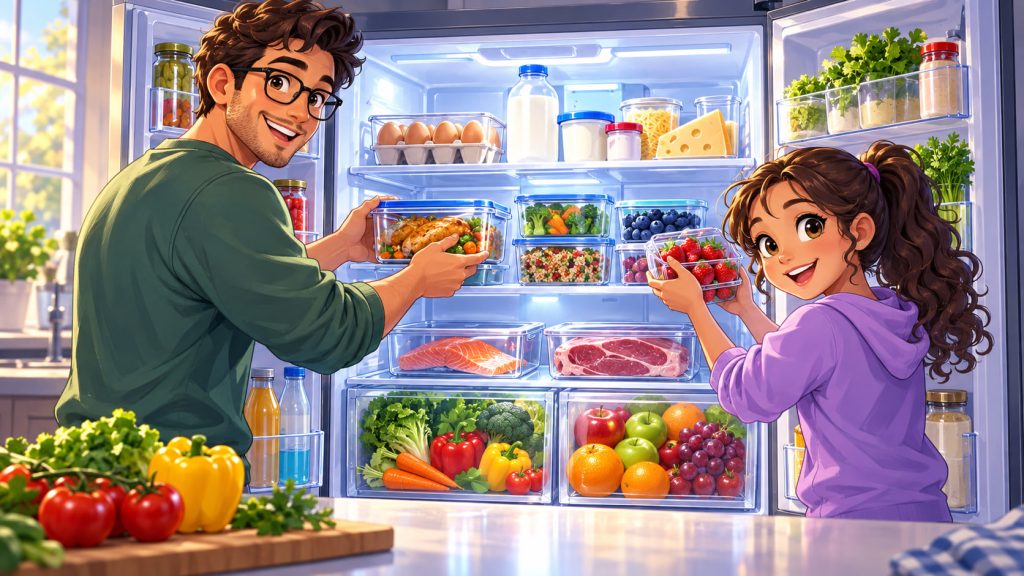
Keep raw meat in sealed containers on the lowest shelf to prevent juices from dripping onto other foods.
This reduces the risk of cross-contamination, where harmful microorganisms transfer between foods or surfaces.
How Long Can Fish and Seafood Be Stored?
Fresh fish is particularly sensitive to temperature changes.
Most raw fish should be cooked or frozen within 1–2 days of purchase. Some seafood varieties have different recommended storage periods.
Cooked fish and seafood dishes generally remain refrigerated for 3–4 days.
Store fresh seafood in leakproof containers in the coldest suitable refrigerator area.
Fish with a strong unpleasant odor, unusual texture, or obvious discoloration should be discarded.
However, dangerous bacteria do not always produce noticeable signs of spoilage.
How Long Do Milk, Cheese, and Yogurt Last?
Dairy storage times depend on the product, packaging, processing method, and whether the container has been opened.
Typical guidelines include:
- Pasteurized milk: follow the expiration instructions and refrigerate promptly after opening
- Yogurt: often approximately 1–2 weeks under proper refrigeration, depending on the label
- Soft cheeses: commonly about 1 week after opening
- Hard cheeses: often several weeks after opening when properly wrapped
- Butter: generally 1–3 months under refrigeration
Unopened products should be stored according to their labels.
Soft cheeses require particular attention because their moisture content can encourage microbial growth.
Unlike some hard cheeses, soft cheeses showing mold should generally be discarded entirely.
How Long Can Eggs Stay in the Refrigerator?
Egg storage practices vary between countries because of differences in washing, processing, and distribution.
Where eggs are sold refrigerated, raw eggs in their shells generally remain usable for 3–5 weeks when continuously chilled.
Hard-boiled eggs should be consumed within one week.
Raw egg whites and yolks separated from their shells should generally be used within 2–4 days.
Keep refrigerated eggs in their original carton on an interior shelf rather than in the refrigerator door.
The carton protects them from damage and reduces exposure to temperature fluctuations.
Which Fruits and Vegetables Belong in the Refrigerator?
Many fruits and vegetables benefit from refrigeration, but storage requirements vary significantly.
Approximate quality-preserving storage periods include:
- Strawberries and raspberries: 2–3 days
- Blueberries: approximately 5–10 days
- Leafy greens: approximately 3–7 days
- Carrots: approximately 2–3 weeks
- Apples: several weeks
- Broccoli: approximately 3–5 days
- Cut melon: approximately 3–4 days
These are general estimates, not guaranteed safety deadlines.
Many refrigerators contain a crisper drawer designed to manage humidity and help produce retain moisture.
Leafy vegetables generally benefit from higher humidity, while some fruits store better under lower-humidity conditions.
Remove visibly spoiled produce promptly to prevent deterioration from spreading.
Which Foods Should Not Normally Be Refrigerated?
Not every food benefits from cold storage.
Some foods lose flavor, texture, or quality when unnecessarily refrigerated.
Examples include:
- Whole potatoes: store in a cool, dark, ventilated location
- Whole onions: keep in a dry, well-ventilated place
- Garlic bulbs: store in a cool, dry environment
- Unripe bananas: allow them to ripen at room temperature
- Whole tomatoes: generally develop better flavor at room temperature
- Bread: freeze for longer storage because refrigeration accelerates staling
Once fruits or vegetables are cut, refrigeration may become necessary.
For example, cut tomatoes and sliced melons should be stored in the refrigerator.
How Long Can Cooked Food and Leftovers Be Stored?
Cooked meals should generally remain refrigerated for no longer than 3–4 days.
This includes:
- Cooked rice and pasta
- Soups and stews
- Cooked chicken
- Meat dishes
- Pizza
- Casseroles
- Prepared salads containing meat or eggs
Refrigerate cooked food within two hours of preparation, or within one hour when the surrounding temperature exceeds 32°C (90°F).
Divide large portions into shallow containers to accelerate cooling.
Food left too long within the temperature danger zone can develop dangerous levels of bacterial contamination.
Reheating cannot reliably make every improperly stored food safe again.
Why Refrigerator Organization Matters
Different refrigerator compartments experience slightly different temperatures.
The door is often warmer because it is exposed to room temperature whenever opened.
Store highly sensitive foods on stable, cold interior shelves.
Keep raw meat below ready-to-eat foods.
Avoid overcrowding shelves because refrigerated air must circulate freely.
Maintaining the cold chain from the supermarket to your refrigerator is equally important.
An insulated shopping bag can help protect chilled groceries during transportation, particularly in warm weather.
Can Refrigerated Food Become Dangerous Without Smelling Bad?
Yes. Food can contain harmful microorganisms without developing obvious changes in smell, color, or texture.
One important example is Listeria monocytogenes, a bacterium capable of growing at refrigerator temperatures.
It is particularly concerning for pregnant people, older adults, and individuals with weakened immune systems.
A normal smell does not guarantee that food is safe to eat.
Respect storage limits, follow product instructions, and discard food that has been stored improperly.
How to Make Refrigerated Food Last Longer
Proper storage helps maintain freshness and extends the useful shelf life of many products.
Several habits make a significant difference:
- Use airtight containers for leftovers.
- Label prepared food with its storage date.
- Keep refrigerator temperatures consistently low.
- Store raw foods separately from ready-to-eat foods.
- Wash produce before eating or preparing it rather than routinely washing everything before storage.
- Freeze foods that cannot be consumed within their recommended refrigeration period.
Freezing is especially useful for meat, fish, bread, and prepared meals.
At −18°C (0°F), continuously frozen food can remain safe for extended periods, although quality gradually declines.
The most effective refrigerator strategy combines correct temperatures, proper packaging, and realistic storage times.
Interesting Facts
- Refrigeration slows bacterial multiplication but does not sterilize food.
- Refrigerator doors generally experience greater temperature fluctuations than interior shelves.
- Raw chicken typically has a much shorter recommended refrigeration period than whole-shell eggs.
- Some microorganisms can multiply even at temperatures close to freezing.
- Storing leafy vegetables at appropriate humidity levels can significantly reduce wilting.
- Bread becomes stale faster in the refrigerator than at ordinary room temperature.
- Freezing preserves food primarily by preventing microbial growth rather than destroying all microorganisms.
- A refrigerator that is too full may struggle to maintain even cooling because airflow becomes restricted.
Glossary
- Perishable Foods — Foods that require controlled storage temperatures because they can spoil or become unsafe relatively quickly.
- Cross-Contamination — The transfer of harmful microorganisms from one food, surface, or utensil to another.
- Crisper Drawer — A refrigerator compartment designed to help control humidity around stored fruits and vegetables.
- Danger Zone — The temperature range approximately between 4°C and 60°C (40°F and 140°F), where many harmful bacteria can multiply rapidly.
- Cold Chain — The continuous maintenance of appropriate low temperatures during food transportation, handling, and storage.
- Listeria monocytogenes — A foodborne bacterium capable of growing at refrigeration temperatures and causing serious illness.
- Shelf Life — The period during which a food product maintains acceptable safety and quality under specified storage conditions.