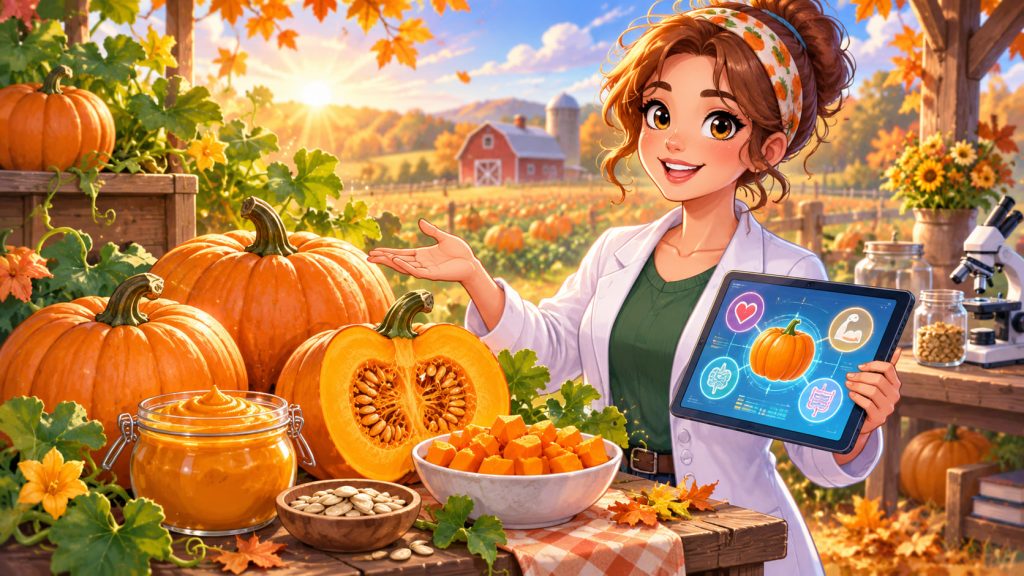
Pumpkin is one of the most recognizable foods in the world. It appears in soups, pies, roasted dishes, autumn decorations, and traditional recipes across many cultures.
But pumpkin is much more than a seasonal symbol.
It is a nutrient-rich food that provides beta-carotene, fiber, potassium, vitamin C, and other beneficial plant compounds while remaining relatively low in calories.
From heart health and digestion to eye health and immune support, pumpkin deserves a place far beyond the holiday table.
What Is a Pumpkin?
Pumpkin belongs to the squash family and is usually classified within the genus Cucurbita.
Although people often think of pumpkin as a vegetable, botanically it is a fruit because it develops from a flower and contains seeds.
Pumpkins come in many shapes, colors, and sizes.
Some are bright orange and round, while others can be green, white, yellow, flattened, elongated, or deeply ribbed.
Not all pumpkins are equally good for cooking.
Some varieties are bred mainly for decoration, while culinary pumpkins tend to have sweeter, denser flesh and a smoother texture.
Pumpkin Is Rich in Beta-Carotene
One of pumpkin’s most important nutrients is beta-carotene, the pigment responsible for its intense orange color.
The body can convert beta-carotene into vitamin A.
Vitamin A plays an essential role in:
- Vision
- Immune function
- Skin health
- Cell growth
- Normal development
Pumpkin is particularly notable because it delivers a large amount of beta-carotene in a relatively small serving.
Its bright color is more than visual appeal—it is a sign of valuable carotenoid compounds.
Pumpkin and Eye Health
Vitamin A is especially important for vision.
The retina requires vitamin A to support normal light detection, and inadequate vitamin A intake can negatively affect eyesight.
Pumpkin also contains other carotenoids that may contribute to eye health.
A diet rich in colorful fruits and vegetables, including pumpkin, supports the intake of protective plant compounds associated with healthy aging.
Pumpkin should not be viewed as a treatment for eye disease, but it is an excellent food for maintaining overall nutritional support for vision.
A Low-Calorie Food with High Nutrient Density
Cooked pumpkin is naturally low in calories because much of its weight comes from water.
At the same time, it provides vitamins, minerals, carotenoids, and fiber.
This combination makes pumpkin a nutrient-dense food, meaning it supplies valuable nutrients without providing excessive energy.
The nutritional profile changes significantly depending on preparation.
Plain roasted or steamed pumpkin is very different from pumpkin pie, sweetened pumpkin drinks, or desserts loaded with sugar, cream, and butter.
Pumpkin itself is nutritious; many pumpkin-flavored products are not necessarily healthy.
Pumpkin and Digestive Health
Pumpkin contains dietary fiber.
Fiber contributes to normal bowel function and helps support digestive health.
It can also promote a greater feeling of fullness after meals.
A healthy digestive system depends on many factors, including total fiber intake, hydration, physical activity, and the diversity of foods in the diet.
Pumpkin can make a useful contribution, especially when eaten as part of soups, stews, roasted vegetable dishes, or purées.
Can Pumpkin Support Heart Health?
Pumpkin provides potassium, a mineral involved in fluid balance, nerve signaling, and muscle function.
Potassium also plays an important role in cardiovascular health.
Diets that include potassium-rich foods are generally associated with healthier blood pressure patterns, particularly when combined with moderate sodium intake.
Pumpkin also contains antioxidants and fiber, both of which fit naturally into heart-friendly eating patterns.
The greatest benefit comes from the overall diet rather than from any single ingredient.
Pumpkin and the Immune System
Pumpkin contains nutrients involved in normal immune function, including vitamin A and vitamin C.
Vitamin A supports tissues that form important barriers between the body and the outside environment, including the skin and mucous membranes.
Vitamin C contributes to normal immune activity and antioxidant protection.
Pumpkin is not an “immune booster” in the dramatic sense often suggested by marketing claims.
However, regular consumption of nutrient-rich foods helps provide the raw materials the immune system needs to function normally.
Pumpkin Seeds Are Nutritionally Different
Pumpkin seeds deserve their own category.
The flesh of the pumpkin is high in water and relatively low in fat, while the seeds are energy-dense and rich in fats, protein, minerals, and other compounds.
Pumpkin seeds provide nutrients such as:
- Magnesium
- Zinc
- Iron
- Protein
- Unsaturated fats
They can be eaten raw or roasted and are commonly added to salads, oatmeal, bread, and snacks.
Because seeds are calorie-dense, portion size matters more than it does with pumpkin flesh.
Expert Perspective
Nutrition experts generally emphasize that pumpkin is most valuable when consumed in minimally processed forms.
Roasted pumpkin, pumpkin soup, unsweetened purée, and whole pumpkin seeds preserve the nutritional advantages of the food without automatically adding large amounts of sugar or saturated fat.
Dietitians also frequently point out that foods rich in naturally occurring plant pigments, such as carotenoids, are useful because they provide a broad mix of nutrients and phytochemicals rather than a single isolated compound.
The health value of pumpkin comes from the entire food, not from one vitamin alone.
Fresh Pumpkin vs Canned Pumpkin
Canned pumpkin can be a convenient and nutritious option.
Plain canned pumpkin is typically cooked and puréed without large amounts of added ingredients.
It can be used in soups, sauces, baked dishes, smoothies, oatmeal, and desserts.
The important distinction is between plain pumpkin purée and pumpkin pie filling.
Pumpkin pie filling may already contain added sugar and spices.
Reading the ingredient list helps determine which product you are buying.
Pumpkin in Cooking
Pumpkin is surprisingly versatile.
Its mild sweetness works well in both savory and sweet dishes.
It can be:
- Roasted
- Steamed
- Puréed
- Baked
- Added to soups
- Mixed into sauces
- Used in breads and muffins
- Combined with grains
- Added to curries
- Served with herbs and spices
Pumpkin pairs particularly well with cinnamon, nutmeg, ginger, garlic, rosemary, sage, chili, and cumin.
Roasting often intensifies its natural sweetness because heat changes both moisture and flavor compounds.
Is Pumpkin Good for Weight Management?
Pumpkin can fit well into a weight-management diet because plain pumpkin is relatively low in calories and contains water and fiber.
These characteristics can help increase meal volume without dramatically increasing calorie intake.
However, pumpkin itself does not cause weight loss.
Total energy intake, food quality, activity, sleep, and long-term habits remain much more important.
Replacing highly processed, calorie-dense foods with vegetables and nutrient-rich plant foods such as pumpkin can be useful, but the effect comes from the overall dietary pattern.
Interesting Facts
- Pumpkin is botanically a fruit, even though it is usually treated as a vegetable in cooking.
- Pumpkins belong to the same plant family as cucumbers, melons, and zucchini.
- The orange color of many pumpkins comes mainly from carotenoid pigments.
- Pumpkin seeds are sometimes called pepitas, although the term is especially common for certain hull-less varieties.
- Some pumpkins can grow to extraordinary sizes under controlled conditions.
- Pumpkin flowers are edible and are used in traditional dishes in several countries.
- Different pumpkin varieties vary greatly in sweetness, moisture, texture, and cooking quality.
- Plain pumpkin purée can be used to add moisture to baked foods while reducing the need for some added fat.
- Pumpkins have been cultivated in the Americas for thousands of years.
Glossary
- Beta-Carotene — A plant pigment that the body can convert into vitamin A.
- Carotenoids — A family of natural pigments found in many yellow, orange, red, and green plants.
- Vitamin A — A nutrient important for vision, immunity, skin, and cell development.
- Dietary Fiber — Plant material that supports digestion and bowel health.
- Potassium — A mineral involved in nerve function, muscle activity, and fluid balance.
- Antioxidant — A substance that helps protect cells from oxidative damage.
- Nutrient Density — The amount of useful nutrients a food provides relative to its calorie content.
- Phytochemicals — Naturally occurring compounds produced by plants that can influence biological processes.
- Pumpkin Purée — Cooked pumpkin that has been blended into a smooth consistency.
- Pepitas — Edible pumpkin seeds, often referring to green hull-less varieties.