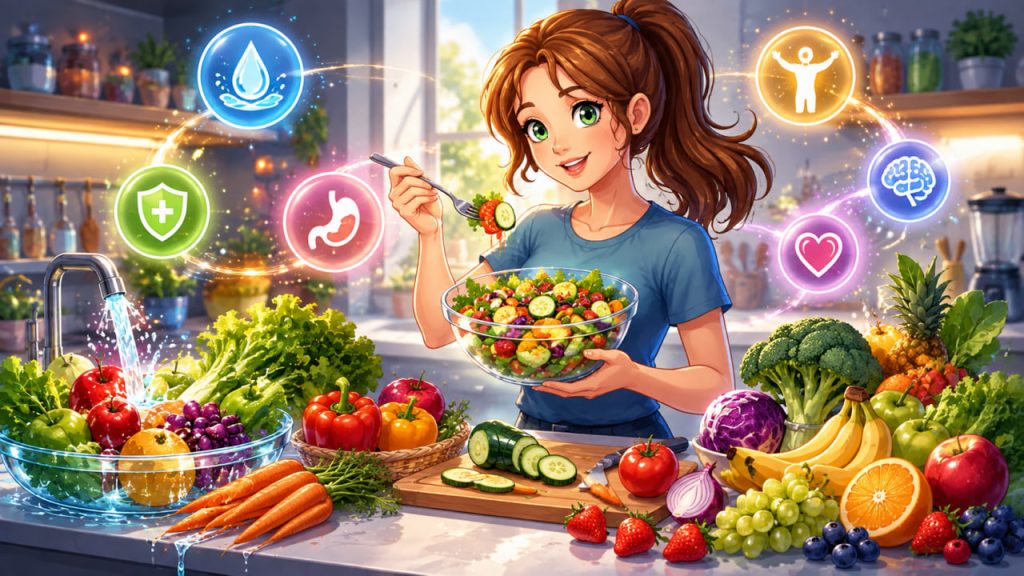
Fruits and vegetables are the foundation of a healthy diet, but eating them “properly” is not only about adding a tomato to lunch or grabbing an apple once in a while.
The real goal is to eat enough, choose a variety of colors, prepare them safely, and combine them with other foods in a way that supports energy, digestion, heart health, and long-term wellness.
The best approach is simple: eat fruits and vegetables every day, make them visible on your plate, and choose whole foods more often than juices or heavily processed versions.
How Much Should You Eat Per Day?
Most adults should aim for a generous daily amount of fruits and vegetables.
The World Health Organization recommends at least 400 grams of fruits and vegetables per day for people older than 10 years, with lower targets for younger children.
In practical terms, many nutrition guides describe this as about five portions per day.
The CDC also notes that adults should generally consume 1.5–2 cup-equivalents of fruit and 2–3 cup-equivalents of vegetables daily.
A simple visual rule works well: make about half your plate fruits and vegetables, especially at lunch and dinner. USDA MyPlate materials use this same half-plate idea as a practical everyday guide.
Eat More Vegetables Than Fruit
Fruit is healthy, but vegetables usually deserve more space in the daily diet.
Vegetables often provide fewer natural sugars and more flexibility in meals. They work in soups, salads, omelets, bowls, side dishes, stews, sauces, and snacks.
A good daily pattern might look like this:
- Fruit at breakfast or as a snack
- Vegetables at lunch
- Vegetables at dinner
- Extra greens, tomatoes, carrots, cucumbers, peppers, or cabbage whenever possible
Think of fruit as a sweet, nutrient-rich addition and vegetables as the main daily foundation.
Choose Color and Variety
Different colors often signal different plant compounds.
Red, orange, yellow, green, purple, blue, and white fruits and vegetables contain different combinations of vitamins, minerals, fiber, and phytonutrients. Harvard’s Nutrition Source recommends aiming for color and variety when choosing fruits and vegetables.
Do not rely only on bananas and potatoes. Add berries, citrus, leafy greens, broccoli, peppers, tomatoes, carrots, beets, onions, apples, plums, cabbage, zucchini, and legumes.
A colorful plate is usually a more nutritionally diverse plate.
This does not mean every meal must look perfect. Over the week, try to include several colors and textures.
Eat Whole Fruits More Often Than Juice
Whole fruit is usually a better choice than fruit juice.
When you eat a whole orange, apple, plum, or pear, you get fiber along with natural sugars. Fiber slows digestion, supports fullness, and helps keep the meal more balanced.
Juice removes much of that structure. It can be easy to drink the sugar from several fruits in a few minutes without feeling full.
The CDC explains that fiber supports digestive health, fullness, blood sugar control, and cholesterol levels, and fruits and vegetables are among good fiber sources.
If you want the best health value, chew your fruit more often than you drink it.
Raw or Cooked: Which Is Better?
Both raw and cooked vegetables can be healthy.
Raw vegetables are refreshing, crunchy, and often rich in vitamin C and water. Cucumbers, lettuce, tomatoes, carrots, cabbage, peppers, and leafy greens are easy raw options.
Cooked vegetables can be easier to digest for some people and may help the body absorb certain nutrients better. For example, cooked tomatoes are known for making lycopene more available.
Steaming, roasting, grilling, sautéing, and adding vegetables to soups are all useful methods.
Avoid turning vegetables into a less healthy dish by covering them with too much butter, heavy cream, deep-fried batter, or sugary sauces.
The best cooking method is the one that helps you eat vegetables regularly without drowning them in excess calories, salt, or fat.
Eat Fruits and Vegetables With Protein and Healthy Fats
Fruits and vegetables are powerful, but they should not be the entire meal.
A balanced plate also needs protein, healthy fats, and often whole grains or legumes.
Good combinations include:
- Berries with Greek yogurt
- Apple slices with peanut butter
- Salad with eggs, chicken, beans, tofu, or fish
- Roasted vegetables with lentils or turkey
- Fruit with cottage cheese
- Vegetable soup with beans
- Oatmeal with fruit and nuts
This combination improves fullness and makes meals more stable.
Vegetables add volume, fiber, and micronutrients. Protein and healthy fats help the meal keep you satisfied longer.
Wash and Store Produce Safely
Eating fruits and vegetables properly also means preparing them safely.
The FDA recommends rinsing fresh fruits and vegetables under running water, including produce with skins and rinds that are not eaten. It also says washing produce with soap, detergent, or commercial produce wash is not recommended.
Wash your hands before preparing produce. Use clean cutting boards and knives. Keep raw meat, poultry, and seafood separate from fruits and vegetables.
Cut fruits and vegetables should be refrigerated because once produce is cut, bacteria can spread more easily and the food becomes more perishable. CDC food safety guidance also recommends refrigerating cut fruit and some vegetables within 2 hours.
Do Not Fear Frozen or Canned Options
Fresh produce is excellent, but it is not the only good option.
Frozen fruits and vegetables can be nutritious, convenient, and affordable. They are often picked and frozen quickly, which helps preserve nutrients.
Canned vegetables and fruits can also be useful, especially when fresh produce is expensive or unavailable. Choose canned vegetables with lower sodium when possible. Choose fruits packed in water or natural juice instead of heavy syrup.
The healthiest diet is not always the most expensive one. It is the one you can maintain consistently.
Best Times to Eat Fruits and Vegetables
There is no magic hour when fruits or vegetables suddenly become healthier.
You can eat fruit in the morning, afternoon, or evening. You can eat vegetables at breakfast, lunch, dinner, or as snacks.
The most important rule is consistency.
For easier habits, attach produce to meals you already eat:
- Add berries to breakfast
- Add salad or soup to lunch
- Add cooked vegetables to dinner
- Keep washed fruit visible
- Prepare sliced vegetables for snacks
The right time to eat fruits and vegetables is the time that helps you actually eat them.
Expert Perspective
Nutrition experts consistently recommend fruits and vegetables because they provide fiber, vitamins, minerals, and protective plant compounds.
Harvard’s Nutrition Source states that a diet rich in vegetables and fruits can help lower blood pressure, reduce the risk of heart disease and stroke, support eye and digestive health, and help keep appetite in check.
This expert view supports a practical message: do not search for one perfect fruit or one perfect vegetable. Build a varied routine that includes many plant foods across the week.
Interesting Facts
- Tomatoes are botanically fruits but are usually eaten as vegetables.
- Many edible skins, such as apple, plum, cucumber, and potato skins, contain fiber and plant compounds.
- Frozen vegetables can be more practical than fresh vegetables for busy people.
- Leafy greens are among the easiest vegetables to add to soups, eggs, smoothies, and sandwiches.
- Citrus fruits can help improve absorption of iron from plant foods.
- Different colors in produce often come from different phytonutrients.
- Eating vegetables before or with the main meal can help increase fullness.
Glossary
- Portion — A practical serving amount of food eaten at one time.
- Cup-Equivalent — A nutrition measurement used to estimate recommended amounts of foods.
- Fiber — A type of carbohydrate that supports digestion, fullness, cholesterol control, and blood sugar balance.
- Phytonutrients — Natural plant compounds that may support health and help protect plants.
- Whole Fruit — Fruit eaten in its natural form, with its fiber and structure mostly intact.
- Lycopene — A red plant pigment found in tomatoes, watermelon, and some other red produce.
- Micronutrients — Vitamins and minerals needed by the body in small amounts.
- Legumes — Beans, lentils, peas, and chickpeas; often counted as protein foods and plant foods.
- Perishable Food — Food that can spoil or become unsafe if not stored correctly.
- Balanced Plate — A meal pattern that includes vegetables or fruit, protein, healthy fats, and often whole grains or legumes.