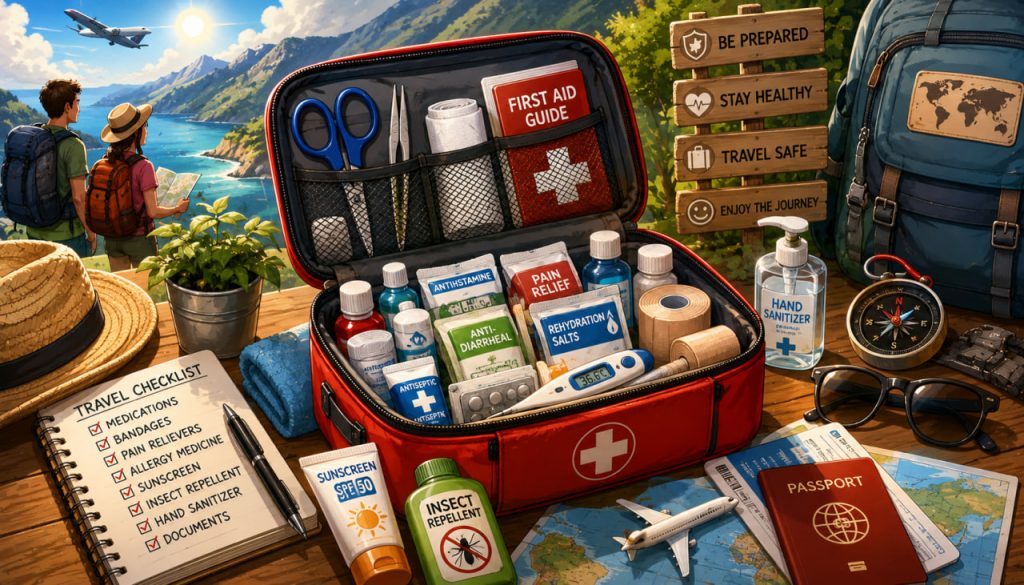
A good travel first aid kit is not about fear. It is about preparation.
When you are away from home, even a small health problem can become inconvenient: a headache during a flight, a blister after a long walk, stomach trouble after unfamiliar food, a small cut on a hike, or a lost prescription medication.
A well-packed travel medical kit helps you handle minor problems quickly and gives you time to seek proper medical care when something more serious happens.
The best travel first aid kit is personal, compact, organized, and matched to your destination.
A weekend city break, a family beach vacation, a mountain trek, and a tropical trip all require different levels of preparation.
Why Every Traveler Needs a First Aid Kit
Travel changes your normal routine.
You may sleep less, walk more, eat unfamiliar food, sit for long hours, face heat or cold, and spend time in places where pharmacies are hard to find.
The CDC recommends preparing a travel health kit with items that may be needed during a trip, especially things that could be difficult to obtain at the destination.
This is especially important for:
- International travel
- Travel with children
- Hiking or camping
- Long flights
- Remote areas
- Trips to hot climates
- Chronic medical conditions
- Adventure activities
A travel first aid kit does not replace a doctor, but it can prevent small problems from disrupting the whole trip.
Start With Your Personal Medications
The most important part of any travel medical kit is your regular medication.
Pack enough prescription medicine for the whole trip, plus extra in case of delays. The WHO advises travelers to carry sufficient medical supplies, including prescribed medicines, to cover the trip duration and possible changes of plan.
Keep medicines in original, labeled containers when possible.
This helps customs officers, airport security, doctors, and pharmacists identify what you are carrying.
The CDC also recommends carrying medications in original labeled containers and keeping them in carry-on luggage rather than checked baggage.
Your medication section should include:
- Prescription medicines
- Copies of prescriptions
- A list of generic medication names
- Allergy information
- Doctor’s contact details
- Medical insurance card
- Important medical documents
Never pack essential medication only in checked luggage. Bags can be delayed, lost, or exposed to extreme temperatures.
Basic First Aid Supplies
Every travel kit should include simple supplies for cuts, scrapes, blisters, and minor injuries.
Useful basics include:
- Adhesive bandages in different sizes
- Sterile gauze pads
- Medical tape
- Antiseptic wipes
- Alcohol-based hand sanitizer
- Disposable gloves
- Small scissors
- Tweezers
- Elastic bandage
- Blister pads or moleskin
- Digital thermometer
- Safety pins
- Instant cold pack
Blister care is especially important for city travel, hiking, festivals, and any trip involving long walks.
A painful blister can turn a beautiful day into a slow, uncomfortable struggle.
Foot care is one of the most underrated parts of travel health.
Pain, Fever, and Inflammation
Pain relievers and fever reducers are among the most useful over-the-counter medicines to bring.
Common options include acetaminophen/paracetamol or ibuprofen.
These can help with headaches, muscle pain, toothache, menstrual cramps, fever, and mild inflammation.
However, they are not suitable for everyone.
People with liver disease, stomach ulcers, kidney disease, blood-thinning medication, pregnancy, or certain chronic conditions should ask a healthcare professional which option is safest.
A familiar medicine from home is often better than trying to understand unfamiliar labels in another language.
Pack only medicines you know how to use correctly.
Stomach and Digestive Problems
Digestive issues are common during travel.
New foods, different water, schedule changes, stress, alcohol, and bacteria can all affect the stomach.
A practical kit may include:
- Oral rehydration salts
- Anti-diarrheal medicine
- Motion sickness medicine
- Antacid
- Mild laxative
- Nausea relief medicine, if appropriate
- Probiotics, if you normally use them
Oral rehydration salts are especially useful because diarrhea and vomiting can cause dehydration.
The CDC notes that travel health kits may include over-the-counter medicines and destination-specific items, while some travelers may need prescription medicines for conditions such as travelers’ diarrhea, malaria, or altitude illness depending on the region.
For severe diarrhea, high fever, blood in stool, dehydration, or persistent vomiting, seek medical care.
Self-treatment is only for mild, short-term problems.
Cold, Allergy, and Respiratory Items
Airplanes, hotels, dry air, crowds, and climate changes can trigger respiratory discomfort.
Consider packing:
- Antihistamine
- Nasal saline spray
- Cough drops
- Cough medicine, if needed
- Throat lozenges
- Tissues
- Face masks
- Personal inhaler, if prescribed
The CDC’s packing guidance includes cough drops, cough suppressants, expectorants, and other symptom-relief items as possible parts of a travel health kit.
People with asthma or severe allergies should carry rescue medication and know where the nearest medical facility is at the destination.
If breathing becomes difficult, do not rely on a travel kit. Get urgent medical help.
Skin, Sun, and Insect Protection
Travel often exposes skin to stronger sun, insects, plants, salt water, sweat, and unfamiliar climates.
Useful items include:
- Sunscreen
- Aloe vera or after-sun gel
- Insect repellent
- Anti-itch cream
- Hydrocortisone cream
- Lip balm with SPF
- Moisturizer
- Burn dressing or gel
- Antifungal cream, if prone to fungal infections
The CDC advises travelers to pack items such as insect repellent, sunscreen, aloe, hand sanitizer, and water disinfection tablets when appropriate.
In tropical areas, insect protection is not just about comfort.
Mosquitoes can transmit diseases such as malaria, dengue, yellow fever, chikungunya, and Zika in some regions.
For some destinations, insect repellent is a medical necessity, not a cosmetic product.
Destination-Specific Additions
Your kit should change depending on where you go.
For mountains, consider altitude-sickness advice and appropriate prescription medication if recommended by a doctor.
For tropical regions, ask about vaccines, malaria prevention, insect protection, and safe water.
For remote travel, add a larger wound-care section, water purification tablets, emergency blanket, and a communication plan.
For beach trips, include burn care, sun protection, antiseptic, and treatment for minor cuts.
For travel with children, bring child-appropriate doses and forms of medication.
Before departure, check destination health risks. The CDC recommends reviewing destination-specific travel health information before deciding what to pack.
A good kit for Paris is not the same as a good kit for the Amazon rainforest or a Himalayan trek.
What Not to Pack Without Advice
Some travelers pack too many medicines “just in case.”
This can create problems.
Avoid carrying antibiotics, strong painkillers, sleeping pills, sedatives, or controlled substances without a legitimate prescription and medical guidance.
Some medications that are legal in one country may be restricted or prohibited in another. The CDC advises travelers to check medication restrictions before traveling and to keep medicines in original containers with documentation.
This is especially important for:
- Opioid pain medicines
- ADHD medications
- Anxiety medications
- Sleep medications
- Some cold medicines
- Injectable medicines
- Medical cannabis products
Legal medicine at home can become a border problem abroad.
Check official rules before you travel.
How to Pack the Kit
Use a small waterproof pouch with clear sections.
Separate items into categories:
- Daily medications
- Emergency medications
- Wound care
- Stomach care
- Pain and fever
- Allergy and cold
- Skin and insect protection
- Documents
Keep essentials in your carry-on bag.
For longer trips, you can divide supplies between carry-on and luggage, but prescription medicines and urgent items should stay with you.
Check expiration dates before every trip.
Replace damaged packaging, dried-out wipes, expired medicine, and used supplies.
A travel first aid kit is only useful if it is organized enough to find things quickly.
Expert Perspective
The CDC Yellow Book, a major reference for travel medicine professionals, states that all travelers should bring a personal first aid kit with basic medical supplies based on their health history and trip type. It also emphasizes that some travelers may need destination-specific prescription medicines or preventive treatment.
This expert guidance points to the most important principle: there is no universal perfect travel kit.
The right kit is built around the traveler, the destination, the season, the activities, and access to healthcare.
A Practical Travel First Aid Kit Checklist
For most ordinary trips, a balanced kit can include:
- Personal prescription medicines
- Copies of prescriptions
- Adhesive bandages
- Gauze and tape
- Antiseptic wipes
- Hand sanitizer
- Pain and fever medicine
- Oral rehydration salts
- Anti-diarrheal medicine
- Motion sickness medicine
- Antihistamine
- Sunscreen
- Insect repellent
- Blister pads
- Thermometer
- Tweezers
- Small scissors
- Insurance card
- Emergency contacts
This simple kit covers many common travel problems without becoming too bulky.
The goal is not to carry a pharmacy. The goal is to carry the right essentials.
Interesting Facts
- Oral rehydration salts can be more important than anti-diarrheal medicine because dehydration is the main danger during vomiting or diarrhea.
- Blisters are among the most common minor travel problems, especially on city trips and hikes.
- Some prescription medicines are restricted in certain countries even when legally prescribed at home.
- Original medication packaging can help avoid confusion at airports and pharmacies.
- A good travel kit should be adjusted for climate, destination, trip length, and planned activities.
- Sunscreen and insect repellent are health items, not just comfort products.
- Copies of prescriptions can be very useful if medicine is lost or damaged.
Glossary
- Travel First Aid Kit — A small collection of medical supplies and medicines prepared for common health needs during travel.
- Prescription Medicine — Medication that legally requires authorization from a healthcare professional.
- Over-the-Counter Medicine — Medicine that can be bought without a prescription.
- Oral Rehydration Salts — A powder or tablet mixture used with clean water to replace fluids and electrolytes.
- Antihistamine — A medicine used to reduce allergy symptoms such as itching, sneezing, or rash.
- Antiseptic — A substance used to reduce germs on skin or minor wounds.
- Insect Repellent — A product used to reduce insect bites.
- Motion Sickness — Nausea or dizziness caused by movement during travel.
- Controlled Substance — A medication or drug regulated by law because of risk of misuse or dependence.
- Travel Medicine — A medical field focused on health risks, prevention, and care related to travel.