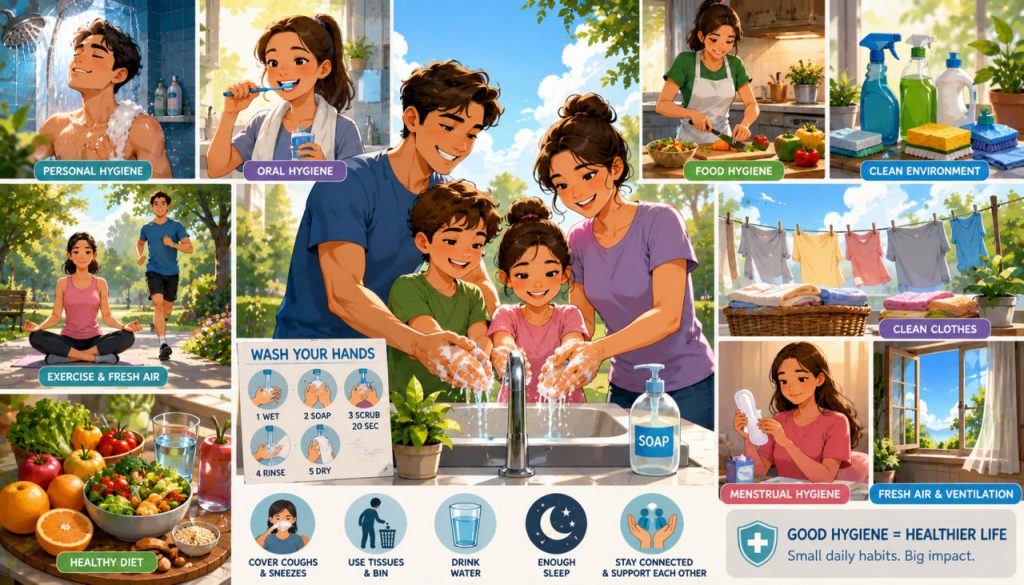
Hygiene is the collection of habits and environmental conditions that help preserve health and reduce the spread of disease. It includes far more than taking a shower or washing visible dirt from the body.
Handwashing, oral care, safe food preparation, clean clothing, menstrual hygiene, respiratory etiquette, household cleaning, and access to safe water and sanitation are all parts of hygiene.
Good hygiene does not attempt to create a completely germ-free life. Its purpose is to interrupt the most important routes through which harmful microorganisms spread.
What Does Hygiene Mean?
Hygiene includes practices that keep the body and surrounding environment reasonably clean while limiting exposure to pathogens.
Common forms of hygiene include:
- Personal hygiene
- Hand hygiene
- Oral hygiene
- Food hygiene
- Menstrual hygiene
- Respiratory hygiene
- Household hygiene
- Medical hygiene
These areas overlap. For example, washing hands before preparing food protects both the person cooking and everyone who eats the meal.
The World Health Organization treats hygiene as part of the wider WASH framework: water, sanitation, and hygiene. Safe habits are much harder to maintain when homes, schools, workplaces, or healthcare facilities lack clean water, soap, toilets, and waste-management systems.
Why Hygiene Prevents Disease
Many infections spread when microorganisms move from contaminated hands, surfaces, food, water, droplets, or bodily waste into the mouth, nose, eyes, or broken skin.
Hands are especially important because people constantly touch objects, prepare food, and unconsciously touch their faces.
According to the CDC, handwashing with soap can prevent approximately 30% of illnesses associated with diarrhea and about 20% of respiratory infections in some populations.
Soap helps lift oils, dirt, chemicals, and microorganisms from the skin so that running water can carry them away.
The goal is not merely to make hands look clean. It is to remove contamination before it reaches the body or another person.
How to Wash Your Hands Correctly
The CDC recommends five basic steps:
- Wet the hands with clean running water.
- Apply soap and create a lather.
- Rub the palms, backs of the hands, between the fingers, and beneath the nails.
- Scrub for at least 20 seconds.
- Rinse and dry the hands thoroughly.
Important moments for handwashing include:
- Before preparing or eating food
- After using the toilet
- After changing a diaper or helping a child use the toilet
- After coughing, sneezing, or blowing the nose
- After handling raw meat
- After touching garbage
- After caring for a sick person
- After touching animals or animal waste
When soap and water are unavailable, a hand sanitizer containing at least 60% alcohol can reduce many germs. However, sanitizer does not remove every chemical, all types of germs, or visible dirt as effectively as proper washing.
Personal Hygiene and Skin Care
Personal hygiene includes regular bathing, clean clothing, nail care, hair care, and appropriate cleaning of intimate areas.
Bathing removes sweat, excess oil, allergens, dirt, and odor-producing microorganisms. The required frequency varies with climate, activity level, occupation, skin condition, and personal needs.
More washing is not always better. Very hot water, harsh scrubbing, strongly scented products, and frequent antiseptic use may irritate the skin and damage its protective barrier.
The ears, eyes, and genital areas require gentle care. Objects should not be pushed deeply into the ear canal, and aggressive internal cleansing of the vagina is unnecessary and may disturb its natural microbial environment.
Effective hygiene should protect the body without injuring the tissues it is meant to clean.
Why Oral Hygiene Matters
Dental plaque is a sticky microbial film that continually forms on the teeth. Without regular removal, it can contribute to tooth decay, gum inflammation, bad breath, and periodontal disease.
The American Dental Association recommends brushing twice daily for two minutes with fluoride toothpaste. Cleaning between the teeth with floss or another interdental cleaner removes plaque from areas a toothbrush may not reach effectively.
A practical oral-hygiene routine includes:
- Brushing gently along the gumline
- Cleaning between the teeth daily
- Cleaning the tongue when necessary
- Limiting frequent sugary snacks and drinks
- Replacing a worn toothbrush
- Attending dental examinations according to individual need
Bleeding gums, persistent mouth pain, loose teeth, swelling, or sores that do not heal should be assessed by a dental professional.
Food Hygiene Protects the Whole Household
Food can become contaminated during production, transport, storage, preparation, or serving.
Hands may transfer organisms such as Salmonella from raw ingredients to ready-to-eat foods. The CDC identifies handwashing as one of the most important ways to reduce foodborne illness in the kitchen.
Basic food-hygiene practices include keeping raw foods separate from cooked foods, refrigerating perishable products promptly, cooking food adequately, washing produce when appropriate, and cleaning utensils after contact with raw meat.
Kitchen cloths, cutting boards, sponges, and refrigerator handles can also spread contamination.
Food hygiene is not about making every surface sterile. It is about controlling the places and moments where harmful organisms are most likely to travel.
Household Cleaning Versus Disinfection
Cleaning and disinfection are related but different.
Cleaning uses soap or detergent to remove dirt, organic material, and many germs from a surface. Disinfection uses chemicals or other methods to kill remaining microorganisms.
Routine household surfaces usually need regular cleaning rather than constant disinfection. More intensive disinfection may be appropriate after contact with bodily fluids, during certain infections, or in high-risk settings.
The CDC recommends immediately cleaning visibly soiled surfaces and using additional precautions when blood or bodily fluids are present.
Household chemicals should never be mixed unless the label specifically allows it. Combining bleach with ammonia or acidic products can release dangerous gases.
Respiratory Hygiene
Respiratory hygiene reduces the spread of illnesses transmitted through droplets, hands, and contaminated surfaces.
Helpful practices include covering coughs and sneezes with a tissue or the inside of the elbow, disposing of used tissues, cleaning the hands afterward, and improving indoor ventilation.
People who are ill should avoid preparing food for others when possible and reduce close contact with vulnerable individuals.
The CDC notes that handwashing reduces the chance that respiratory germs will reach the eyes, nose, or mouth when a person touches the face.
Menstrual Hygiene and Human Dignity
Menstrual hygiene involves access to clean absorbent products, private washing facilities, safe disposal systems, accurate information, and freedom from stigma.
Products should be changed according to their instructions and individual flow. Reusable products must be washed, dried, and stored correctly.
Menstrual hygiene is not merely a private cleanliness issue. Lack of toilets, water, supplies, or privacy can prevent people from attending school, working comfortably, and participating fully in society.
This illustrates an important principle: hygiene depends on infrastructure, affordability, education, and dignity—not only personal responsibility.
Expert Perspective
WHO describes hand hygiene as one of the most effective measures for preventing infections in healthcare environments. Its improvement programs can prevent a substantial proportion of avoidable healthcare-associated infections while protecting patients and medical workers.
The same principle applies to everyday life: simple practices become powerful when they are performed at the right moments and supported by reliable access to water, soap, sanitation, and education.
UNICEF reported that global access to basic hygiene services rose from 66% to 80% between 2015 and 2024. However, approximately 1.7 billion people still lacked basic services in 2024, including hundreds of millions with no handwashing facility.
When Hygiene Becomes Excessive
Healthy hygiene should not create constant fear of ordinary contact with the world.
Repeated washing, harsh chemicals, compulsive cleaning, and unnecessary antibiotic or antiseptic products can damage skin, increase irritation, waste resources, and disrupt daily life.
People with eczema or other skin disorders may need fragrance-free products and individualized medical advice.
When fear of contamination produces severe anxiety or repetitive rituals that interfere with work, relationships, or sleep, professional mental-health support may be appropriate.
Good hygiene is targeted, practical, and sustainable—not obsessive.
Interesting Facts
- Human skin naturally supports communities of microorganisms known as the skin microbiome.
- Soap does not need to be antibacterial to clean hands effectively in ordinary situations.
- Drying is part of hand hygiene because germs transfer more easily from wet hands.
- Fingernails can shelter dirt and microorganisms.
- Hand sanitizer should contain at least 60% alcohol when soap and water are unavailable.
- Toothbrushing alone may not clean tight spaces between teeth effectively.
- A visibly clean kitchen surface can still carry microorganisms.
- Hygiene facilities in schools can influence attendance and learning.
- Medical X-rays and vaccines do not replace ordinary infection-prevention habits.
- Access to clean water and toilets is a public-health necessity, not a luxury.
Glossary
- Hygiene — Practices and conditions that help maintain health and limit disease transmission.
- Pathogen — A microorganism or biological agent capable of causing disease.
- Microorganism — A microscopic organism, such as a bacterium, fungus, or protozoan.
- Hand Hygiene — Cleaning the hands with soap and water or an appropriate sanitizer.
- Personal Hygiene — Practices used to care for the body, clothing, mouth, hair, and skin.
- Oral Hygiene — Care intended to keep the teeth, gums, tongue, and mouth healthy.
- Food Hygiene — Practices that reduce contamination during food storage, preparation, and serving.
- Respiratory Hygiene — Behaviors that limit the spread of respiratory secretions and infections.
- Menstrual Hygiene — Safe and dignified management of menstruation using suitable products, water, sanitation, and information.
- Cleaning — Physical removal of dirt and many germs from a surface.
- Disinfection — Use of a chemical or physical process to destroy many microorganisms on a surface.
- Cross-Contamination — Transfer of harmful material from one person, food, object, or surface to another.
- Dental Plaque — A sticky microbial film that forms on teeth.
- Skin Barrier — The outer protective layer of skin that limits water loss and blocks irritants.
- WASH — Water, sanitation, and hygiene services and practices.