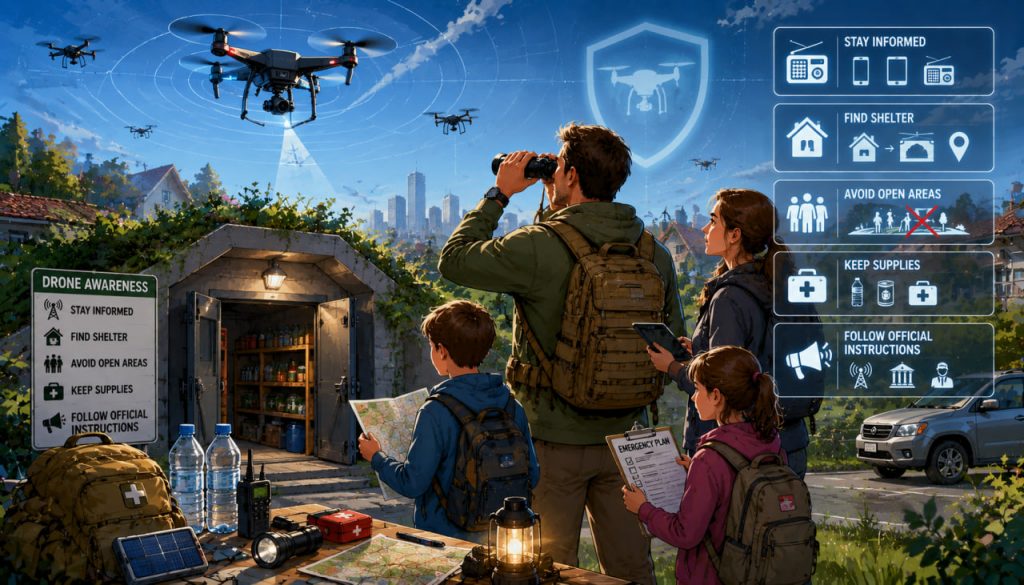
Modern military drones have transformed the nature of warfare. Once limited to reconnaissance missions, drones now perform surveillance, target identification, communication support, and, in some cases, offensive operations. Their growing use in armed conflicts around the world has raised concerns among civilians living in or near conflict zones.
For ordinary families, the most important goal is not understanding military technology in detail but learning practical safety principles that can reduce risk during emergencies. While civilians cannot control military operations, they can take steps to improve preparedness, situational awareness, and emergency response.
This article explains what military drones are, how they are used, and what security experts recommend for civilian safety in areas where drone activity may occur.
What Are Military Drones?
Military drones, also known as Unmanned Aerial Vehicles (UAVs), are aircraft operated remotely or autonomously without a pilot onboard.
Different types serve different purposes:
- Surveillance drones
- Reconnaissance drones
- Communication drones
- Target acquisition drones
- Combat drones
Some are small enough to fit inside a backpack, while others have wingspans larger than passenger aircraft.
Most drones are equipped with cameras, sensors, navigation systems, and communication equipment.
Why Drones Matter in Modern Conflicts
Drones provide military forces with several advantages:
- Continuous observation
- Long operational endurance
- Reduced risk to pilots
- Rapid intelligence gathering
Because drones can observe large areas from above, they often serve as aerial eyes for military operations.
For civilians, this means that awareness and preparedness are increasingly important during conflicts.
Understanding Civilian Risk
The level of risk depends heavily on location.
People face higher risks if they are near:
- Active combat zones
- Military facilities
- Strategic infrastructure
- Ammunition depots
- Transportation hubs
- Areas of ongoing military activity
Most civilian casualties in modern conflicts result from proximity to dangerous areas rather than direct targeting.
For this reason, security specialists consistently emphasize avoidance and evacuation when possible.
Stay Informed
One of the most effective protective measures is maintaining access to reliable information.
Important sources include:
- Emergency alerts
- Local authorities
- Civil defense organizations
- Official government communications
- Emergency radio broadcasts
Situational awareness often provides valuable time to react safely.
Families should establish a routine for monitoring trusted information sources during emergencies.
Develop a Family Emergency Plan
Experts strongly recommend preparing before a crisis occurs.
A family emergency plan should include:
- Meeting locations
- Emergency contacts
- Evacuation routes
- Transportation options
- Communication procedures
Children should understand basic instructions appropriate for their age.
Preparation reduces confusion and panic during stressful situations.
Know the Location of Safe Shelters
In areas facing military threats, identifying safe shelter locations is essential.
Safer locations generally include:
- Purpose-built shelters
- Underground facilities
- Reinforced basements
- Protected civil defense structures
The effectiveness of any shelter depends on local circumstances and construction quality.
Local emergency authorities typically provide guidance regarding approved shelters.
Avoid Open Areas During Active Threats
When authorities issue warnings regarding aerial threats, experts generally recommend avoiding:
- Open fields
- Rooftops
- Large parking areas
- Exposed roads
- Open public spaces
Structures provide greater protection than exposed locations.
Moving indoors and remaining away from windows can reduce injury risks from debris or blast effects.
Maintain Emergency Supplies
Preparedness experts recommend keeping emergency supplies available.
Useful items may include:
- Drinking water
- Nonperishable food
- Flashlights
- Batteries
- First-aid supplies
- Portable radios
- Essential medications
- Important documents
Emergency kits should be easily accessible and regularly updated.
Communication Is Critical
During emergencies, communication networks may become overloaded.
Families should establish:
- Alternative contact methods
- Emergency meeting points
- Backup communication plans
Text messaging often remains functional when voice networks experience congestion.
Knowing how family members will communicate can reduce anxiety during rapidly changing situations.
Protect Mental Health
Living under the threat of conflict can create significant psychological stress.
Common reactions include:
- Anxiety
- Sleep disturbances
- Fatigue
- Difficulty concentrating
Experts encourage families to:
- Maintain routines when possible
- Discuss concerns openly
- Limit exposure to unverified rumors
- Seek professional support when needed
Psychological resilience is an important component of overall safety.
Expert Perspective
Security researcher Peter W. Singer has noted that drones have fundamentally changed the modern battlefield by increasing the availability of aerial surveillance. His work emphasizes that civilians benefit most from preparedness, awareness, and adherence to official safety guidance rather than attempting technological countermeasures on their own.
The Importance of Following Official Guidance
Military situations can change rapidly.
Authorities may issue instructions regarding:
- Evacuation
- Shelter use
- Travel restrictions
- Curfews
- Emergency procedures
Following verified official guidance remains one of the most effective ways to improve personal safety.
Reliable information is often as important as physical protection.
What Not to Do
Security experts generally advise civilians against:
- Approaching military equipment
- Investigating suspicious objects
- Entering active combat areas
- Sharing sensitive military locations online
- Ignoring official warnings
Personal curiosity should never override safety considerations.
Conclusion
Military drones have become a significant part of modern conflicts, increasing the importance of preparedness and situational awareness for civilians. While individuals cannot control military operations, they can improve safety by staying informed, preparing emergency plans, identifying shelters, maintaining supplies, and following official instructions.
Experts consistently emphasize that the most effective civilian protection comes from preparation, awareness, and timely response rather than attempting to directly interact with or counter military systems. Families that plan ahead are often better equipped to remain calm and make safer decisions during emergencies.
Interesting Facts
- Modern military drones can remain airborne for many hours or even days.
- Some reconnaissance drones operate at altitudes difficult to observe from the ground.
- Drones are used for surveillance, mapping, communication, and search operations.
- Emergency preparedness plans improve survival during many types of disasters, not only conflicts.
- Portable radios remain important because they can function when internet access is disrupted.
- Many countries include civilian preparedness programs as part of national emergency planning.
Glossary
- UAV (Unmanned Aerial Vehicle) — An aircraft operated without a pilot onboard.
- Reconnaissance — The collection of information about an area or situation.
- Surveillance — Continuous observation of a location or activity.
- Evacuation — The organized movement of people away from danger.
- Civil Defense — Protective measures designed for civilian populations during emergencies.
- Situational Awareness — Understanding current conditions and potential risks.
- Emergency Shelter — A protected location designed to provide safety during crises.