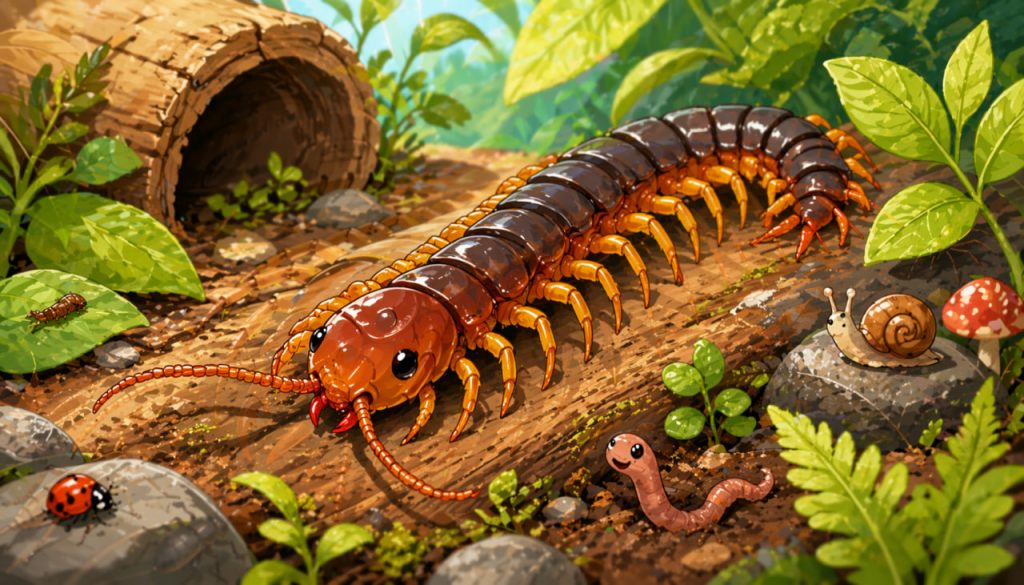
Centipedes, especially those from the genus Scolopendra, are among the most intimidating arthropods found in tropical and subtropical regions. Known for their speed, aggressive behavior, and venomous bite, these creatures often trigger fear and curiosity alike. While they play an important ecological role as predators, encounters with large centipedes can be painful and, in rare cases, medically significant. Understanding their behavior, habitat, and risks is essential for anyone living in or traveling through regions where they are found.
What Are Scolopendra Centipedes?
Scolopendra are large, predatory centipedes belonging to the class Chilopoda. Unlike millipedes, which are slow-moving and harmless, centipedes are fast, agile hunters equipped with venomous claws called forcipules. These modified front legs inject venom into their prey or in self-defense.
Some species, such as Scolopendra gigantea, can grow over 30 cm (12 inches) in length, making them among the largest centipedes in the world. Their bodies are flattened and segmented, allowing them to move quickly through tight spaces like soil, leaf litter, and even human dwellings.
Where Do They Live?
Scolopendra species are primarily found in warm, humid climates. They thrive in regions such as Southeast Asia, Central and South America, Africa, and parts of Southern Europe.
These centipedes prefer dark, moist environments:
- Under rocks and logs
- Inside rotting wood
- In soil and leaf litter
- Occasionally inside homes, especially in bathrooms or basements
Their tendency to hide in clothing, shoes, or bedding in certain regions makes accidental encounters more likely.
Are Centipede Bites Dangerous?
Centipede bites are venomous but rarely life-threatening to healthy adults. However, the experience can be extremely painful and alarming.
The venom contains a mixture of toxins that can cause:
- Intense localized pain
- Swelling and redness
- Numbness or tingling
- In some cases, fever or mild systemic symptoms
According to entomologist Dr. Justin O. Schmidt, known for his work on insect venom and pain scales:
“A large centipede bite can be comparable to a painful bee sting multiplied several times. The pain is immediate, intense, and can last for hours.”
In rare cases, particularly in children, elderly individuals, or those with allergies, more serious reactions may occur, including infection or severe inflammation.
How Do Centipedes Hunt and Defend Themselves?
Scolopendra are nocturnal predators. They rely on speed and venom rather than webs or traps. Their diet includes insects, spiders, small reptiles, and even small mammals in the case of larger species.
Their hunting strategy is simple:
- Detect vibrations and movement
- Rush toward prey with rapid leg motion
- Inject venom using forcipules
- Hold and consume the immobilized prey
When threatened, they do not hesitate to bite. Unlike many animals that prefer to flee, large centipedes can be defensive and aggressive if cornered.
Human Encounters: Why They Happen
Encounters between humans and centipedes usually occur by accident. These creatures do not seek out humans but may bite when:
- Stepped on
- Trapped in clothing or bedding
- Handled or disturbed
In tropical regions, it is not uncommon for people to find centipedes in shoes, towels, or under furniture. Their nocturnal habits mean that many bites happen at night.
What To Do If You Are Bitten
If bitten by a centipede, it is important to remain calm and follow basic first aid steps:
- Clean the wound with soap and water
- Apply a cold compress to reduce swelling
- Take over-the-counter pain relief if needed
- Monitor for unusual symptoms such as severe swelling, difficulty breathing, or signs of infection
- Seek medical help immediately
Medical attention should be sought if symptoms worsen or if the person bitten is particularly vulnerable.
Prevention: How To Stay Safe
Avoiding centipede encounters is largely about awareness and simple precautions:
- Shake out shoes and clothing before wearing them
- Keep living areas clean and dry
- Seal cracks and gaps in walls and floors
- Use gloves when moving rocks, wood, or debris
- Avoid handling centipedes directly
In regions where they are common, these small habits can significantly reduce the risk of a painful encounter.
Ecological Importance of Centipedes
Despite their fearsome reputation, centipedes play a crucial role in ecosystems. As predators, they help control populations of insects and other small invertebrates. This natural pest control is beneficial for both natural environments and agriculture.
Removing centipedes entirely from an ecosystem can disrupt the balance, leading to increases in pest populations.
Interesting Facts
- Some large Scolopendra species can prey on bats, catching them mid-air in caves.
- Centipedes do not have exactly 100 legs; the number varies by species.
- Their venom contains complex proteins that are being studied for potential medical applications.
- They can regenerate lost legs over time.
- Certain species exhibit parental care, protecting their eggs until they hatch.
Glossary
- Forcipules — modified front legs of centipedes used to inject venom.
- Venom — toxic substance used by animals for defense or hunting.
- Nocturnal — active primarily at night.
- Arthropod — an invertebrate animal with a segmented body and exoskeleton.
- Systemic Symptoms — symptoms that affect the entire body rather than just one area.