Himalayan salt is a type of rock salt (halite) mined from the Punjab region of Pakistan, near the foothills of the Himalayas. Often marketed as one of the purest salts…
Flour-based products — bread, pastries, pasta, and other baked goods — are among the oldest and most universal foods in human history. Their origins go back thousands of years, and…
Spices are aromatic plant substances that have shaped human culture, trade, and cuisine for thousands of years. Beyond adding flavor and fragrance to food, spices were once more valuable than…
In the modern world, mobile phones and gadgets have become constant companions. Many people continue using them even while walking — texting, browsing, or listening to music. Although it seems…
Our eyes are among the most important sensory organs, giving us up to 80% of information about the world. In modern life, with constant screen use, artificial lighting, and environmental…
When the skin is cut or injured, the body immediately activates a complex system of responses to stop bleeding and begin healing. Blood plays a central role in this process,…
Iron is an essential mineral for human health, playing a key role in the formation of hemoglobin, the protein in red blood cells that carries oxygen. Without enough iron, the…
Leukocytes, also known as white blood cells (WBCs), are a crucial part of the human immune system. Unlike red blood cells, which carry oxygen, leukocytes defend the body against infections,…
Platelets, also known as thrombocytes, are small, disk-shaped cell fragments in the blood that play a key role in blood clotting and wound healing. Although they are not full cells…
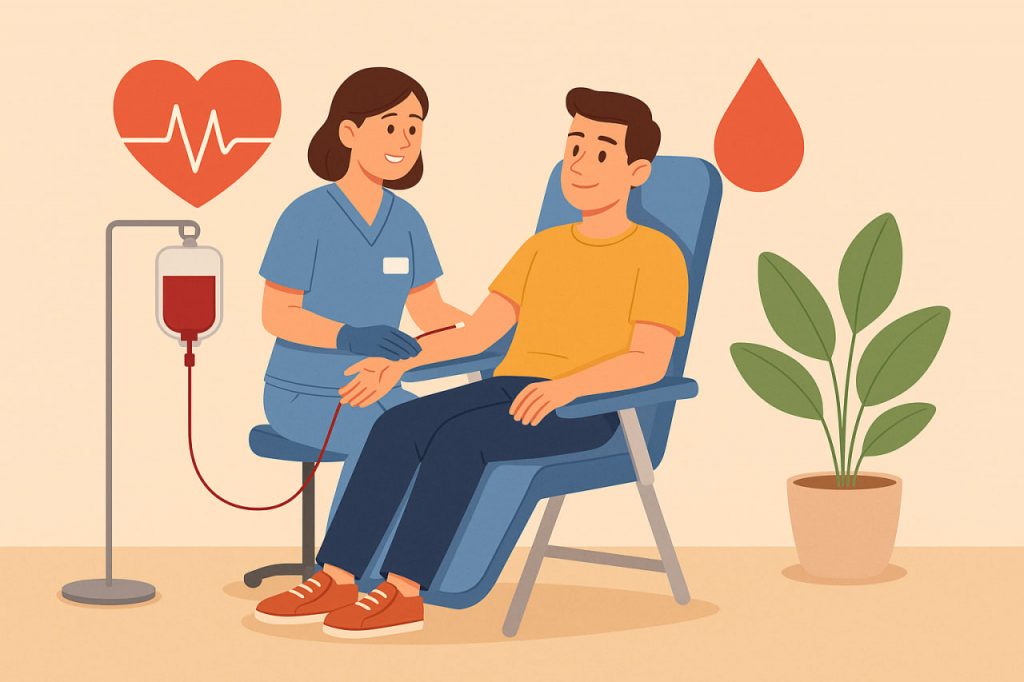
Donating blood is a simple yet powerful act that saves lives. Every year, millions of people around the world require blood transfusions due to surgery, trauma, childbirth complications, or medical…