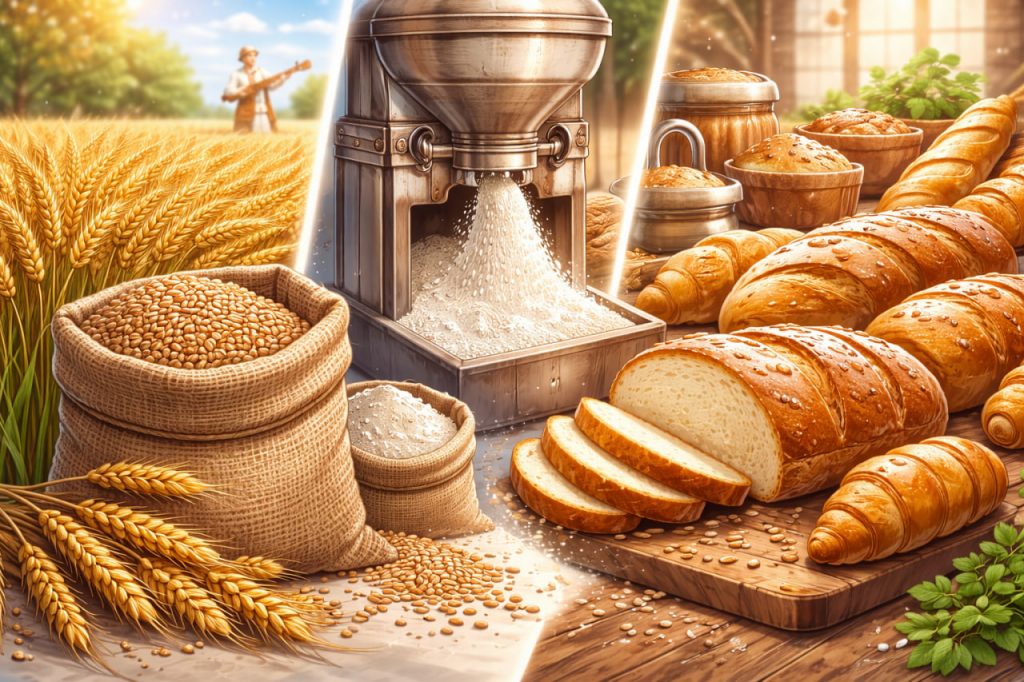
The transformation of grain into flour and then into a finished flour-based product is a complex chain of mechanical, chemical, and biological processes. At first glance, it may seem simple: grind grain, mix with water, and bake. In reality, each stage changes the structure of starches, proteins, and other components at a microscopic level. These changes determine texture, taste, nutritional value, and shelf life. Understanding how grain becomes flour—and how flour becomes bread, pasta, or pastry—reveals the science behind one of humanity’s oldest food technologies. This journey combines agriculture, milling engineering, food chemistry, and thermal processing.
Stage 1: What Happens When Grain Is Milled Into Flour
Grain kernels consist of three main parts: the bran (outer layer), the germ (embryo), and the endosperm (starch-rich center). During milling, the kernels are cleaned and then mechanically crushed between rollers. The goal is to separate the endosperm from the bran and germ. Food technologist Dr. Anna Keller explains:
“Milling is not just grinding.
It is a controlled separation process that defines flour quality.”
White flour primarily contains endosperm, while whole-grain flour includes all three components. The milling process reduces particle size, increasing surface area and altering how the flour interacts with water.
Stage 2: The Chemistry of Mixing Flour With Water
When flour is mixed with water, proteins called glutenin and gliadin begin interacting. Together, they form gluten, a flexible network that traps gases during baking. At the same time, starch granules absorb water and swell. Kneading strengthens the gluten structure, giving dough elasticity and structure. This network determines whether the final product will be airy like bread or dense like flatbread.
Stage 3: Fermentation and Biological Activity
If yeast or sourdough cultures are added, fermentation begins. Yeast consumes sugars in the dough and produces carbon dioxide and small amounts of alcohol. The trapped gas expands within the gluten network, causing the dough to rise. Fermentation also develops flavor compounds and affects texture. Enzymes naturally present in flour break down complex starches into simpler sugars, supporting microbial activity.
Stage 4: Heat and Structural Transformation
During baking, dramatic changes occur. Heat causes starch gelatinization, where starch granules swell and solidify. Proteins coagulate, fixing the structure in place. Gas expansion increases volume before the crust forms. Moisture evaporates from the surface, creating browning through the Maillard reaction, which produces aroma and flavor. This step permanently transforms soft dough into a stable product.
Nutritional Changes During Processing
Refining grain into white flour removes fiber and some vitamins found in the bran and germ. Whole-grain products retain more nutrients but have a shorter shelf life due to natural oils in the germ. Fermentation may improve digestibility for some individuals. The balance between processing efficiency and nutritional retention remains an important consideration in food production.
From Field to Table
The transformation from grain to finished product is a blend of agriculture, physics, chemistry, and microbiology. Each stage shapes the final texture, taste, and nutritional profile. Although the process has ancient origins, modern technology continues refining efficiency and quality control. What begins as a simple seed ultimately becomes one of the most widely consumed food categories in the world.
P.S. It’s better to replace white flour with whole grains, and your body will thank you. Boiled buckwheat with vegetables can help.
Interesting Facts
- Grain kernels contain three main parts: bran, germ, and endosperm.
- Gluten forms only when flour proteins interact with water.
- Fermentation produces carbon dioxide that makes dough rise.
- Baking triggers chemical reactions that create crust color and flavor.
- Whole-grain flour retains more natural nutrients than refined flour.
Glossary
- Endosperm — the starch-rich inner part of a grain kernel.
- Gluten — protein network formed when flour mixes with water.
- Fermentation — biological process where microorganisms convert sugars.
- Starch Gelatinization — swelling and stabilization of starch under heat.
- Maillard Reaction — chemical reaction responsible for browning and aroma.