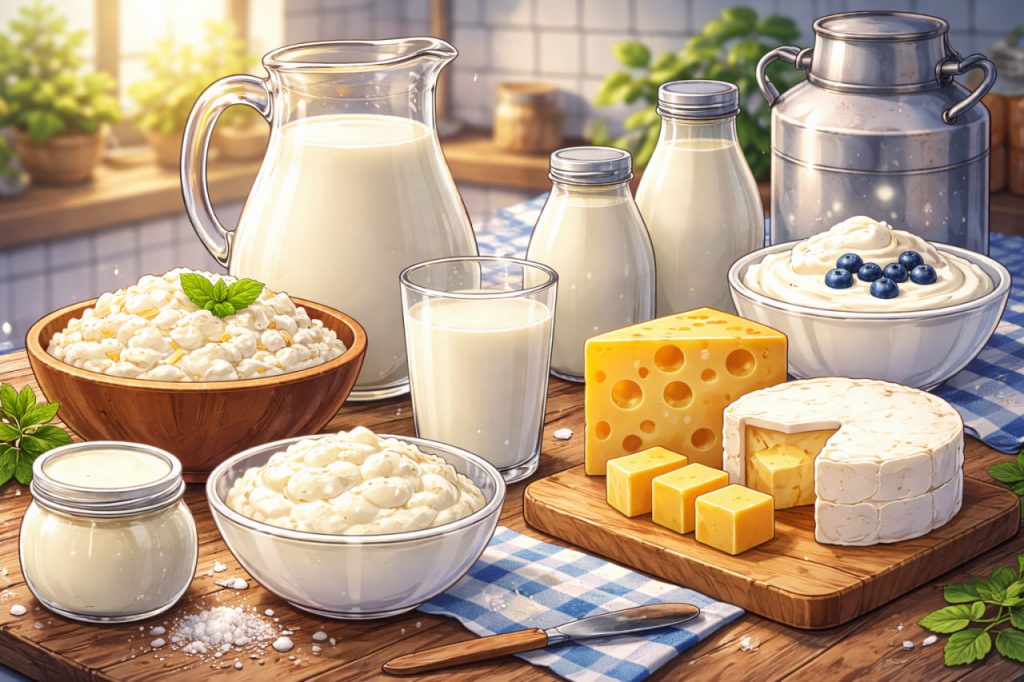
Dairy products are foods made from milk, most commonly obtained from cows, but also from goats, sheep, and other mammals. They are a major part of diets around the world and provide essential nutrients such as protein, calcium, and vitamins. From fresh milk to cheese and yogurt, dairy products vary widely in texture, flavor, and nutritional composition. Their production combines traditional agricultural practices with modern food technology. Understanding how dairy products are made helps clarify their role in nutrition and food systems. It also sheds light on quality control, safety standards, and sustainability considerations.
What Counts as a Dairy Product
Dairy products include milk, cheese, yogurt, butter, cream, and fermented milk beverages. All of them begin with raw milk, which is then processed in different ways. Milk itself can be consumed fresh, pasteurized, or processed into other products. The transformation depends on fermentation, separation, churning, or aging techniques. Food technologist Dr. Elena Novak explains:
“Milk is a complex biological liquid.
By adjusting temperature, bacteria, and processing methods, we create entirely different foods.”
Each dairy product results from specific chemical and microbiological processes.
Milk Collection and Processing
Production begins on dairy farms, where animals are milked under hygienic conditions. The milk is rapidly cooled to prevent bacterial growth and transported to processing facilities. There, it undergoes pasteurization, a heat treatment that eliminates harmful microorganisms. Homogenization may follow, breaking down fat molecules to create a uniform texture. After quality testing, milk can be packaged or directed toward further processing.
How Cheese Is Made
Cheese production involves adding specific bacteria and enzymes to milk. These microorganisms ferment lactose into lactic acid, causing the milk to coagulate. The solid portion, called curd, is separated from the liquid whey. The curd is then pressed, shaped, salted, and sometimes aged for weeks or months. Aging influences flavor, texture, and moisture content. Different bacterial cultures and aging conditions create the wide variety of cheeses available worldwide.
Yogurt and Fermented Products
Yogurt is produced by introducing beneficial bacterial cultures into warm milk. These bacteria ferment lactose, thickening the milk and creating a tangy taste. Fermentation also enhances digestibility for some individuals. Similar processes are used to produce kefir and other fermented dairy beverages. Controlled temperature and timing are essential to maintain product quality and safety.
Butter and Cream
Butter is made by churning cream, which separates fat from liquid. Continuous agitation causes fat molecules to cluster together, forming solid butter. The remaining liquid, known as buttermilk, is separated. Cream itself is produced by separating fat from milk using centrifugation. The fat content determines whether it becomes light cream, heavy cream, or whipping cream.
Quality Control and Safety
Modern dairy production relies heavily on quality control. Testing ensures proper fat content, absence of harmful bacteria, and consistent taste. Refrigeration and sanitation standards are critical throughout the supply chain. While dairy products offer nutritional benefits, proper storage is essential to prevent spoilage.
Interesting Facts
- Milk contains natural proteins such as casein and whey.
- Cheese varieties differ mainly due to bacterial cultures and aging methods.
- Pasteurization significantly improves food safety.
- Yogurt fermentation increases certain beneficial bacteria.
- Butter forms when fat molecules cluster during churning.
Glossary
- Pasteurization — heat treatment that eliminates harmful microorganisms.
- Fermentation — process where bacteria convert sugars into acids.
- Curd — the solid part of milk formed during cheese production.
- Whey — the liquid byproduct separated from curd.
- Homogenization — process that evenly distributes fat in milk.