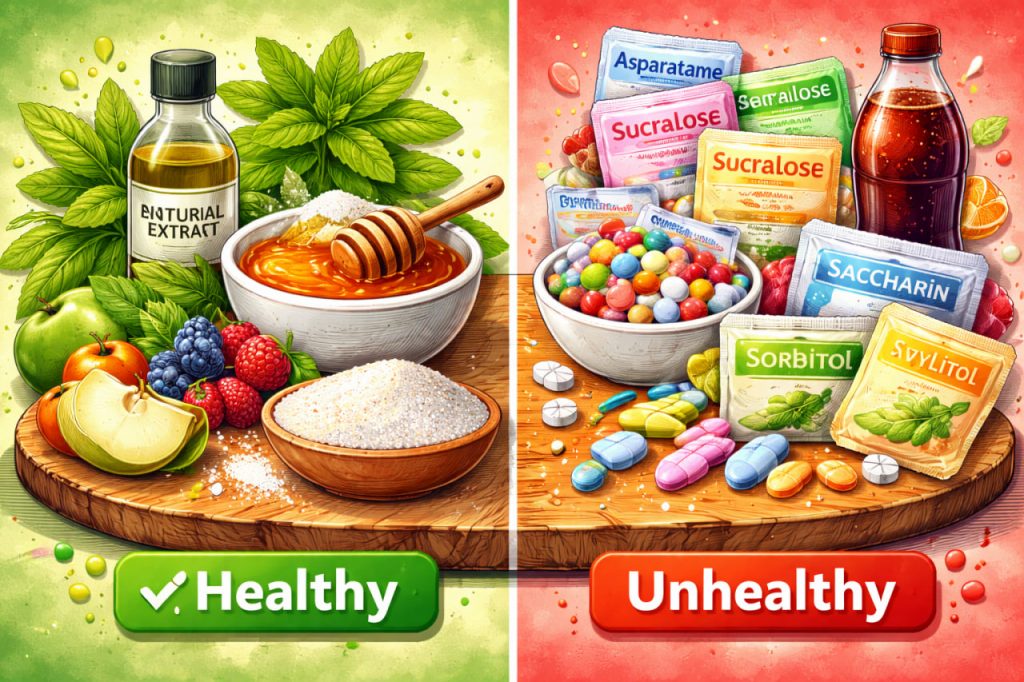
Sugar substitutes have become increasingly popular as people seek to reduce sugar intake while maintaining sweetness in their diets. These alternatives are used in beverages, desserts, and processed foods, often marketed as healthier options. However, not all sugar substitutes affect the body in the same way, and their impacts depend on chemistry, metabolism, and individual responses. Scientific research shows a clear distinction between substitutes that are generally well tolerated and those that raise concerns when consumed frequently. Understanding these differences helps consumers make informed choices without falling for simplified claims. Rather than labeling all substitutes as good or bad, it is important to examine how each one interacts with the body.
What Sugar Substitutes Are
Sugar substitutes are substances that provide a sweet taste with less or no caloric value compared to regular sugar. They are broadly divided into natural low-calorie sweeteners, sugar alcohols, and artificial sweeteners. Each category differs in origin, sweetness intensity, and metabolic effects. Some substitutes occur naturally in plants, while others are synthesized in laboratories. According to nutrition scientist Dr. Laura Chen:
“Sweetness is a sensory experience,
but the metabolic response to sweeteners varies dramatically.”
This variation explains why some substitutes are better tolerated than others.
Generally Better-Tolerated Sugar Substitutes
Certain sugar substitutes are considered more physiologically compatible with the human body when consumed in moderate amounts. Stevia-derived sweeteners come from plant leaves and provide intense sweetness without raising blood glucose directly. Erythritol, a sugar alcohol, is absorbed differently from other carbohydrates and is largely excreted unchanged. These substances tend to have minimal effects on insulin response and oral bacteria. Their chemical structure limits fermentation in the gut, reducing common digestive issues seen with other sweeteners. Scientific consensus views these options as relatively neutral when used appropriately.
Sugar Alcohols and Digestive Effects
Sugar alcohols such as xylitol, sorbitol, and maltitol are commonly used in sugar-free products. They contain fewer calories than sugar but are not fully absorbed in the intestine. As a result, they can be fermented by gut bacteria, leading to bloating or discomfort in some individuals. Xylitol is notable for its role in dental health, as it does not promote tooth decay. However, tolerance varies significantly between individuals. This category illustrates that “natural” does not always mean universally harmless.
Artificial Sweeteners and Ongoing Debate
Artificial sweeteners such as aspartame, sucralose, and saccharin are among the most studied food additives in history. They provide intense sweetness at extremely low doses, making them attractive for calorie reduction. While regulatory agencies consider approved artificial sweeteners safe within established limits, research continues to explore their potential effects on appetite regulation, gut microbiota, and metabolic signaling. According to metabolic researcher Dr. James Walker:
“Artificial sweeteners are chemically safe by current standards,
but their long-term metabolic interactions are still being actively studied.”
This ongoing research fuels debate rather than definitive conclusions.
Why Context and Moderation Matter
The effects of sugar substitutes depend heavily on overall diet, frequency of use, and individual biology. Replacing sugar does not automatically improve nutritional quality if the diet remains highly processed. Some substitutes may help reduce sugar intake, while others may encourage continued preference for intense sweetness. Scientists emphasize that no sweetener should be viewed as a cure-all. Informed moderation and dietary balance remain central to long-term well-being.
Interesting Facts
- Some sugar substitutes are hundreds of times sweeter than sugar.
- Erythritol is absorbed into the bloodstream and excreted unchanged.
- Artificial sweeteners were first developed over 100 years ago.
- Taste receptors for sweetness exist outside the mouth, including in the gut.
- Sugar substitutes affect taste perception, not just calorie intake.
Glossary
- Sugar Substitute — a substance used to replace sugar while providing sweetness.
- Sugar Alcohol — a carbohydrate with partial absorption and reduced caloric value.
- Artificial Sweetener — a synthetic compound providing intense sweetness.
- Insulin Response — the body’s hormonal reaction to carbohydrate intake.
- Gut Microbiota — the community of microorganisms living in the digestive system.