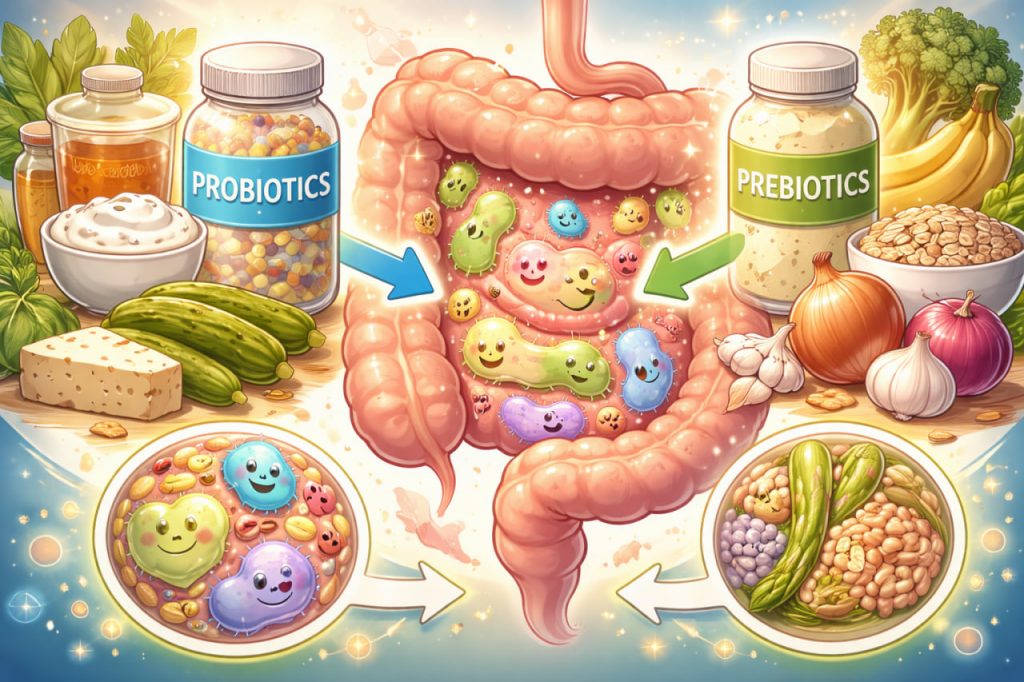
Probiotics and prebiotics are often mentioned together, yet they play very different roles in human health. Both are closely connected to the gut microbiome, a complex ecosystem of microorganisms living in the digestive system. Modern research shows that this microbial community influences digestion, immunity, metabolism, and even brain function. Confusion between probiotics and prebiotics is common, partly due to marketing language and similar-sounding names. Understanding the difference helps make sense of how the gut ecosystem is supported. A clear explanation allows informed choices without oversimplification.
What Probiotics Actually Are
Probiotics are live microorganisms, usually bacteria, that are intended to be consumed in adequate amounts. These microorganisms are similar to beneficial bacteria naturally present in the human gut. When introduced through food or supplements, they may temporarily increase microbial diversity. Probiotics are strain-specific, meaning different strains can have different effects. According to microbiologist Dr. Erica Sonnenburg:
“Not all probiotics do the same thing,
and their effects depend on strain, dose, and context.”
This explains why probiotics cannot be treated as a single, universal solution.
What Prebiotics Actually Are
Prebiotics are non-digestible food components, usually certain types of fiber, that serve as nourishment for beneficial gut bacteria. Unlike probiotics, prebiotics are not living organisms. They pass through the upper digestive tract largely unchanged and are fermented by gut microbes in the colon. This fermentation process supports the growth and activity of beneficial bacteria already present. Prebiotics work indirectly by shaping the gut environment rather than adding new microbes.
How Probiotics and Prebiotics Work Together
Probiotics and prebiotics support the gut in complementary ways. Probiotics introduce or reinforce beneficial microbial strains, while prebiotics provide the fuel those microbes need to thrive. Without adequate prebiotic intake, introduced bacteria may struggle to survive. This synergy is sometimes referred to as synbiotic interaction, where both elements enhance each other’s effectiveness. The balance between the two is often more important than either one alone.
Why the Gut Microbiome Matters
The gut microbiome plays a key role in digestion, immune signaling, and metabolic regulation. Beneficial bacteria help break down complex carbohydrates, produce short-chain fatty acids, and interact with immune cells. Disruptions in this ecosystem can affect overall physiological balance. Supporting microbial diversity is associated with resilience rather than a single measurable outcome. Probiotics and prebiotics are tools that interact with this system, not quick fixes.
Limits and Responsible Understanding
Despite growing interest, probiotics and prebiotics are not universal remedies. Their effects vary widely between individuals due to genetics, diet, and existing microbiome composition. Marketing often exaggerates benefits without explaining these limitations. Scientific evidence supports context-specific use rather than blanket recommendations. For health-related concerns, individuals should consult qualified healthcare specialists instead of relying solely on generalized claims.
Interesting Facts
- The human gut contains trillions of microorganisms.
- Different probiotic strains can have opposite effects.
- Prebiotics are found naturally in many plant-based foods.
- Gut bacteria can influence immune and metabolic signals.
- Microbiome diversity is linked to ecosystem stability, not perfection.
Glossary
- Probiotics — live microorganisms intended to support gut microbial balance.
- Prebiotics — non-digestible fibers that feed beneficial gut bacteria.
- Gut Microbiome — the community of microorganisms living in the digestive tract.
- Fermentation — microbial breakdown of compounds producing metabolic byproducts.
- Synbiotic — a combination of probiotics and prebiotics working together.