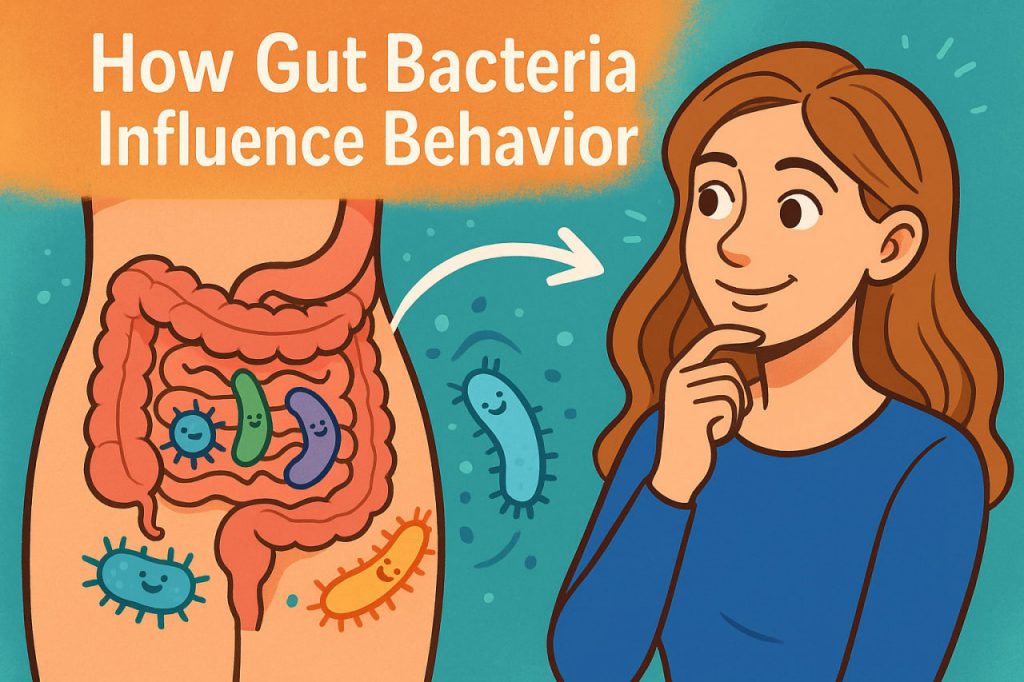
Inside the human body lives a vast and complex ecosystem of microorganisms known as the microbiome, with the largest concentration residing in the gut. These trillions of bacteria, viruses, and fungi were once thought to play a minor role limited to digestion. Modern science, however, has revealed that the gut microbiome communicates constantly with the brain and can influence mood, stress responses, motivation, and even decision-making. This connection, often called the gut–brain axis, challenges the traditional idea that behavior is controlled only by the brain. Instead, behavior appears to emerge from a dynamic dialogue between the nervous system, immune system, and microbial communities. Understanding this hidden influence reshapes how we think about human biology and mental processes.
What Is the Gut Microbiome
The gut microbiome is a diverse population of microorganisms living primarily in the large intestine. Each person’s microbiome is unique, shaped by genetics, early life conditions, environment, and lifestyle factors. These microbes help break down complex food components, produce vitamins, and interact with immune cells. Importantly, they also produce neuroactive compounds, including neurotransmitter precursors and signaling molecules. According to neuroscientist Dr. Elaine Foster:
“The gut microbiome functions like a biochemical factory,
producing signals that the brain constantly interprets.”
This makes the microbiome an active participant in physiological and behavioral regulation rather than a passive digestive aid.
The Gut–Brain Axis
Communication between the gut and the brain occurs through a network known as the gut–brain axis, which includes neural, hormonal, and immune pathways. The vagus nerve serves as a major communication channel, transmitting information directly from the gut to the brain. At the same time, gut bacteria influence levels of hormones and inflammatory molecules that affect brain function. This two-way system allows psychological stress to alter gut activity and, conversely, gut changes to influence emotional states. The gut–brain axis explains why digestive discomfort often accompanies anxiety and why emotional stress can affect appetite and digestion.
Microbial Influence on Mood and Emotions
Research has shown that gut bacteria can influence the production and regulation of neurotransmitters such as serotonin, dopamine, and GABA, which play key roles in mood and emotional balance. In fact, a significant portion of serotonin is produced in the gut, not the brain. Certain bacterial profiles are associated with resilience to stress, while others correlate with heightened anxiety-like behaviors in experimental studies. Behavioral changes observed in animal models suggest that microbiome composition can alter stress responses and social behavior. Scientists emphasize that these effects arise from complex interactions rather than single “good” or “bad” bacteria.
Decision-Making and Behavioral Patterns
Beyond emotions, the microbiome may also influence decision-making and motivation. By affecting energy metabolism, inflammation levels, and neural signaling, gut bacteria can subtly alter how the brain evaluates rewards and threats. Some studies suggest that microbial metabolites influence impulsivity, fatigue, and cognitive flexibility. These effects do not override free will but may bias behavior in certain directions, especially under stress or fatigue. This emerging field highlights behavior as a product of both neural circuits and biological context.
Why This Research Matters
Understanding the relationship between the microbiome and behavior has broad implications for neuroscience, psychology, and biology. It encourages a more integrated view of the human body, where mental and physical processes are deeply interconnected. Scientists caution that research in this field is still evolving, and many mechanisms remain under investigation. Importantly, no single behavior can be explained by the microbiome alone. Instead, gut bacteria act as one of many influencing factors within a highly complex system.
Interesting Facts
- The human gut contains more microbial cells than there are human cells in the body.
- Gut bacteria can produce compounds that act like neurotransmitters.
- The vagus nerve provides a direct communication route between the gut and the brain.
- Each person’s microbiome is as unique as a biological fingerprint.
- Changes in gut bacteria can alter behavior in animal studies without changing brain structure.
Glossary
- Microbiome — the community of microorganisms living in and on the human body.
- Gut–Brain Axis — a communication network linking the digestive system and the brain.
- Neurotransmitters — chemical messengers that transmit signals between nerve cells.
- Vagus Nerve — a major nerve connecting the brain to internal organs, including the gut.
- Microbial Metabolites — substances produced by microbes that influence bodily processes.