Ginger (Zingiber officinale) is one of the world’s most ancient and versatile plants, valued for thousands of years both as a culinary spice and a natural remedy. Originating in Southeast Asia, ginger spread across India, China, the Middle East, and eventually Europe, becoming an essential part of global cuisine and traditional healing practices. Its distinct aroma, warm flavor, and rich chemical composition make ginger a unique root with numerous biological properties. While ginger is widely consumed today, its complex history and scientific importance reveal why it continues to fascinate researchers, chefs, and wellness experts alike.
Ginger contains a group of biologically active compounds, including gingerols, shogaols, and zingerone, which contribute to its characteristic heat and aroma. These compounds play key roles in ginger’s effects on digestion, circulation, and metabolic processes. Although ginger is often used in herbal and traditional medicine, scientific research continues to evaluate and verify many of its claimed properties. This ensures that ginger remains a subject of both cultural appreciation and scientific investigation.
How Ginger Is Used Around the World
Ginger plays a major role in global cuisine. It adds depth to soups, curries, teas, desserts, sauces, and marinades. In Japanese cuisine, pickled ginger cleanses the palate; in Indian cooking, ginger forms the foundation of many spice pastes; in Caribbean cuisine, it flavors drinks and baked goods. Fresh, dried, powdered, candied, and essential-oil forms all offer different intensities and uses. According to ethnobotanist Dr. Helena Strauss:
“Few plants have influenced both world cuisine and traditional medicine
as profoundly as ginger has across centuries.”
This versatility makes ginger indispensable in kitchens and herbal traditions worldwide.
Plant Biology and Cultivation
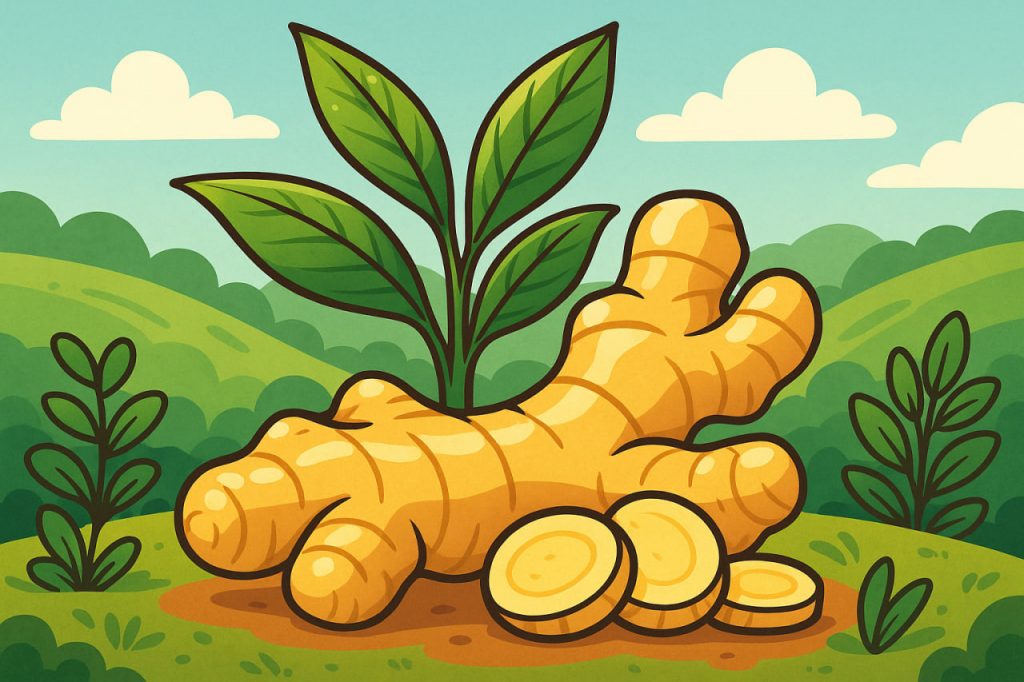
Ginger is a flowering plant, but the part used by humans is the rhizome, an underground stem packed with nutrients and aromatic oils. Ginger thrives in warm, humid climates with rich soil. Major producers include India, China, Nigeria, and Indonesia. The plant is harvested once the rhizome matures, then washed, dried, and processed depending on its intended use. Farmers often propagate ginger by planting small pieces of the rhizome, ensuring continuous growth cycles.
Potential Benefits and Research Interest
Ginger is widely known for its influence on digestion and circulation. It is studied for its effects on nausea, appetite, and general gastrointestinal comfort. Scientists also investigate ginger’s antioxidant and anti-inflammatory properties, although results vary depending on dosage, preparation, and individual health conditions. Importantly, while ginger is a popular natural product, it should not replace medical treatment, and people with health concerns should consult professionals before using concentrated extracts.
Cultural and Historical Significance
Ancient texts from China, India, and the Middle East describe ginger as a valuable spice traded along early maritime and land routes. In medieval Europe, ginger was considered luxurious and was often used in festive dishes. Its long-standing presence in rituals, cooking, and traditional healing systems highlights ginger’s global cultural importance. As historian Dr. Marcus Levin notes:
“Ginger’s journey across continents reflects the history of trade, medicine, and human curiosity.”
Its enduring popularity demonstrates how one plant can shape culinary and cultural traditions.
Modern Uses in Food and Industry
Beyond cooking, ginger is used in beverages, candies, supplements, perfumes, and cosmetics. Its essential oils contribute fragrance, while ginger extract is used in wellness products and natural formulations. Food scientists explore new ways to incorporate ginger’s unique flavor and properties into modern recipes and health-oriented products.
Interesting Facts
- Ginger is one of the earliest spices ever traded internationally.
- Fresh ginger contains over 400 unique compounds.
- The plant belongs to the same family as turmeric and cardamom.
- Pickled ginger served with sushi is meant to reset the palate.
- Ginger ale was once used as a traditional drink on long sea voyages.
Glossary
- Rhizome — an underground plant stem that stores nutrients and grows horizontally.
- Gingerol — a key compound responsible for ginger’s spicy taste.
- Aromatic Oils — volatile compounds that give ginger its fragrance.
- Ethnobotany — the study of how cultures use plants.
- Antioxidant — a molecule that helps protect cells from oxidative stress.