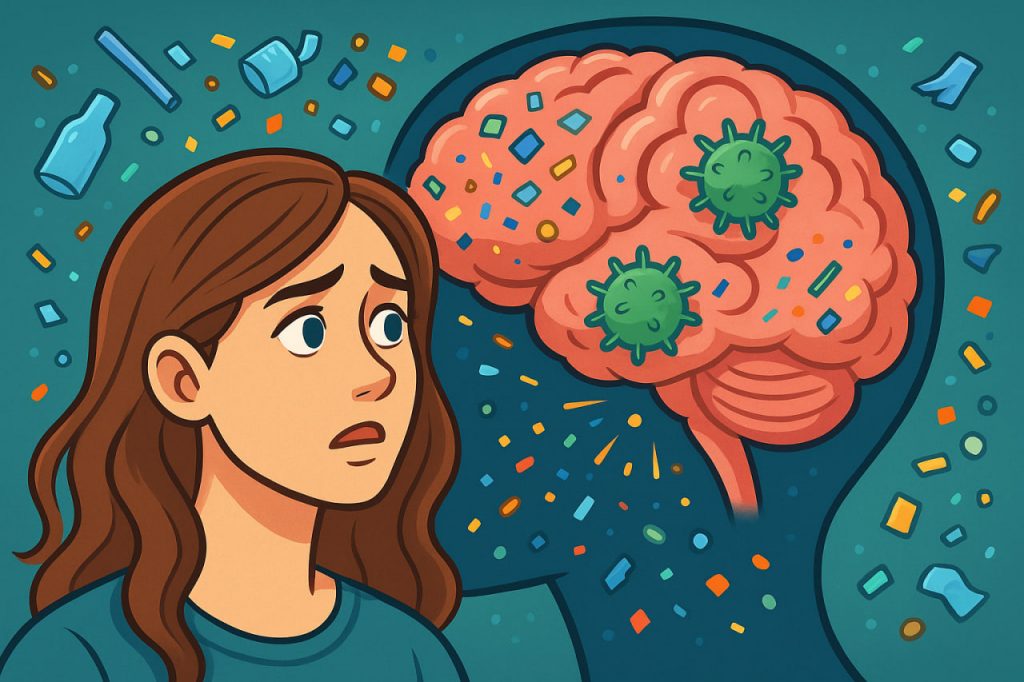
Nano- and microplastics have become one of the most alarming environmental and health concerns of the 21st century. These particles — ranging from visible fragments of plastic to nanoscale particles thousands of times smaller than a human hair — now exist in water, soil, air, food, and even inside the human body. Their ability to travel through biological systems raises pressing questions about how they affect vital organs, especially the brain. Scientific research over the last decade suggests that nano- and microplastics may cross biological barriers, trigger inflammation, interfere with cellular communication, and influence neurological health. Although research is ongoing, early findings highlight potential risks that demand global attention.
What makes nano- and microplastics particularly dangerous is their tiny size. While microplastics can accumulate in the digestive and respiratory systems, nanoplastics are small enough to penetrate tissues, enter the bloodstream, and potentially reach the central nervous system. Once inside the body, these particles may carry harmful chemicals, including additives, colorants, or pollutants that adhered to their surfaces in the environment. Their combined physical and chemical presence creates a complex challenge for the body’s natural defense systems.
How Nano- and Microplastics Enter the Brain
The human body has protective barriers designed to keep harmful substances out of sensitive organs. The most important is the blood–brain barrier — a tightly regulated membrane that shields the brain from toxins. However, laboratory studies show that extremely small plastic particles may bypass this barrier under certain conditions. According to neurotoxicologist Dr. Helena Moore:
“Nanoplastics’ ability to cross protective barriers
raises serious questions about their long-term neurological effects.”
Researchers believe these particles may infiltrate the brain through the bloodstream, nerve pathways such as the olfactory system, or inflammatory processes that temporarily weaken barrier integrity.
Potential Effects on Brain Cells and Nervous Tissue
Once inside the brain, nano- and microplastics may interfere with:
- cellular communication
- hormone signaling
- immune responses within the nervous system
- mitochondrial energy production
Animal studies show that exposure to nanoplastics can trigger inflammation, oxidative stress, and changes in neurotransmitter balance — all processes associated with neurological disorders. While research in humans is still limited, early data suggests that long-term exposure may influence cognitive functions, emotional regulation, and cellular aging within brain tissues.
Chemical Contaminants and Secondary Risks
Plastic particles rarely travel alone. They often carry attached chemicals such as bisphenols, phthalates, flame retardants, or heavy metals absorbed from polluted environments. These substances are known to affect endocrine function, metabolism, and neural development. When hitching a ride on nano- or microplastic particles, they may be delivered deeper into the body than through ordinary exposure. This combination of physical particles and chemical additives amplifies potential risks to the brain.
Sources of Exposure in Everyday Life
Nano- and microplastics are found in:
- bottled water and tap water
- seafood and table salt
- household dust
- synthetic clothing fibers
- packaging materials
- cosmetic and personal-care products
Inhalation and ingestion are the most common exposure pathways. Urban environments, indoor spaces with synthetic materials, and areas near industrial pollution tend to have higher concentrations.
Why Brain Effects Are Difficult to Study
Studying the impact of nanoplastics on the brain is scientifically challenging. Their tiny size makes them hard to track inside biological systems, and their interactions vary depending on shape, chemical composition, and environmental history. Long-term studies in humans are only beginning. As neurologist Dr. Marcus Levin notes:
“We are witnessing the beginning of a new field —
understanding how synthetic particles interact with the human nervous system.”
Early findings are concerning, but more research is needed before drawing definitive conclusions.
Reducing Exposure: A Practical Perspective
Although the health risks of nano- and microplastics are still being studied, reducing exposure is considered a sensible precaution. Strategies include avoiding unnecessary plastic packaging, using glass or metal containers, limiting synthetic textiles, and improving household ventilation. These measures support overall well-being but do not replace professional medical advice.
Interesting Facts
- Nanoplastics can be smaller than 100 nanometers, comparable to viruses.
- Microplastics have been detected in human blood, lungs, and placenta.
- Some studies show nanoplastics can alter dopamine signaling in animal brains.
- Synthetic clothing can release thousands of fibers during a single wash.
- Researchers estimate humans may ingest tens of thousands of microplastic particles yearly.
Glossary
- Nanoplastics — plastic particles smaller than 1 micrometer.
- Blood–Brain Barrier — a protective membrane regulating substances entering the brain.
- Neuroinflammation — inflammation affecting brain cells and nervous tissue.
- Endocrine Disruptors — chemicals that interfere with hormone systems.
- Oxidative Stress — cellular damage resulting from reactive oxygen molecules.