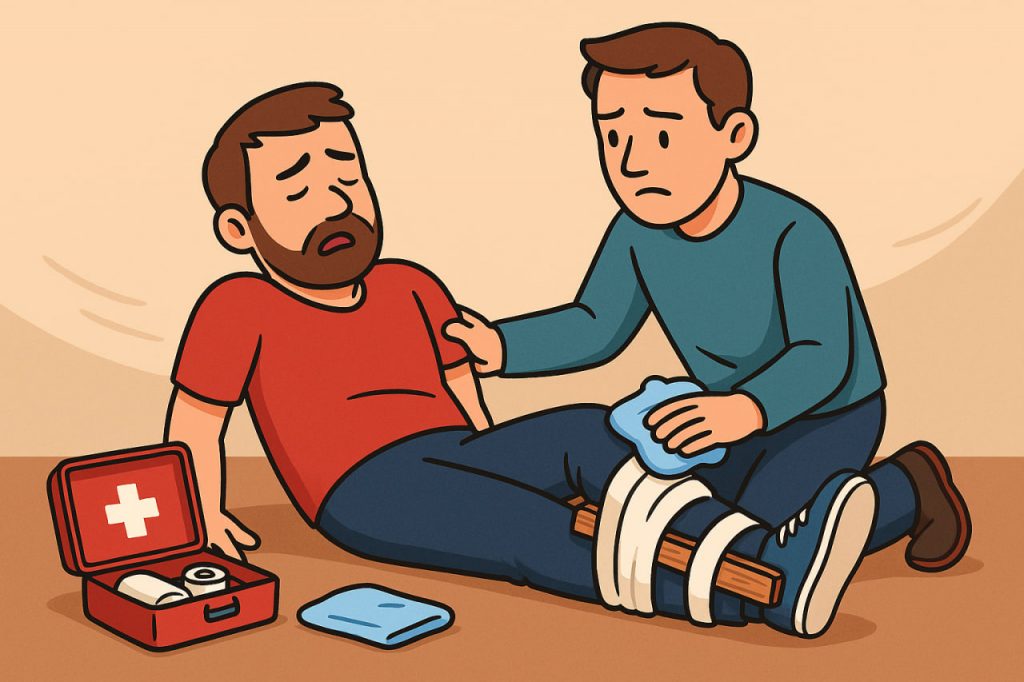
A fracture is a break or crack in a bone that occurs when external force exceeds the bone’s natural strength. Fractures can happen during falls, accidents, sports, or sudden impacts. Although fractures vary in severity, they always require medical evaluation to prevent complications and ensure proper healing. Recognizing the signs early and providing safe, basic first aid can reduce pain, prevent further injury, and support stabilization before professional help arrives. Understanding these steps is important, but it does not replace trained medical care. Only healthcare professionals can diagnose the type of fracture and determine the correct treatment.
Fractures occur when bones withstand more force than they can absorb. Children and older adults are especially vulnerable — children because of high activity levels, and older adults because of reduced bone density. Fractures can be closed (skin intact) or open (bone breaks through the skin), and some can involve joints, complex fragmentation, or surrounding tissue damage. Regardless of the type, attempting to realign or manipulate the injured limb without training is extremely dangerous. First aid focuses on immobilization, protection, and seeking medical attention promptly.
How to Recognize a Possible Fracture
While only an X-ray or medical examination can confirm a fracture, several signs strongly suggest bone injury. These include:
- sudden, severe pain at the injury site
- swelling, bruising, or visible deformity
- inability to move the limb normally
- sharp pain when pressure is applied or movement attempted
- hearing or feeling a “crack” at the moment of injury
- bone protruding through the skin (open fracture)
- numbness or tingling due to nerve involvement
According to trauma specialist Dr. Helena Ward:
“If movement causes sharp, localized pain,
always treat the injury as a fracture until proven otherwise.”
Even minor-looking injuries can hide serious internal damage, especially in wrists, ankles, ribs, and hips.
Immediate First Aid Steps
First aid for fractures prioritizes stabilization and safety. Incorrect handling can worsen the injury, so gentle care is essential.
1. Keep the person still
Ask the injured person not to move the affected area. Movement increases pain and may shift the broken bone.
2. Immobilize the injury
Use a splint or a firm object (board, rolled magazine, folded fabric) to immobilize the limb above and below the suspected fracture. Do not tighten so much that circulation is restricted.
If unsure — simply support the limb in a comfortable position.
3. Apply a cold compress
Ice wrapped in cloth can reduce swelling and pain. Avoid placing ice directly on the skin.
4. Control bleeding (for open fractures)
If there is bleeding, gently cover the wound with a clean cloth or sterile bandage.
Do not attempt to push bone fragments back inside.
5. Monitor the person’s condition
Check for signs of shock: pale skin, rapid breathing, dizziness. Keep the person warm and calm until help arrives.
6. Seek professional medical care immediately
Fractures require proper diagnosis, imaging, and treatment such as casting, immobilization, or surgical repair.
First aid is only temporary support.
As orthopedic expert Dr. Marcus Levin emphasizes:
“Stabilize, protect, and transport —
these are the core principles of safe fracture first aid.”
What NOT to Do During First Aid
Some actions can worsen the injury or cause complications:
- do not straighten or force a limb into alignment
- do not allow the injured person to walk on a suspected broken leg
- do not give food or drink if surgery may be required
- do not remove deeply embedded objects
- do not delay medical evaluation
Every suspected fracture deserves careful, professional attention.
When Emergency Care Is Urgent
Call emergency services immediately if:
- the bone is visible through the skin
- the person cannot move or feel their fingers or toes
- the injured area is cold, blue, or numb
- the fracture involves the head, neck, spine, pelvis, or thigh
- the injured person appears confused, dizzy, or faint
Rapid medical response helps prevent long-term complications and ensures safe treatment.
Interesting Facts
- Bone tissue constantly renews itself and is stronger than steel by weight.
- Children’s bones heal faster due to higher metabolic activity.
- Athletes experience microfractures regularly — these heal naturally and strengthen bone.
- The clavicle (collarbone) is one of the most commonly fractured bones.
- Bones store 99% of the body’s calcium.
Glossary
- Closed Fracture — a broken bone that does not pierce the skin.
- Open Fracture — a fracture where the bone breaks through the skin.
- Immobilization — restricting movement to prevent further injury.
- Splint — a device used to support and protect an injured limb.
- Shock — a dangerous condition caused by inadequate blood flow.