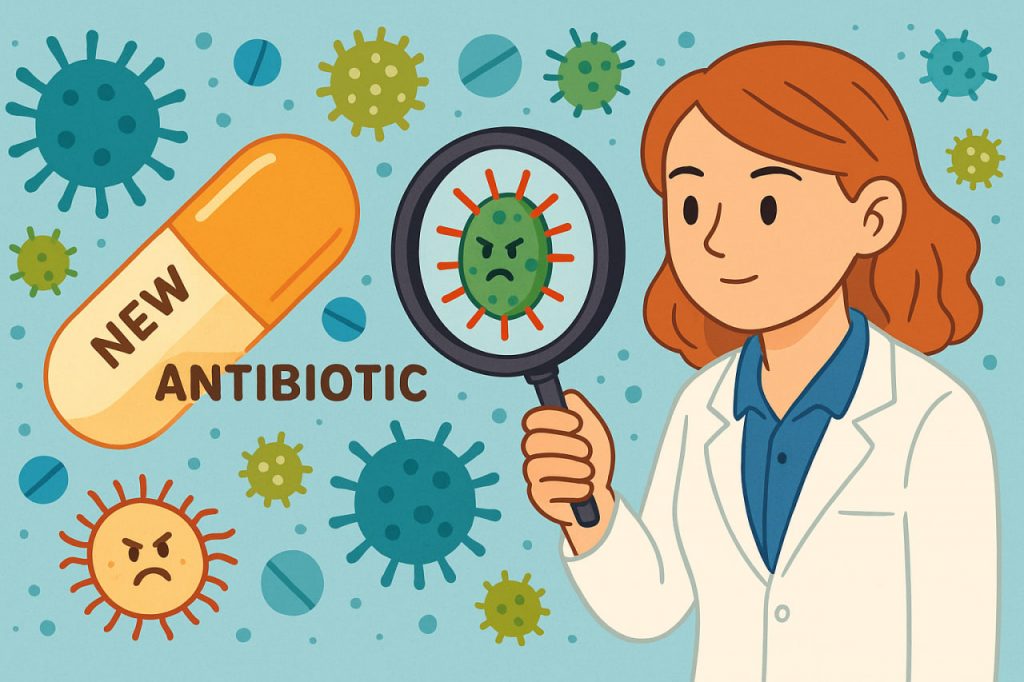
Helicin is an innovative experimental antibiotic designed to combat superbugs — dangerous bacteria that have developed resistance to multiple existing drugs. Growing antibiotic resistance has become one of the most serious medical challenges of the 21st century, leading scientists to search for new molecules that can bypass or neutralize bacterial defense mechanisms. Helicin represents a promising breakthrough because it targets bacteria using novel biochemical pathways that traditional antibiotics cannot exploit. Early laboratory studies show that Helicin is capable of destroying strains resistant to multiple drug classes, making it a potential tool in the global fight against antimicrobial resistance.
Unlike many conventional antibiotics, Helicin appears to work by disrupting bacterial energy production and weakening protective structures that shield resistant bacteria from attack. This dual mechanism gives researchers hope that Helicin may overcome several known resistance strategies. While the compound is still in the early research phase, scientific interest is rapidly expanding as researchers search for safer, more powerful alternatives to existing antibiotics. Understanding how Helicin works is essential for predicting its potential impact on future healthcare and infectious disease management.
How Helicin Attacks Superbugs
Helicin is believed to interfere with two critical bacterial processes:
- Cellular energy metabolism, disrupting ATP synthesis and preventing bacteria from maintaining vital functions;
- Cell wall stability, making bacteria vulnerable to environmental stressors and immune responses.
This two-pronged attack is rare among current antibiotics and may explain why Helicin remains effective against resistant strains. According to microbiologist Dr. Elena Kross:
“The power of Helicin lies in its ability to target bacterial systems that current antibiotics leave untouched —
it represents a new frontier in antimicrobial research.”
Scientists emphasize that these observations come from preclinical studies and require extensive validation.
Why Superbugs Are Hard to Kill
Superbugs develop resistance through multiple mechanisms: altering drug targets, pumping antibiotics out of their cells, forming protective biofilms, or acquiring resistance genes from other bacteria. These adaptations make infections harder to treat and increase the risk of complications. Helicin’s ability to circumvent some of these defenses makes it an exciting candidate, though researchers caution that bacteria may eventually develop resistance to Helicin as well. Continuous monitoring and responsible use will remain essential.
Current Research and Development
Helicin is currently being tested in laboratory environments, including studies of:
- effectiveness against multidrug-resistant Staphylococcus aureus, Pseudomonas aeruginosa, and Klebsiella pneumoniae
- toxicity levels and safety profiles in controlled cell cultures
- stability and interaction with human immune responses
- potential delivery methods for maximizing efficiency
Pharmaceutical development is a long process, and researchers stress that Helicin is not yet approved for medical use. Its safety, efficacy, and long-term effects must be studied in animals and eventually clinical trials before it can be considered for human treatment.
The Global Need for New Antibiotics
Antimicrobial resistance is responsible for millions of infections each year worldwide. As bacteria evolve faster than new drugs are developed, innovative antibiotics like Helicin are urgently needed. According to infectious disease specialist Dr. Marcus Levin:
“Without new antibiotic classes, modern medicine risks returning to a time
when simple infections became life-threatening.”
Helicin represents one of several new molecules under investigation that may help bridge this widening therapeutic gap.
Future Outlook
If Helicin continues to show promise in preclinical studies, it may become a foundation for a completely new class of antibiotics. Its unique mechanism of action could inspire related compounds with even stronger effects. However, experts emphasize the importance of cautious optimism: early breakthroughs must be matched by rigorous scientific evaluation before clinical use can begin.
Interesting Facts
- Superbugs cause more than 1.2 million deaths annually worldwide.
- Helicin represents a new antibiotic class, not just a modification of older drugs.
- Bacteria can share resistance genes through structures called plasmids.
- Developing a new antibiotic can take 10–15 years from discovery to approval.
- Multidrug-resistant bacteria can survive in hospitals, soil, water, and even the human body for long periods.
Glossary
- Superbug — a bacterium resistant to multiple antibiotics.
- ATP (Adenosine Triphosphate) — the main energy molecule in cells.
- Biofilm — a protective bacterial layer that increases resistance to drugs.
- Plasmid — a DNA molecule that can transfer resistance genes between bacteria.
- Preclinical Studies — laboratory tests performed before human clinical trials.