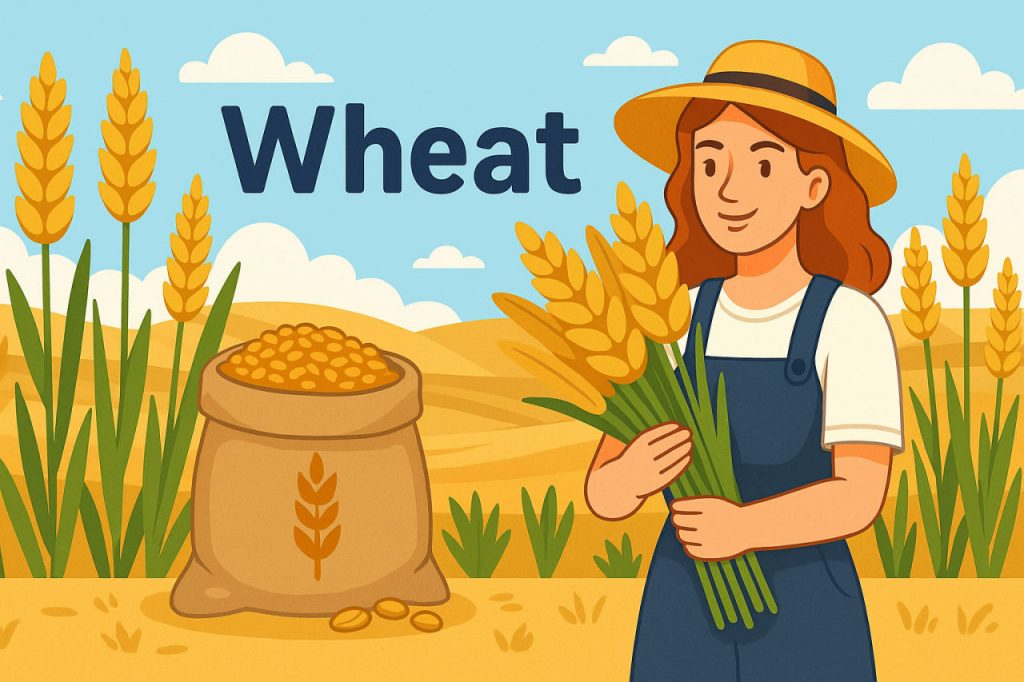
Wheat is one of the oldest and most essential agricultural crops in human history, providing nourishment for billions of people around the world. As a staple food, it supports global food security and forms the foundation of countless cuisines. Wheat grains are processed into flour used for bread, pasta, pastries, cereals, and many other daily foods. Beyond its role in nutrition, wheat is deeply tied to culture, farming traditions, and the development of civilizations. Its adaptability allows it to grow in diverse climates — from warm plains to cold northern regions — making it a resilient and reliable crop. Understanding wheat’s biology, cultivation, and health impact provides insight into why this plant remains central to human life.
Biology and Growth of Wheat
Wheat belongs to the grass family and grows from a seed into a tall, slender plant with a flowering head known as a spike. Each spike contains grains, which are the edible parts of the plant. Wheat thrives in well-drained soils and requires moderate rainfall. The crop grows in stages — germination, tillering, booting, heading, and ripening — each essential for producing high-quality grain. According to agricultural biologist Dr. Helena Strauss:
“Wheat is one of the most efficient crops humans have ever cultivated —
it converts sunlight, soil, and water into energy-rich grains with remarkable productivity.”
Selective breeding and modern farming techniques continue to improve yield, disease resistance, and climate tolerance.
Major Types of Wheat and Their Uses
There are several major categories of wheat, each serving different culinary and industrial purposes:
- Hard wheat — rich in protein, ideal for bread and bakery products
- Soft wheat — lower in protein, used for cakes, cookies, and pastries
- Durum wheat — used to produce pasta, couscous, and semolina
- Ancient varieties — such as spelt, einkorn, and emmer, valued for unique flavors and traditional recipes
These varieties allow wheat-based foods to play a versatile role in global diets.
Wheat and Human Health
Wheat provides carbohydrates, fiber, vitamins (especially B-group), minerals such as iron and magnesium, and small amounts of protein. Whole-grain wheat is particularly beneficial because it contains all three grain components — bran, germ, and endosperm — offering improved digestion, steady energy release, and support for cardiovascular health. However, some individuals have sensitivities or medical conditions that affect their ability to digest wheat. Gluten — a natural protein in wheat — is well tolerated by most people, but it can cause issues for those with celiac disease or related disorders. For the general population, wheat remains a nutritious and valuable part of a balanced diet.
Economic and Environmental Importance
Wheat farming supports millions of agricultural workers worldwide. It plays a key role in international trade and national food supply systems. Wheat straw is also used in livestock feed, building materials, paper production, and bioenergy. At the same time, modern wheat cultivation faces challenges such as soil degradation, climate change, and water scarcity. Sustainable practices — crop rotation, minimized chemical use, and soil conservation — help protect farmland for future generations. As agricultural scientist Dr. Marco Klein notes:
“The future of wheat depends on balancing high production
with ecological sustainability and responsible land use.”
Technological innovation, including precision agriculture and improved seed genetics, is leading this evolutionary shift.
Cultural Significance of Wheat
Wheat has shaped human culture for thousands of years. It appears in ancient myths, harvest festivals, religious rituals, and symbolic traditions representing abundance, fertility, and renewal. Bread, one of its primary products, holds cultural power in nearly every society. Wheat fields also inspire art, literature, and rural identity, reminding people of the deep connection between land, community, and nourishment.
Interesting Facts
- Wheat was first domesticated around 10,000 years ago in the Fertile Crescent.
- There are over 25,000 varieties of wheat grown globally.
- Wheat provides nearly 20% of all calories consumed worldwide.
- Durum wheat is the hardest wheat variety, used exclusively for pasta.
- A single wheat spike can contain up to 50 grains.
Glossary
- Spike — the flowering head of the wheat plant containing grains.
- Gluten — a natural protein that gives dough elasticity and structure.
- Endosperm — the starchy part of the grain used for white flour.
- Crop Rotation — rotating different crops to maintain soil health.
- Whole Grain — grain that includes all its natural components.