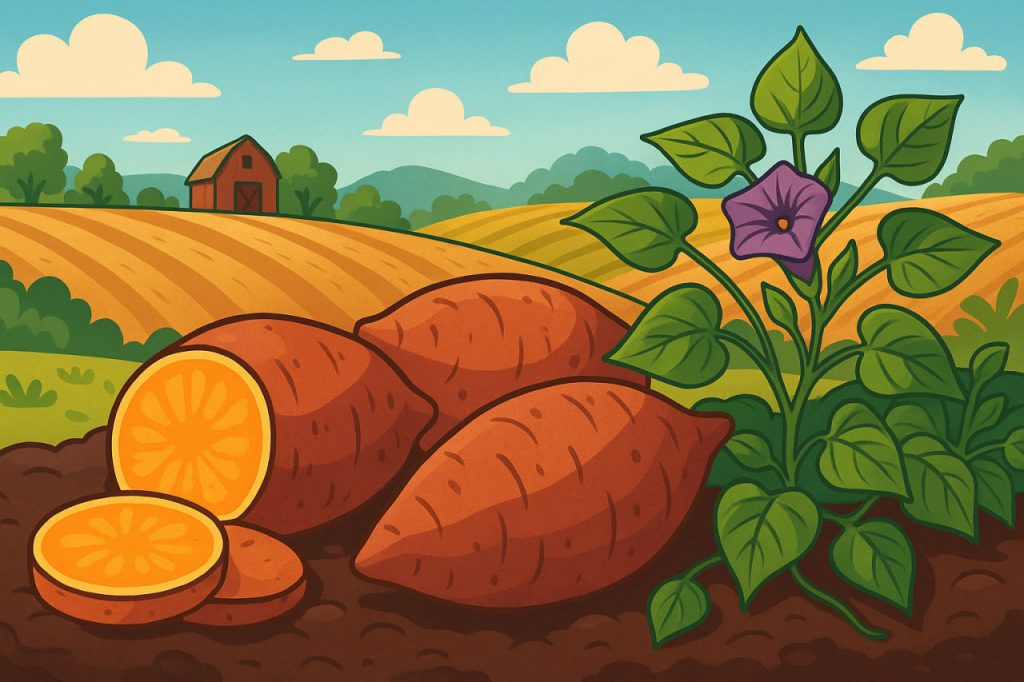
The sweet potato, commonly known as batat, is one of the world’s most nutritious and versatile root vegetables. Unlike regular potatoes, sweet potatoes belong to a different botanical family and carry a naturally sweet flavor, vibrant colors, and an impressive nutritional profile. Cultivated for thousands of years across Africa, Asia, and the Americas, batat has become a global food staple valued for its resilience, affordability, and health-supporting qualities. Its rich supply of vitamins, minerals, antioxidants, and fiber makes it a cornerstone ingredient in both traditional cuisine and modern healthy diets. Because sweet potatoes grow well in diverse climates and soils, they play an essential role in food security for many cultures worldwide.
Botanical Characteristics and Cultivation
Sweet potatoes come from the plant Ipomoea batatas, a member of the morning glory family. They grow as a spreading vine with edible tuberous roots forming underground. The plant thrives in warm climates and requires fertile, well-drained soil. Batat varieties range in color from orange and yellow to purple and white, each offering unique nutritional benefits. According to agricultural scientist Dr. Helena Moore:
“Sweet potatoes are one of the most resilient root crops —
they grow quickly, adapt easily, and offer exceptional nutritional value.”
Farmers appreciate batat for its drought tolerance and ability to produce high yields even in challenging environments.
Nutritional Value and Health Benefits
Sweet potatoes are rich in beta-carotene (a precursor to vitamin A), vitamin C, potassium, fiber, and antioxidants. Orange varieties support immune function, skin health, and vision. Purple sweet potatoes contain anthocyanins — powerful antioxidants that help combat oxidative stress. Their high fiber content supports digestion and helps maintain steady energy levels throughout the day. Because of their natural sweetness and low glycemic impact, sweet potatoes are popular among athletes and health-conscious individuals seeking sustained energy.
Culinary Uses Around the World
Batat is celebrated in cuisines across continents. It can be baked, boiled, steamed, roasted, mashed, or fried, making it suitable for both savory and sweet dishes. In Asia, sweet potatoes appear in soups, desserts, and noodles; in Africa, they serve as a staple food during dry seasons; in the Americas, they feature in casseroles, pies, and traditional celebrations. Their versatility allows chefs and home cooks to incorporate them into breakfasts, lunches, and dinners with ease.
Agricultural and Environmental Importance
Sweet potatoes support sustainable agriculture by improving soil structure and requiring fewer resources than many other crops. Their vines create ground cover that reduces erosion, while their roots enhance soil health. Because batat produces more edible energy per hectare than many grains, it is a valuable crop for addressing global hunger. However, changing climate patterns and pest pressures require ongoing research to maintain stable production.
Role in Modern Nutrition and Wellness
Today, sweet potatoes are central to many wellness-focused diets due to their balanced carbohydrate profile and nutrient density. They appear in gluten-free recipes, plant-based diets, and fitness meal plans. Their combination of complex carbohydrates and micronutrients makes them ideal for providing sustained energy. As holistic nutrition expert Dr. Marcus Liu notes:
“Sweet potatoes offer one of the most nutritious and accessible sources
of natural energy available to people worldwide.”
Because of this, batat continues to gain popularity in both culinary innovation and nutritional science.
Interesting Facts
- Sweet potatoes originated over 5,000 years ago and were cultivated by ancient civilizations.
- The orange color comes from beta-carotene, which supports vision and immunity.
- Purple sweet potatoes contain antioxidants similar to those found in blueberries.
- Batat can grow in poor soil where many other crops fail.
- Some countries celebrate a Sweet Potato Day during harvest festivals.
Glossary
- Beta-Carotene — an antioxidant that the body converts into vitamin A.
- Anthocyanins — pigments in purple batat with strong antioxidant properties.
- Tuber — an enlarged root storing nutrients for the plant.
- Glycemic Impact — the effect of a food on blood sugar levels.
- Ground Cover — vegetation that protects soil from erosion.